Anasazi State Park
🏆 Researched by State Park Experts — Based on Utah Division of State Parks data and verified archaeological records from the Coombs Site excavation at this 6-acre Ancestral Puebloan preserve
The tiny town of Boulder, Utah, sits at the intersection of two of America’s most spectacular national monuments—Grand Staircase-Escalante to the south and Capitol Reef to the northeast—but the most remarkable thing about this remote settlement isn’t the red rock wilderness surrounding it. It’s what lies beneath the surface. Roughly 900 years ago, a thriving community of 200 to 250 Ancestral Puebloan people built an elaborate village on this very spot, farming corn, beans, and squash in the high desert soil, trading pottery with distant communities, and creating a cultural crossroads that archaeologists are still working to understand.
Anasazi State Park Museum preserves what remains of that village—the Coombs Site—one of the largest Ancestral Puebloan communities ever discovered west of the Colorado River. The museum combines indoor artifact exhibits with an outdoor self-guided trail through partially excavated rooms and life-size pueblo replicas, creating an experience that bridges the gap between dusty pottery shards behind glass and the visceral reality of standing where ancient people lived, cooked, and raised families. It’s one of those rare places where the past doesn’t feel distant at all.
What makes this park particularly compelling isn’t just its archaeology—it’s the setting. Boulder was the last town in the continental United States to receive its mail by mule pack train, and the drive here along Scenic Byway 12 is regularly ranked among the most beautiful roads in America. You could spend weeks exploring the surrounding canyon country and never run out of trails, slot canyons, or reasons to pull over and stare at the landscape. The museum is the perfect starting point—or the perfect excuse to slow down in a place where rushing seems almost offensive.
The Coombs Site: 900 Years of History Beneath Your Feet
The archaeological heart of Anasazi State Park Museum is the Coombs Site, also known as the Coombs Village Site. This settlement was occupied between approximately A.D. 1050 and 1200, during a period when Ancestral Puebloan culture was expanding westward from its core territory in the Four Corners region. Tree ring dating of timber recovered from the site’s structures narrows the primary construction period to between A.D. 1129 and 1169, with evidence suggesting the village was abandoned around A.D. 1175—possibly following a catastrophic fire, though prolonged drought likely played a role as well.
What makes the Coombs Site exceptional is its scale and cultural complexity. University of Utah archaeologists excavated the site in 1958 and 1959 as part of the Glen Canyon Dam Project, uncovering approximately 97 rooms and recovering thousands of artifacts including pottery, tools, jewelry, and agricultural implements. The village contained a mix of architectural styles—Kayenta masonry rooms, jacal (wattle-and-daub) structures, and subterranean pit houses—suggesting that multiple cultural traditions coexisted here. Evidence of both Ancestral Puebloan and Fremont culture artifacts at the same site is unusual and points to extensive trade networks or possibly a genuinely multicultural community.
The residents of Coombs Village were sophisticated farmers who cultivated corn, beans, and squash using irrigation techniques adapted to the high desert environment at roughly 6,700 feet elevation. They supplemented their agricultural diet with wild game—deer, rabbit, and mountain sheep—and foraged for wild plants, seeds, and pine nuts. Their pottery shows remarkable craftsmanship, with black-on-white designs that connect them stylistically to the broader Kayenta tradition of northern Arizona.
Museum Exhibits & Indoor Displays
The museum building itself is modest by big-city standards, but what it lacks in square footage it compensates for with focus and accessibility. The indoor exhibits showcase a carefully curated selection of artifacts recovered during the 1958-59 excavations, including intact pottery vessels, stone tools, bone implements, shell and turquoise jewelry, and woven sandals. Interpretive panels provide context for each artifact category, explaining not just what the objects are but how they fit into the daily rhythms of village life—grinding corn on metates, shaping arrow points from obsidian traded from distant volcanic sources, and weaving baskets and textiles for storage and clothing.
One of the museum’s most effective displays is a comparative exhibit showing Ancestral Puebloan and Fremont cultural artifacts side by side, highlighting the similarities and differences that make the Coombs Site such an important crossroads. Fremont figurines, distinctive for their trapezoidal bodies and elaborate headdresses, sit near Puebloan black-on-white pottery in a visual conversation that spans centuries. For visitors unfamiliar with the nuances of Southwest archaeology, this single display does more to explain the cultural landscape than a shelf of academic papers.
The museum also features a small bookshop with regional history titles, field guides to local geology and botany, and educational materials for children. During summer months, park staff occasionally offer pottery-making demonstrations and other interpretive programs that bring the artifacts to life in ways that static displays cannot.
The Self-Guided Trail & Outdoor Ruins
Behind the museum building, a self-guided interpretive trail leads visitors through the Coombs Site ruins—a 0.25-mile path that takes approximately 45 minutes if you read every interpretive sign (which you should). The trail is mostly flat and portions are wheelchair accessible, making it one of the most approachable archaeological sites in the region. Numbered markers correspond to a trail guide available at the visitor center, providing detailed explanations of the features you’re seeing.
| Trail/Site | Distance | Difficulty | Highlights |
|---|---|---|---|
| Coombs Site Interpretive Trail | 0.25 mi | Easy | Excavated rooms, pueblo replica, pit house replica, interpretive signs |
| Museum Indoor Exhibits | — | Easy | Ancestral Puebloan pottery, tools, jewelry, cultural comparison displays |
| Outdoor Pueblo Replica | — | Easy | Life-size 6-room dwelling with authentic construction materials |
| Pit House Replica | — | Easy | Reconstructed subterranean dwelling showing original building techniques |
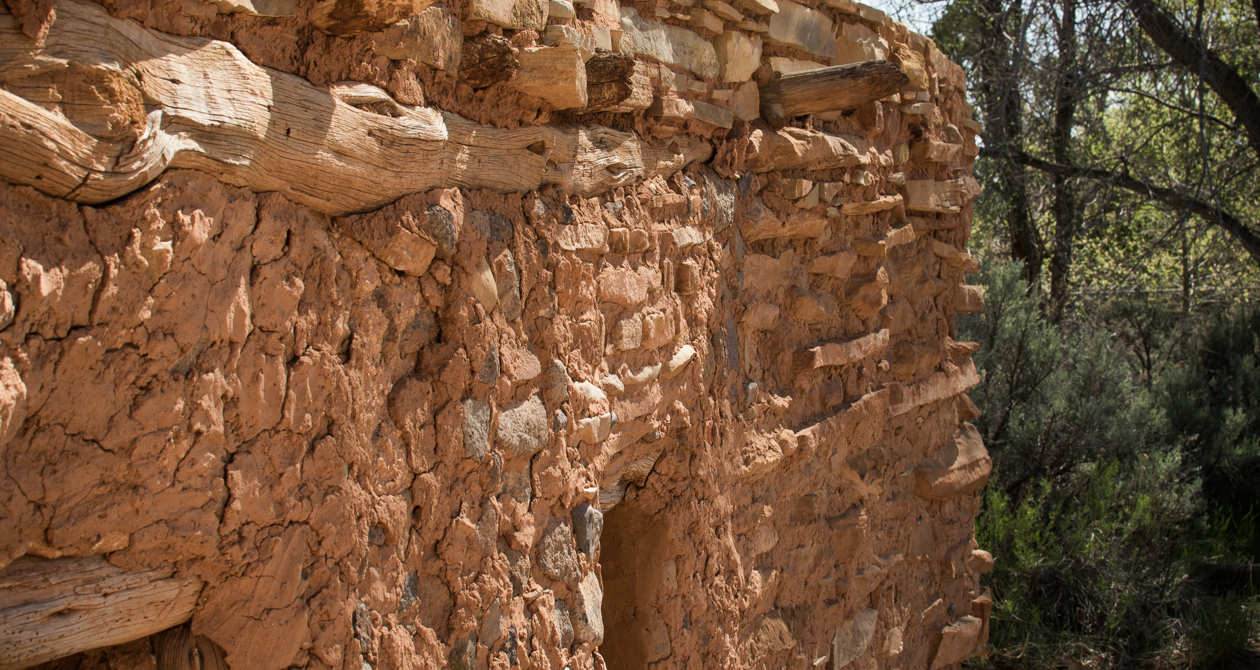
The highlight of the outdoor trail is the life-size, six-room pueblo replica, constructed using traditional materials and methods to give visitors a tangible sense of what these structures actually looked and felt like. You can peer into the rooms and see how small the living spaces were, how low the doorways hung, and how the interconnected rooms functioned as both living quarters and storage. Nearby, a reconstructed pit house shows the earlier, semi-subterranean architectural tradition—a reminder that the people who lived here built on centuries of accumulated knowledge about how to survive in this demanding landscape.
The partially excavated original rooms are visible along the trail as low stone walls emerging from the earth, their outlines defining rooms that once sheltered families, stored food, and served as workshops. Standing among these foundations, with Boulder Mountain rising to the north and the red cliffs of the Escalante drainage visible to the south, the 900-year gap between then and now feels paper-thin.
Best Time to Visit: A Seasonal Guide
Anasazi State Park Museum is open year-round, but the experience varies significantly with the seasons. The park’s location at 6,700 feet elevation means genuine four-season weather, and the surrounding region’s outdoor attractions are highly season-dependent. Planning your visit around both the museum schedule and the broader travel context of Scenic Byway 12 will maximize your experience.
| Season | Weather | Crowds | Best For |
|---|---|---|---|
| Spring (Apr–May) | 50–70°F, occasional rain | Low to Moderate | Wildflowers on Boulder Mountain, pleasant hiking weather, fewer crowds at nearby slot canyons |
| Summer (Jun–Aug) | 75–90°F, afternoon thunderstorms | High | Full museum programming, guided hikes, longest hours (8 AM–6 PM), best access to all area trails |
| Fall (Sep–Oct) | 55–75°F, clear skies | Moderate | Spectacular fall color on Boulder Mountain, golden cottonwoods, perfect hiking temperatures |
| Winter (Nov–Mar) | 25–45°F, snow possible | Very Low | Solitude, reduced hours (9 AM–4 PM), Byway 12 may have winter conditions |
Fall is arguably the ideal season for a visit. The aspens on Boulder Mountain explode into gold and orange during late September and early October, the summer thunderstorm season has passed, and the crowds that pack Bryce Canyon and Capitol Reef thin out considerably. The museum’s reduced fall hours still provide ample time for a thorough visit, and the afternoon light on the red rock landscapes surrounding Boulder is at its most photogenic.
Summer brings the fullest museum experience—more programming, longer hours, and ranger-led activities—but also peak tourist traffic on Scenic Byway 12. The museum itself rarely feels crowded even in high season, but nearby trailheads for Calf Creek Falls and popular slot canyons can fill up early. Arrive at the museum by mid-morning and you’ll have the outdoor trail largely to yourself.
Photography Guide
📸 Best Photo Opportunities & Settings
• Pueblo Replica: Best in morning light (before 10 AM) when warm tones illuminate the adobe-style walls. Shoot from the southeast corner for the most dramatic angle with Boulder Mountain as backdrop. Wide-angle lens (16-35mm) recommended.
• Original Excavation Walls: Late afternoon creates shadows that emphasize the stone construction details. Get low—shooting at wall height creates a more intimate perspective. 35-50mm focal length, f/8 for sharpness.
• Indoor Artifacts: No flash photography allowed. Use a fast lens (f/2.8 or wider) and boost ISO to 800-1600. The black-on-white pottery photographs beautifully against the neutral museum backgrounds. A polarizing filter helps reduce reflections on display cases.
• Sunset Context Shots: The museum grounds offer unobstructed views west toward the Escalante canyons. Golden hour (1 hour before sunset) creates extraordinary warm light on the ruins and replica structures. Panoramic compositions work well here.
Budget Planning
Anasazi State Park Museum is one of the most affordable archaeological experiences in the Southwest—significantly less than comparable sites like Mesa Verde National Park. The compact size means you don’t need to budget an entire day, but the surrounding area offers enough to fill a week if you’re exploring Scenic Byway 12 and the adjacent national monuments.
| Expense | Day Visit | Weekend Trip | Week-Long Stay |
|---|---|---|---|
| Museum Entry | $8/person | $8/person | $8/person |
| Camping (nearby) | — | $25–35/night | $150–210 |
| Gas (from SLC) | $50–70 | $50–70 | $50–70 |
| Food & Drinks | $15–25 | $60–100 | $200–350 |
| Nearby Park Fees | $10–20 | $20–40 | $50–80 |
| Estimated Total | $85–125 | $165–255 | $460–720 |
The Utah State Parks Annual Pass ($125) covers entry to all Utah state parks for up to seven people in a private vehicle and pays for itself quickly if you’re visiting multiple parks along Scenic Byway 12. A five-day pass ($15) is also available for shorter trips. Families pay $20 for museum entry, making this one of the most affordable family-friendly archaeological experiences in the Southwest.
Wildlife & Nature
The park’s 6-acre footprint is too small for significant wildlife viewing, but the surrounding Boulder Mountain and Escalante canyon country support a remarkably diverse ecosystem. The museum grounds themselves attract songbirds, hummingbirds (especially in summer), and the occasional mule deer wandering through at dawn or dusk. The real wildlife viewing happens within a short drive in every direction.
| Species | Best Season | Where to Look | Notes |
|---|---|---|---|
| 🦌 Mule Deer | Year-round | Museum grounds, Boulder Mountain meadows | Most active at dawn/dusk; common along Hwy 12 |
| 🦅 Golden Eagles | Year-round | Cliffs along Escalante River canyon | Soaring on thermals in late morning |
| 🐦 Hummingbirds | May–Sep | Museum garden, wildflower meadows | Broad-tailed and Black-chinned species common |
| 🦎 Collared Lizards | Apr–Oct | Rocky areas near ruins | Brightly colored males visible on warm days |
| 🐂 Elk | Year-round | Boulder Mountain (Hwy 12 higher elevations) | Bugling season Sep–Oct; drive carefully at dusk |
Boulder Mountain, which rises to over 11,000 feet just north of town, harbors one of the largest elk herds in Utah as well as populations of black bear, mountain lion, and wild turkey. The Escalante canyons provide critical riparian habitat for neotropical migratory birds, and the desert scrub between the two ecosystems supports pronghorn antelope, coyotes, and jackrabbits. Birders should bring binoculars even for a museum visit—the juxtaposition of multiple ecosystems around Boulder creates an unusually diverse avian community for such a small area.
Safety & Hazards
The museum and interpretive trail present minimal physical hazards, but the surrounding region demands respect. The high desert environment, remote location, and variable weather can create genuine safety concerns for unprepared visitors.
| Hazard | Risk Level | Prevention |
|---|---|---|
| ☀️ Heat & Dehydration | High (summer) | Carry at least 1 liter per hour for hiking; museum has water fountains. Temperatures above 90°F common Jun–Aug |
| ⛈️ Flash Floods | Moderate (Jul–Sep) | NEVER enter slot canyons during rain; check weather forecasts at museum or BLM office before hiking in Escalante |
| 🛣️ Remote Roads | Moderate | Fill gas tank before leaving Escalante or Torrey; cell service is extremely limited or absent between towns |
| 🐍 Rattlesnakes | Low to Moderate | Watch where you step on outdoor trails; most active Apr–Oct in rocky areas |
| ⚡ Lightning | Moderate (summer) | Afternoon thunderstorms common; seek shelter in museum during storms. Do not shelter under isolated trees |
The most common safety issue at Anasazi State Park is visitors underestimating the remoteness of the area. Boulder is 30 miles from the nearest gas station in either direction (Escalante to the south, Torrey to the northeast), and cell phone service is unreliable to nonexistent along much of Scenic Byway 12. Fill your tank, carry extra water, and tell someone your itinerary if you’re heading into the backcountry around Grand Staircase-Escalante. The BLM Interagency Visitor Center in Escalante is an excellent resource for current trail conditions and weather forecasts.
Nearby Attractions & Day Trips
Anasazi State Park Museum sits at the geographical heart of one of America’s most spectacular concentrations of public lands. Within a 90-minute drive, you can access two national parks, a national monument, two more state parks, and seemingly unlimited backcountry wilderness. The museum makes an ideal base camp or rest stop for exploring any of these destinations.
| Attraction | Distance | Drive Time | Highlights |
|---|---|---|---|
| Grand Staircase-Escalante NM | Adjacent | 5–30 min | Slot canyons (Spooky, Peekaboo), Calf Creek Falls, Hole-in-the-Rock Road |
| Escalante Petrified Forest SP | 28 mi | 35 min | Petrified wood trails, Wide Hollow Reservoir, camping |
| Capitol Reef National Park | 37 mi | 50 min | Waterpocket Fold, Capitol Gorge, historic fruit orchards |
| Bryce Canyon National Park | 78 mi | 1 hr 45 min | Hoodoos, Navajo Loop Trail, world-class stargazing |
| Kodachrome Basin State Park | 45 mi | 55 min | Sand pipes, colorful cliffs, Angel’s Palace Trail |
| Burr Trail Scenic Backway | Starts in Boulder | Full day | 67-mile road through GSENM, Capitol Reef, and Glen Canyon NRA |
The Lower Calf Creek Falls trailhead, located just 12 miles east of the museum along Highway 12, leads to one of the most photographed waterfalls in Utah—a 126-foot cascade pouring over a sandstone cliff into a crystal-clear pool. The 6-mile round trip hike is moderate in difficulty and ranks among the finest day hikes in the Southwest. Arrive early in summer as trailhead parking fills by 9 AM.
For a truly unique experience, drive the Burr Trail Scenic Backway, which begins right in Boulder and traverses 67 miles of increasingly dramatic terrain through Grand Staircase-Escalante National Monument and Capitol Reef National Park before ending at Bullfrog Marina on Lake Powell. The first 30 miles are paved; beyond that, a graded gravel road drops through the Waterpocket Fold via a series of dramatic switchbacks that rank among the most spectacular drives in the American West.
Visitor Information
| Detail | Information |
|---|---|
| Address | 460 UT-12, Boulder, UT 84716 |
| Phone | (435) 335-7308 |
| Summer Hours | 8:00 AM – 6:00 PM daily (May 16 – Sep 15) |
| Winter Hours | 9:00 AM – 4:00 PM daily (Sep 16 – May 15) |
| Closed | New Year’s Day, Thanksgiving, Christmas |
| Entry Fee | $8/person; $20/family; Utah seniors/students $5 |
| Annual Pass | Utah State Parks Annual Pass ($125) accepted |
| Accessibility | Museum fully accessible; outdoor trail partially wheelchair accessible |
| Restrooms | Inside museum building |
| Gift Shop | Books, educational materials, regional interest items |
Getting There & Parking
Anasazi State Park Museum is located on Scenic Byway 12 (Highway 12) in the small town of Boulder, Utah. The museum is easily visible from the highway, with a signed parking lot that accommodates approximately 20-25 vehicles including RV-accessible spaces. From Salt Lake City, the drive takes approximately 4.5 hours (280 miles) via I-15 South and US-89; from Bryce Canyon, it’s about 1 hour 45 minutes (78 miles) along one of the most scenic stretches of highway in the country.
Be aware that Highway 12 between Escalante and Boulder crosses “The Hogsback”—a narrow ridge with steep drop-offs on both sides that can be intimidating for nervous drivers and challenging for large RVs. The road is paved and maintained, but its narrow sections, tight curves, and elevation changes (topping out above 9,600 feet on Boulder Mountain) demand attention. The views are spectacular enough that you’ll want to pull over at designated viewpoints rather than trying to sightsee while driving.
Understanding the Name: “Anasazi” vs. “Ancestral Puebloan”
The park’s name deserves a note of explanation. “Anasazi” is a Navajo word that has been variously translated as “ancient enemies,” “ancient ones,” or “enemy ancestors.” While the term became standard in archaeological literature during the 20th century, many contemporary Pueblo peoples—who are the direct descendants of these ancient communities—prefer the term “Ancestral Puebloan” because it acknowledges their living connection to these cultures without the potentially pejorative connotations of the Navajo-derived name.
The museum acknowledges this terminology evolution in its exhibits, and the state park system has discussed updating the name, though as of 2026 it officially remains “Anasazi State Park Museum.” Visitors should be aware that both terms are used interchangeably in the region, and that the people whose sites are preserved here were the ancestors of today’s Hopi, Zuni, and Rio Grande Pueblo communities—cultures that are very much alive and thriving in the American Southwest.
Sample Itineraries
Half-Day Museum Visit (2–3 Hours)
Start with the indoor museum exhibits (allow 45 minutes to an hour), paying particular attention to the Puebloan vs. Fremont comparative display and the pottery collection. Then walk the outdoor interpretive trail, spending time at the pueblo replica and pit house reconstruction. Read every interpretive sign—they’re well-written and genuinely informative. Finish with the bookshop and grab lunch at one of Boulder’s surprisingly excellent restaurants—Hell’s Backbone Grill is a nationally recognized farm-to-table destination that’s worth the trip on its own.
Full-Day Boulder Area (8–10 Hours)
Arrive at the museum when it opens. Complete the museum and outdoor trail (2 hours). Drive 12 miles east to the Lower Calf Creek Falls trailhead and hike to the 126-foot waterfall (3–4 hours round trip). Return to Boulder for a late lunch. In the afternoon, drive the first section of the Burr Trail for views of the Long Canyon narrows and Capitol Reef’s Waterpocket Fold. Return to Boulder for dinner—reservations recommended at Hell’s Backbone Grill during summer season.
Multi-Day Scenic Byway 12 Road Trip (3–5 Days)
Day 1: Drive Scenic Byway 12 from Bryce Canyon to Boulder, stopping at Kodachrome Basin State Park and Escalante Petrified Forest State Park. Arrive in Boulder for dinner and overnight. Day 2: Museum in morning, Calf Creek Falls in afternoon, Burr Trail sunset drive. Day 3: Explore slot canyons off Hole-in-the-Rock Road (Peekaboo, Spooky Gulch). Day 4: Drive to Capitol Reef National Park, explore Capitol Gorge and the historic fruit orchards. Day 5: Return via Boulder Mountain, stopping at viewpoints and fishing in high-altitude lakes.
Frequently Asked Questions
How long does it take to visit Anasazi State Park Museum?
Plan 1.5 to 2 hours for a thorough visit that includes both the indoor museum exhibits and the outdoor interpretive trail through the Coombs Site ruins. The museum can be seen in as little as 45 minutes if you’re short on time, but the outdoor trail with its pueblo and pit house replicas deserves at least 30–45 minutes of unhurried exploration. If you’re genuinely interested in Southwest archaeology, you could easily spend 2–3 hours reading every interpretive sign and examining the artifacts in detail.
Is Anasazi State Park Museum worth visiting?
Absolutely. Despite its modest size, the museum offers one of the most accessible and informative archaeological experiences in Utah. The combination of indoor artifacts and outdoor ruins with life-size replicas gives you a far more complete understanding of Ancestral Puebloan life than most larger, more famous sites. The $8 entry fee makes it one of the best values in the region, and its location in Boulder means you can combine it with some of the most spectacular scenery in the American West—Scenic Byway 12, Grand Staircase-Escalante, and Capitol Reef are all within easy reach.
Can you camp at Anasazi State Park Museum?
No, there are no campsites at Anasazi State Park Museum—it is a day-use facility only. However, several excellent camping options exist nearby. Calf Creek Campground (BLM, 12 miles east, $15/night, 14 sites, first-come-first-served) is the closest option and sits in a beautiful sandstone canyon. Deer Creek Campground on Boulder Mountain (Forest Service, 6 miles north, $12/night) offers high-altitude camping with aspen groves. Escalante Petrified Forest State Park (28 miles south) has a full-service campground with hookups. Dispersed camping is available throughout Grand Staircase-Escalante National Monument—check with the BLM visitor center in Escalante for current regulations.
Is the Anasazi State Park Museum trail wheelchair accessible?
The museum building is fully wheelchair accessible, and portions of the outdoor interpretive trail are accessible as well. The main pathway to the pueblo replica is relatively flat and can accommodate wheelchairs, though some sections of the trail that pass by the original excavation sites may be uneven. Contact the park at (435) 335-7308 for specific accessibility questions before your visit.
What is the best time of year to visit?
Fall (September–October) offers the best combination of pleasant weather, manageable crowds, and spectacular scenery—the aspens on Boulder Mountain turn brilliant gold, and daytime temperatures hover in the comfortable 55–75°F range. Summer (June–August) provides the fullest museum experience with extended hours and occasional guided programs, but expect higher temperatures and more crowded conditions at nearby trailheads. Spring (April–May) is excellent for wildflowers but can bring unpredictable weather. Winter visits are possible—the museum is open year-round—but Scenic Byway 12 may have snow or ice, and reduced hours (9 AM–4 PM) limit your time.
What other attractions are near Anasazi State Park Museum?
Boulder sits at the geographic heart of some of America’s most spectacular public lands. Grand Staircase-Escalante National Monument is immediately adjacent, offering world-class slot canyons, the iconic Lower Calf Creek Falls (12 miles east), and the Hole-in-the-Rock Road. Capitol Reef National Park is 37 miles northeast. Kodachrome Basin State Park and Bryce Canyon National Park are accessible via Scenic Byway 12 heading west. The 67-mile Burr Trail Scenic Backway starts right in Boulder and traverses some of the most dramatic terrain in the Colorado Plateau.
Is there cell phone service in Boulder, Utah?
Cell phone service in Boulder is extremely limited. Some carriers (primarily Verizon) may get intermittent service in town, but coverage is unreliable and drops entirely on Highway 12 between Boulder and Escalante. Download offline maps before arriving, tell someone your travel plans, and don’t rely on your phone for navigation or emergency communication in the surrounding backcountry. The museum has a landline phone, and the town of Boulder has basic services, but this is genuinely remote territory.
🏛️ Ready to Explore Anasazi State Park Museum?
Step back 900 years into the daily life of the Ancestral Puebloan people who called this corner of Utah home. Combine your visit with a drive along America’s most scenic byway and some of the best hiking in the Southwest.