
🌤 Weather at Barn Island Wildlife Management Area by season
| Spring | Summer | Fall | Winter |
|---|---|---|---|
| 32–67 °F | 59–82 °F | 38–74 °F | 24–45 °F |
Each range runs from the coldest monthly average low to the warmest monthly average high in that season (1991-2020 climate normals), measured at Westerly State Airport, 4 mi away, elevation 81 ft. Conditions at the park can differ from the station, especially where elevation differs — check a forecast before you go.

🦅 Connecticut’s Largest Coastal Preserve — 1,000 Acres of Salt Marsh Where the Birds Come First — Barn Island Wildlife Management Area in Stonington, New London County, Connecticut, 1,000+ acres of salt marsh tidal wetlands and upland forest, Connecticut’s largest coastal preserve, Long Island Sound shoreline, birding hotspot with osprey egrets herons and migratory waterfowl, hiking trails through marsh and woodland, Palmer Neck Road access, restored tidal wetlands — New London County, CT
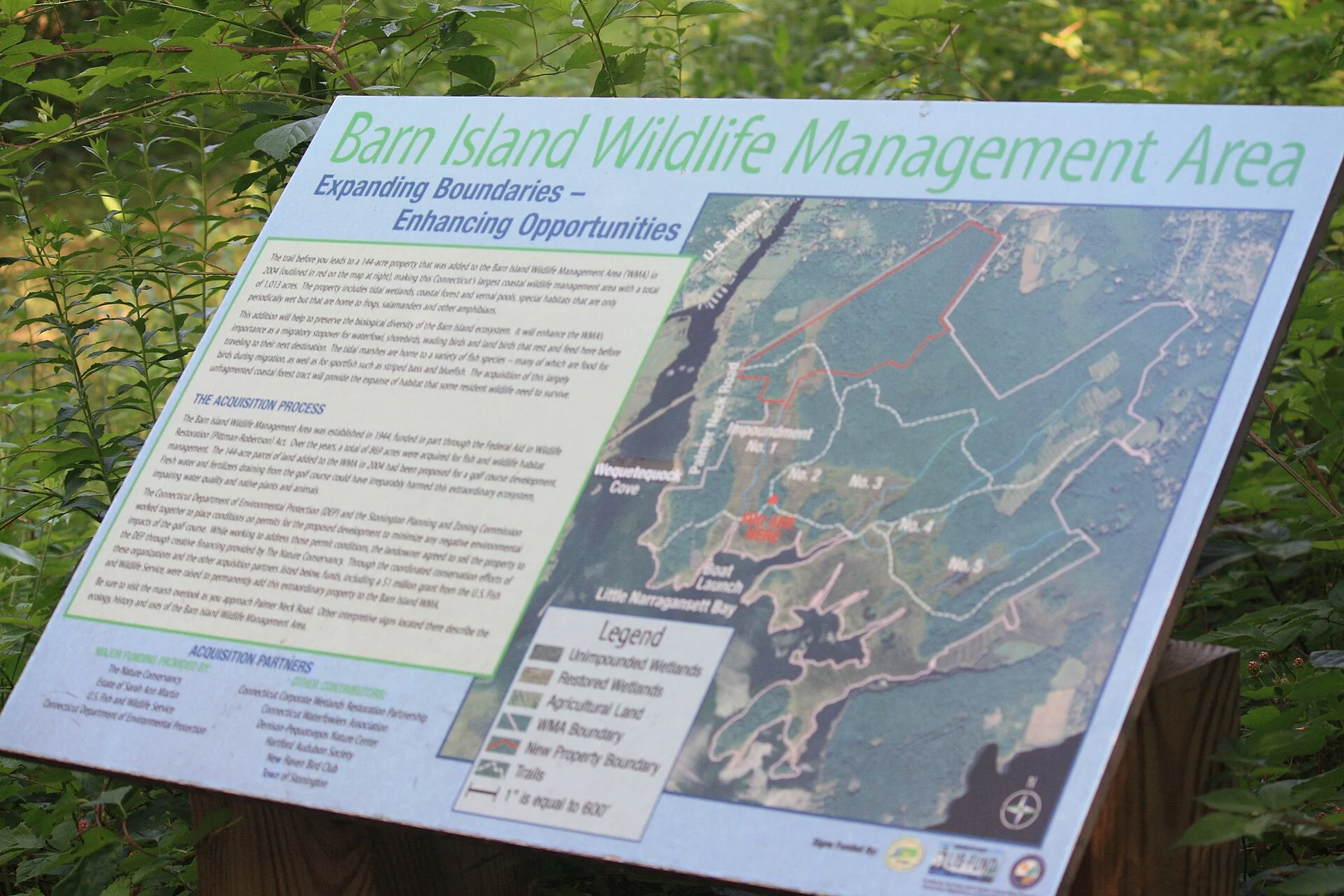
In a state where almost every inch of coastline is developed, Barn Island is 1,000 acres of salt marsh that nobody built on. Tidal creeks wind through cordgrass meadows. Osprey nest on platforms above the marsh. Great blue herons stand motionless in the shallows. And Long Island Sound stretches south to the horizon.
This is Connecticut’s largest coastal preserve — a laboratory of tidal wetland restoration and one of the Northeast’s premier birding destinations. The trails are simple dirt paths through marsh and forest. There are no facilities, no gift shops, no entrance fees. Just salt air, birds, and the tide.
What to See
| Feature | Details |
|---|---|
| Salt Marsh | Hundreds of acres of tidal salt marsh — cordgrass, salt hay, and tidal creeks. One of the largest intact salt marshes remaining in Connecticut |
| Birding | Year-round birding with peak during spring and fall migration. Osprey, great blue heron, snowy egret, glossy ibis, American oystercatcher, and dozens of migratory waterfowl and shorebird species |
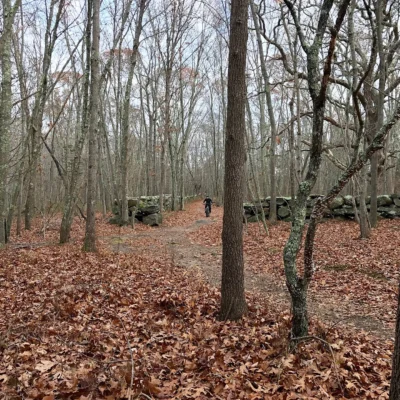
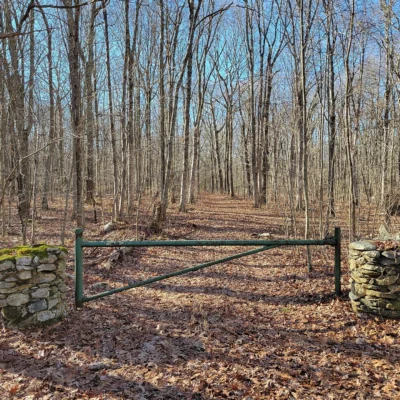
| Hiking Trails | ~3 miles of trails through salt marsh, upland forest, and along the shoreline. Easy to moderate. Some sections muddy at high tide |
| Tidal Restoration | Barn Island is one of the earliest and most successful tidal wetland restoration projects in the US. Formerly diked farmland was reconnected to tidal flow, and the marsh recovered naturally |
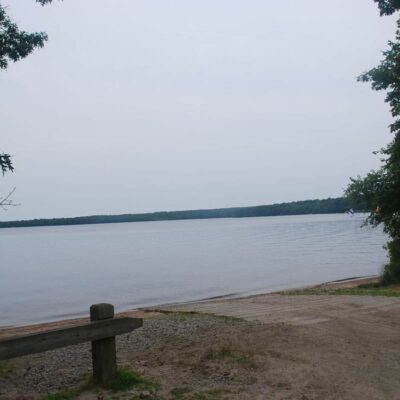
| Shoreline Access | Views of Long Island Sound, Sandy Point, and the Pawcatuck River estuary. Kayak launch for exploring the tidal creeks |
The Birds
| Season | Species |
|---|---|
| Spring (Apr–May) | Migrating warblers, shorebirds, and raptors. Osprey return to nesting platforms. Glossy ibis in the marsh. Saltmarsh sparrow |
| Summer (Jun–Aug) | Nesting osprey with chicks. Great and snowy egrets feeding in shallows. Willet, American oystercatcher. Least terns |
| Fall (Sep–Nov) | Peak waterfowl migration. Ducks, geese, and shorebirds staging in the marsh. Hawk migration overhead. Best diversity |
| Winter (Dec–Feb) | Wintering waterfowl — buffleheads, goldeneyes, mergansers. Short-eared owls. Harriers hunting the marsh. Quiet and cold |
Best Time to Visit
| Season | Best For |
|---|---|
| Spring (Apr–May) | 🌸 Migration peak. Osprey nesting. Marsh greening up. Best birding diversity. Wildflowers in upland areas |
| Fall (Sep–Nov) | 🍂 Waterfowl migration. Marsh turning golden. Hawk flights. Cool weather for hiking. Best photography light |
| Summer (Jun–Aug) | Nesting season. Egrets and herons. Hot — mosquitoes in the marsh. Early morning visits essential |
| Winter (Dec–Feb) | Wintering waterfowl and raptors. Cold but dramatic. Marsh in winter tones. Few visitors |
Frequently Asked Questions
Is there an entrance fee?
No — Barn Island is free and open year-round. There are no facilities — no restrooms, no visitor center, no water. Bring everything you need. The parking area is on Palmer Neck Road in Stonington.
Is hunting allowed?
Yes — this is a Wildlife Management Area. Hunting is permitted in season (waterfowl, deer). During hunting season, wear blaze orange and check DEEP regulations. Outside hunting season, the area is used primarily by birders, hikers, and kayakers.
Why is the tidal restoration important?
Barn Island was one of the first places in the US to demonstrate that diked salt marshes could be restored by simply reconnecting them to tidal flow. Starting in the 1940s, researchers removed dikes and let the tide return. The marsh recovered on its own — proving that salt marshes are resilient if given the chance. This work informed coastal restoration projects nationwide.
Make it a road trip: Pair a visit with Assekonk Swamp Wildlife Management Area (a short drive away) or Haley Farm State Park (a short drive away).
🦅 1,000 Acres of Salt Marsh in the Most Developed State
Everyone paved their coastline. Barn Island didn’t. The osprey still nest. The tide still floods the cordgrass. And Connecticut’s largest coastal preserve stays wild — one of the last unbroken marshes on Long Island Sound.

🐾 Dogs & Pets at Barn Island Wildlife Management Area
- Pets allowed? statewide rule
- Pets on a leash are permitted in most Connecticut state parks and forests, but not in buildings, swimming areas or state park campgrounds.
- Leash rule statewide rule
- Pets must be leashed and under control at all times; in state forest camping areas the leash may be no longer than 7 feet.
- Beaches & swim areas statewide rule
- Pets are prohibited in swimming areas; Sherwood Island and Squantz Pond State Parks ban pets entirely April 15 - September 30.
- Cabins & lodging statewide rule
- Pets are banned from all state park campgrounds; they are allowed only in the American Legion, Pachaug and Salt Rock state forest campgrounds, but not on rustic cabin sites.
- Statewide exceptions statewide rule
- Pets prohibited year-round at Dinosaur State Park and in the formal gardens and beach at Harkness Memorial State Park.
Are dogs allowed at Barn Island Wildlife Management Area?
Pets on a leash are permitted in most Connecticut state parks and forests, but not in buildings, swimming areas or state park campgrounds. Individual parks can post stricter rules — check signage on arrival.
Rules verified July 2026 via portal.ct.gov. More: Connecticut state parks guide · Dog rules in all 50 states compared
Park Location
Plan your gear for Barn Island Wildlife Management Area
From our editorial guides, matched to this park’s activities:






Top Tours & Activities Near Mystic
 from $100from $75
 from $59