

🌤 Weather at East Beach State Beach by season
| Spring | Summer | Fall | Winter |
|---|---|---|---|
| 32–67 °F | 59–82 °F | 38–74 °F | 24–45 °F |
Each range runs from the coldest monthly average low to the warmest monthly average high in that season (1991-2020 climate normals), measured at Westerly State Airport, 7 mi away, elevation 81 ft. Conditions at the park can differ from the station, especially where elevation differs — check a forecast before you go.

🏖️ Rhode Island’s Wild Side — A 3-Mile Barrier Beach Where the Only Way In Is 4WD — East Beach State Beach in Charlestown, Rhode Island, 3-mile undeveloped barrier beach, 4WD-only access, 20 self-contained camping sites, Ninigret Pond, Atlantic Ocean, Block Island Sound, piping plover habitat, pristine dunes, beachcombing — Washington County, RI
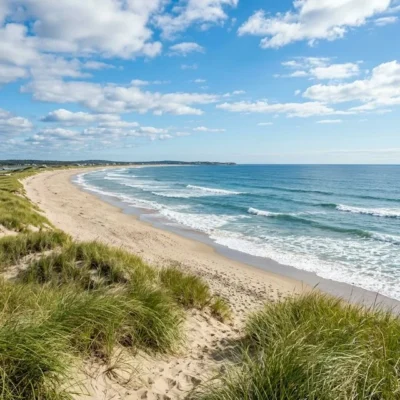
Rhode Island is the smallest state in America, and East Beach is its biggest secret. Three miles of undeveloped barrier beach — no boardwalk, no snack bar, no lifeguards — separating the Atlantic Ocean from Ninigret Pond. The only way to reach the camping area is 4WD over sand.
This is not Rhode Island’s party beach. This is Rhode Island’s wild beach — adjacent to the Ninigret National Wildlife Refuge, home to nesting piping plovers, and so committed to its undeveloped character that the state limits camping to 20 self-contained vehicle sites. No tents. No trailers. Just you, your self-contained unit, and the Atlantic.
What to Do
| Activity | Details |
|---|---|
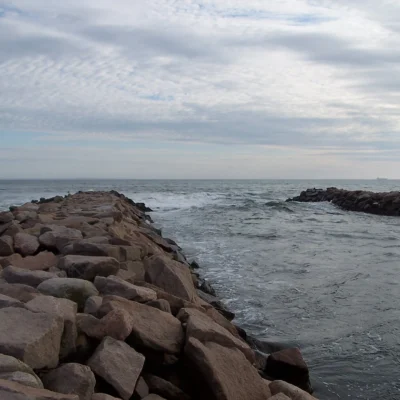
| Beach | Three miles of pristine Atlantic barrier beach — wide, sandy, and largely empty compared to Rhode Island’s more developed beaches. The surf pounds in from Block Island Sound. The dunes behind you are fragile and protected. Walk the full length and you might not see another person |
| 4WD Camping | 20 self-contained vehicle camping sites on the beach — 4WD required. Self-contained means built-in holding tanks for water, gray, and black water. No tents, no towed trailers. First-come, first-served. Wake up, unzip your RV door, and the Atlantic is right there |
| Beachcombing | The barrier beach catches everything the Atlantic throws — shells, sea glass, driftwood, and the occasional fishing float. Low tide exposes sand flats and tidal pools. The unvisited stretches at the far ends of the beach offer the best finds |
| Wildlife | Piping plovers nest in the dunes — the beach may partially close during nesting season to protect them. Horseshoe crabs come ashore to spawn in spring. Shorebirds, terns, and migrating raptors use the barrier beach as a corridor. The adjacent Ninigret National Wildlife Refuge adds even more habitat |
| Fishing | Surf casting from the beach — striped bass, bluefish, and fluke. The barrier beach creates a natural edge where predator fish patrol. Dawn and dusk are prime casting times. Rhode Island saltwater license required |
The Barrier Beach
| Feature | Details |
|---|---|
| Ninigret Pond | Behind the barrier beach — a 1,711-acre coastal salt pond, one of the largest in Rhode Island. The pond is shallow, warm, and teeming with life. Kayaking and paddleboarding on the pond side while the ocean breaks on the other. Two worlds separated by a strip of sand |
| Wildlife Refuge | Ninigret National Wildlife Refuge borders the beach — 409 acres of grassland, shrubland, and freshwater wetlands. Birding is excellent year-round. The Frosty Drew Observatory on the refuge hosts stargazing events — some of the darkest skies in Rhode Island |
| 4WD Permit | Driving on the sand requires a Barrier Beach Permit from the RI Coastal Resources Management Council. The permit system limits vehicle traffic and protects the fragile dune ecosystem. Apply in advance — permits are limited |
| Minimal Facilities | Composting toilets. No showers. No water. No electric. No trash service (pack in, pack out). The state keeps it this way on purpose — undeveloped means undeveloped |
Best Time to Visit
| Season | Best For |
|---|---|
| Summer (Jul–Aug) | ☀️ Warmest water. Longest days. Camping season. The beach at its warmest (water still cold — this is Rhode Island) |
| Fall (Sep–Oct) | 🎣 Striped bass run. Fewer visitors. Clear water. Horseshoe crabs. The barrier beach at its most peaceful |
| Spring (May–Jun) | Piping plover nesting (some closures). Horseshoe crab spawning. Wildflowers on the dunes. Cool but beautiful |
| Winter (Nov–Apr) | Dramatic surf. Beach empty. Storm watching. The barrier beach in its most raw, powerful state |
Frequently Asked Questions
Can I camp in a tent?
No — only self-contained vehicles with manufacturer-installed holding tanks. No tents, no pop-ups, no towed trailers. This rule protects the fragile barrier beach and limits the camping impact. Your vehicle must have 4WD.
How do I get a permit to drive on the beach?
Apply through the Rhode Island Coastal Resources Management Council (CRMC) for a Barrier Beach Permit. Applications open seasonally. Permits are limited to protect the ecosystem. Apply early — they sell out.
Nearby state parks: If you have extra time, Burlingame State Park is a short drive away, and East Matunuck State Beach is a short drive away.
Camping reservations: Book campsites and cabins for Rhode Island state parks online at rhodeislandstateparks.reserveamerica.com.
🏖️ 3 Miles. No Boardwalk. No Snack Bar. Just the Atlantic and 4WD Tracks in the Sand.
The smallest state’s wildest beach. Drive your 4WD across the barrier. Camp where the ocean meets the pond. Watch piping plovers in the dunes. And remember that undeveloped doesn’t mean undiscovered — it means Rhode Island is protecting something worth keeping wild.

⛺ Camping at East Beach State Beach: Campgrounds & Cabins
| Campsites | RI DEM's own program description refers to this as a 10-site campground. The Reserve America booking system lists 20 self-contained RV sites split across two areas, Area 1 and Area 2, of 10 back-in sites each, with a maximum vehicle length of around 38 feet. No electric, water or sewer hookups. Four Clivus Multrum composting toilets serve the campground. Tent camping is not allowed. |
|---|---|
| Pets | Pets are not allowed at East Beach Campground (does not apply to service animals). |
| Reservations | Book online via Reserve America or call 1-877-742-2675; must show proof of an active, valid reservation. Non-refundable $8.75 reservation fee. Sitewide RI DEM cancellation policy applies: full refund minus fees 8+ days before arrival, one-night penalty 2-7 days before arrival, no refund under 2 days before arrival. |
| Special sites | All camping units must be self-contained (permanent holding tanks for potable, grey and black water) AND equipped with 4-wheel drive; tow trailers and fifth wheels are not allowed. All campers must obtain a Barrier Beach Permit from the Rhode Island Coastal Resources Management Council (CRMC) prior to their stay. A beach parking fee applies to any vehicle using the East Beach Sand Trail unless registered for a campsite. Registered campers may use the Septic Dump and Water Filling Station at Burlingame State Campground and/or Fishermen's Memorial State Campground once at no charge after checking in. Part or all of the campground may close during the season for nesting of the threatened Piping Plover, with reservations cancelled and refunded in full if this occurs. Maximum stay is 7 nights within any 21-day period during Peak Season (shorter than the sitewide 14-night maximum). |
| Season notes | 2026 season start: Saturday, May 23. Located on three miles of undeveloped barrier beach frontage in Charlestown; a small portion of the beach is staffed with lifeguards on a seasonal basis; parking is very limited and fills up early on sunny summer days. |
Camping questions about East Beach State Beach
Can you camp at East Beach State Beach?
RI DEM's own program description refers to this as a 10-site campground. The Reserve America booking system lists 20 self-contained RV sites split across two areas, Area 1 and Area 2, of 10 back-in sites each, with a maximum vehicle length of around 38 feet. No electric, water or sewer hookups. Four Clivus Multrum composting toilets serve the campground. Tent camping is not allowed.
How do you reserve a campsite at East Beach State Beach?
Book online via Reserve America or call 1-877-742-2675; must show proof of an active, valid reservation. Non-refundable $8.75 reservation fee. Sitewide RI DEM cancellation policy applies: full refund minus fees 8+ days before arrival, one-night penalty 2-7 days before arrival, no refund under 2 days before arrival.
Are pets allowed at the East Beach State Beach campground?
Pets are not allowed at East Beach Campground (does not apply to service animals).
Source: riparks.ri.gov (verified July 2026). Details change seasonally — confirm when booking.
🐾 Dogs & Pets at East Beach State Beach
- Pets allowed? statewide rule
- Domestic animals are allowed in Rhode Island state parks but must be leashed and under a handler's control at all times.
- Leash rule statewide rule
- Leash no more than 6 feet in length required (up to 25 feet in state management areas)
- Beaches & swim areas statewide rule
- No animals allowed on any state bathing beach, East Beach/Ninigret or Burlingame Picnic Area from April 1 through September 30
- Cabins & lodging statewide rule
- No cabin lodging program; camping allows a maximum of two pets (dogs or cats) per campsite, but pets are not permitted at Charlestown Breachway or East Beach campgrounds
- Statewide exceptions statewide rule
- Current rabies vaccination certificate required for camping pets; e-collars/e-leashes do not count as leashed
Are dogs allowed at East Beach State Beach?
Domestic animals are allowed in Rhode Island state parks but must be leashed and under a handler's control at all times. Individual parks can post stricter rules — check signage on arrival.
Rules verified July 2026 via rules.sos.ri.gov. More: Rhode Island state parks guide · Dog rules in all 50 states compared
Park Location
Plan your gear for East Beach State Beach
From our editorial guides, matched to this park’s activities:

Top Tours & Activities Near Mystic
 from $100from $75
 from $59