
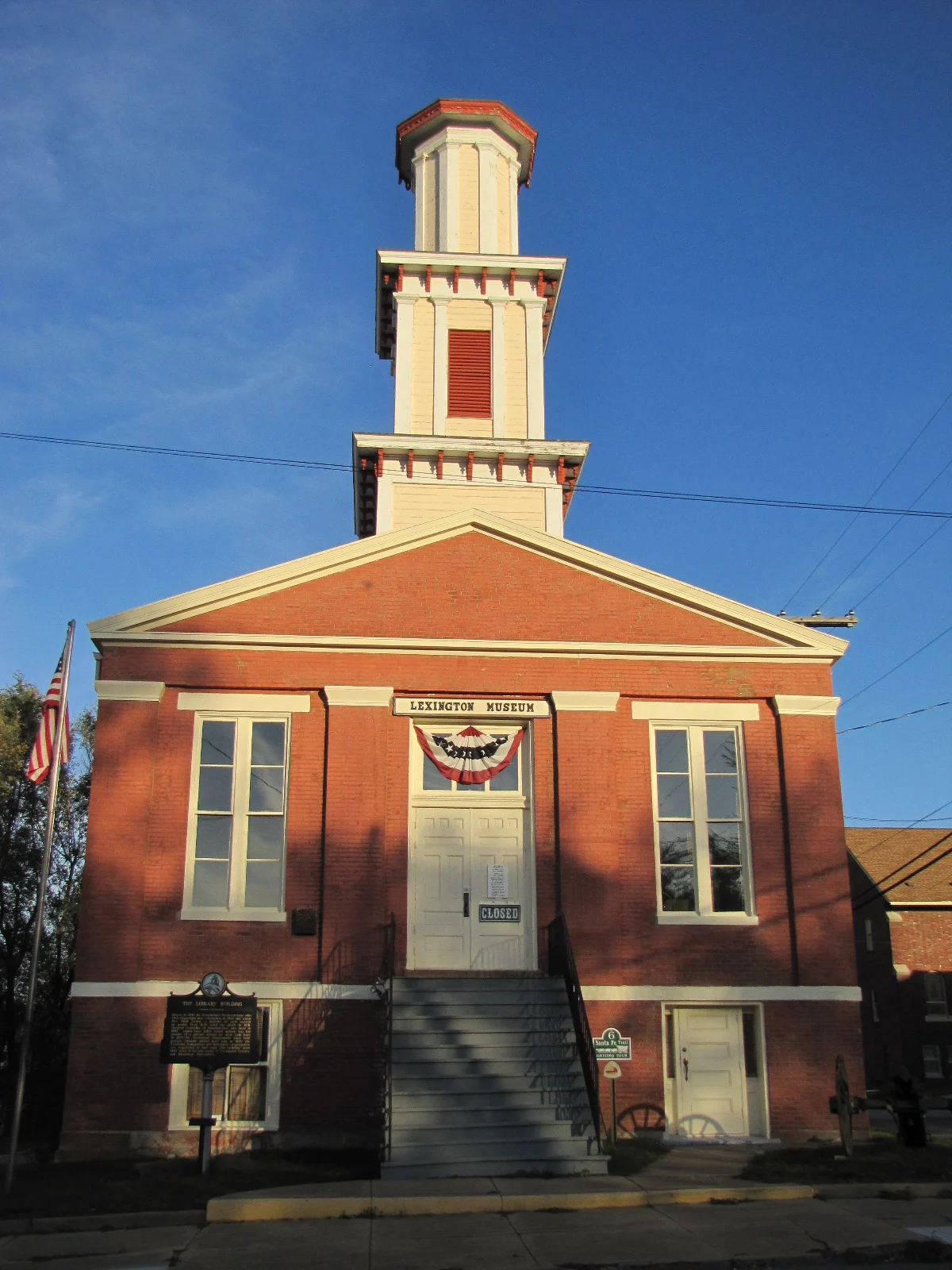
🌤 Weather at Battle of Lexington State Historic Site by season
| Spring | Summer | Fall | Winter |
|---|---|---|---|
| 33–75 °F | 64–88 °F | 34–80 °F | 20–44 °F |
Each range runs from the coldest monthly average low to the warmest monthly average high in that season (1991-2020 climate normals), measured at Lexington 3E, 1 mi away, elevation 825 ft. Conditions at the park can differ from the station, especially where elevation differs — check a forecast before you go.

🏆 Missouri History — Site of the three-day “Battle of the Hemp Bales” (September 1861) — Confederates soaked hemp bales in the Missouri River and rolled them uphill as mobile shields! The Anderson House still has Civil War damage.
Visitor Information
| Detail | Information |
|---|---|
| Location | Missouri |
| Entry Fee | Free admission! |
About Battle of Lexington
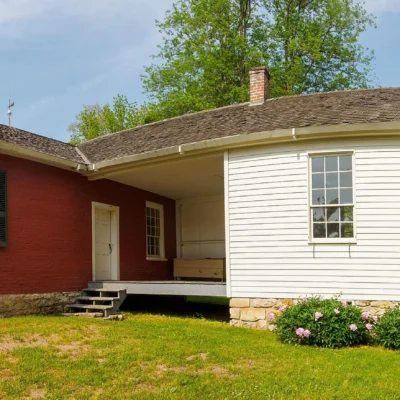
Battle of Lexington State Historic Site preserves the 1861 battlefield where Confederate General Sterling Price besieged the Union garrison at the Anderson House — a three-day battle won using movable hemp bale breastworks. The bullet-pocked Anderson House still stands, with over 100 visible bullet holes in its walls. The battle was part of Price’s campaign to take Missouri for the Confederacy — a effort that ultimately failed.
Things to Do
Touring the bullet-scarred Anderson House (100+ visible impacts), walking the battlefield, viewing the Civil War museum, and learning about the famous “hemp bale” breastwork tactic used in the siege.
Visiting Today
The Anderson House, with over 100 visible bullet impacts in its walls, is one of the most visceral Civil War sites in America. Guided tours explain the famous hemp bale breastwork tactic. The museum houses artifacts from the 1861 siege. The site overlooks the Missouri River from a commanding bluff.
Getting There
Located on 13th Street in Lexington, Lafayette County — overlooking the Missouri River valley. The Anderson House museum is open March through November. Lexington’s Main Street retains excellent 19th-century commercial architecture. The Wentworth Military Academy (nearby) adds to the town’s military heritage.
Insider Tips
Battle of the Hemp Bales: The Battle of Lexington (September 1861) is known as the “Battle of the Hemp Bales” — Confederate forces soaked hemp bales in water and rolled them forward as mobile breastworks. Pro tip: The Anderson House, used as a field hospital, still has bloodstains on the floor. Missouri hemp: Pre-war Missouri was the nation’s largest hemp producer — the crop was processed by enslaved labor.
Best Time to Visit
September: Anniversary events. Fall: Missouri River valley foliage. Spring: Battlefield wildflowers. Year-round: Anderson House tours.
Frequently Asked Questions
How did hemp bales work as protection?
Confederate forces commandeered hemp bales from Lexington’s warehouses — each bale weighed 300+ pounds. Soldiers soaked the bales in the Missouri River to make them fire-resistant, then rolled them forward as moving shields. The Union defenders couldn’t penetrate the wet, dense hemp. It was one of the most creative tactical innovations of the war — and it worked.
Nearby state parks: If you have extra time, Watkins Mill State Park is within about an hour’s drive, and Watkins Woolen Mill State Park is within about an hour’s drive.
Wildlife & Nature
Battle of Lexington SHS — preserves the site of the 1861 Battle of Lexington (“Battle of the Hemp Bales”), where Confederate forces used hemp bales as mobile breastworks. The Anderson House still bears Civil War cannonball damage. White-tailed deer and bald eagles inhabit the Missouri River bluffs.
Nearby Attractions
Lexington — adjacent — has the historic courthouse square. Missouri River — adjacent. Kansas City — 40 miles west. Fort Osage NHS — 20 miles west.

🐾 Dogs & Pets at Battle of Lexington State Historic Site
- Pets allowed? statewide rule
- Responsible pet owners and their pets are welcome in Missouri state parks and historic sites, with pets leashed and under control.
- Leash rule statewide rule
- Leash not longer than 10 feet required at all times; portable fences and shock collars do not satisfy the requirement.
- Beaches & swim areas statewide rule
- Pets are not allowed in public swimming areas or on beaches.
- Cabins & lodging statewide rule
- The 'Cabins for Canines' program opens about 30% of lodging units to dogs (max two dogs per unit) at roughly 15 participating parks including Lake of the Ozarks, Bennett Spring, Echo Bluff and Roaring River; per-dog per-night fee varies by unit type.
- Pet fees statewide rule
- No day-use pet fee; Cabins for Canines charges a per-dog, per-night lodging fee (varies by unit).
- Statewide exceptions statewide rule
- Maximum two dogs per campsite; pets not allowed inside any park building.
Are dogs allowed at Battle of Lexington State Historic Site?
Responsible pet owners and their pets are welcome in Missouri state parks and historic sites, with pets leashed and under control. Individual parks can post stricter rules — check signage on arrival.
Rules verified July 2026 via mostateparks.com. More: Missouri state parks guide · Dog rules in all 50 states compared
Park Location
Top Tours & Activities Near Kansas City
 from $30
 from $779
 from $75