
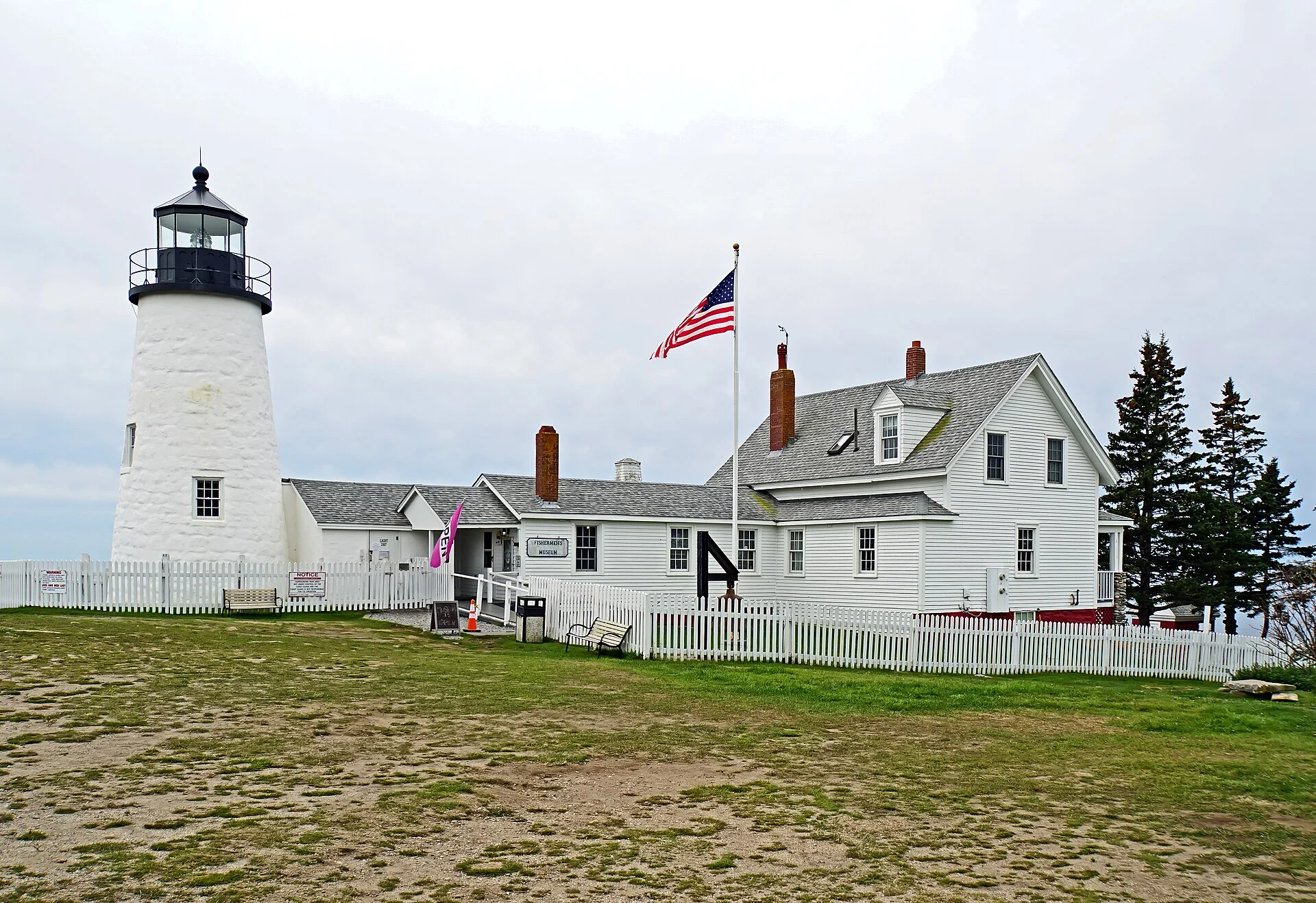
🌤 Weather at Colonial Pemaquid State Historic Site by season
| Spring | Summer | Fall | Winter |
|---|---|---|---|
| 24–62 °F | 53–76 °F | 32–69 °F | 14–37 °F |
Each range runs from the coldest monthly average low to the warmest monthly average high in that season (1991-2020 climate normals), measured at Westport Island, 9 mi away, elevation 90 ft. Conditions at the park can differ from the station, especially where elevation differs — check a forecast before you go.

🏰 Where Maine’s Colonial Wars Were Won and Lost — A 400-Year Archaeological Site at the Edge of the Atlantic — Colonial Pemaquid State Historic Site in Bristol, Maine, National Historic Landmark, archaeological remains of a 17th-century English settlement and fishing station, Fort William Henry stone tower (1908 reconstruction of 1692 fort), museum with excavated colonial artifacts (pottery, musket balls, coins), Fort House (1790 research center), colonial burial ground (headstones from early 1700s), near Pemaquid Point Lighthouse — Lincoln County, ME
Before Plymouth was famous, before Boston was built, English fishermen and traders were already working the rocky coast of the Pemaquid Peninsula. By the 1620s, a permanent settlement stood here — one of the earliest English-speaking communities in what would become the United States. And for the next century, this spot at the edge of the Atlantic was fought over more than almost any other place in New England.
Three successive forts were built and destroyed on this site. The English, French, and Wabanaki fought for control of this coastline in a series of brutal colonial wars. Today, the stone foundations of the settlement and a reconstructed fort tower stand as a National Historic Landmark — one of the most important archaeological sites in New England.
What to See
| Feature | Details |
|---|---|
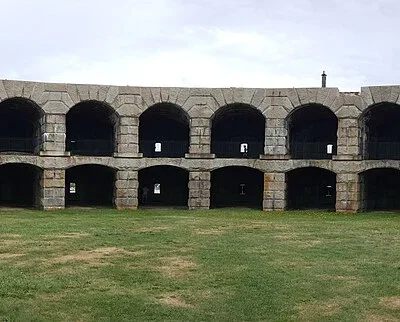
| Fort William Henry Tower | Stone tower — a 1908 partial reconstruction of the 1692 fort. Houses interpretive exhibits. The second of three successive forts built on this site |
| Archaeological Foundations | Stone foundations of the original 17th- and 18th-century colonial village — homes, workshops, and trading posts visible on the ground |
| Museum | Excavated artifacts from 400+ years of habitation — pottery, musket balls, trade beads, coins, household items. One of the most significant colonial artifact collections in Maine |
| Fort House | Restored 1790 Federal-style home. Now serves as an archaeological laboratory and research library |
| Burial Ground | Cemetery with headstones dating to the early 1700s. Believed to contain burials from the initial 1620s English settlement |
The Timeline
| Era | Event |
|---|---|
| Pre-contact | Wabanaki peoples use the Pemaquid Peninsula for thousands of years |
| ~1620s | English fishing station and trading post established — one of the earliest permanent English settlements in Maine |
| 1677 | First fort built (Fort Charles) during King Philip’s War. Destroyed |
| 1692 | Fort William Henry built — the largest stone fort in New England at the time. Attacked and destroyed by French and Wabanaki forces in 1696 |
| 1729 | Fort Frederick built on the same site. Eventually abandoned as the colonial frontier moved inland |
| 1908 | Fort William Henry tower reconstructed from original stone |
| 1993 | Designated a National Historic Landmark |
Best Time to Visit
| Season | Best For |
|---|---|
| Summer (Jun–Aug) | 🌊 Full museum and site access. Maine coast at its best. Combine with Pemaquid Point Lighthouse |
| Fall (Sep–Oct) | 🍂 Maine fall color. Fewer tourists. Dramatic coastal light. Atmospheric at the ruins |
| Spring (May) | Opening season. Wildflowers along the coast. Cool but beautiful |
| Winter | Site closed. The Pemaquid coast is beautiful in winter but facilities are shut down |
Frequently Asked Questions
Is this near Pemaquid Point Lighthouse?
Yes — they’re on the same peninsula, about 3 miles apart. The lighthouse (famous from the Maine state quarter) and the colonial site are often visited together.
How old is this settlement?
The English settlement dates to the 1620s — contemporary with Plymouth Colony. Indigenous use of the site goes back thousands of years before that.
Can I see actual archaeological remains?
Yes — stone foundations of the colonial village are visible on the ground. The museum displays thousands of excavated artifacts. This is a National Historic Landmark specifically for its archaeological significance.
Keep exploring: The closest neighbors are Dodge Point (a short drive away) and Fort Edgecomb State Historic Site (a short drive away).
🏰 400 Years at the Edge of the Atlantic
Three forts built and destroyed. A colonial village archaeologically preserved. A National Historic Landmark on Maine’s rocky coast — 3 miles from Pemaquid Point Lighthouse.
Wildlife & Nature
Colonial Pemaquid SHS — preserves one of the earliest English settlements in North America (early 1600s). Fort William Henry (rebuilt) was a major frontier fort that withstood French and Native American attacks. The site’s rocky coast, harbor, and archaeological grounds support eiders, cormorants, and harbor seals.
Nearby Attractions
Pemaquid Point Lighthouse — 2 miles south — one of the most photographed lighthouses in America. New Harbor — adjacent. Monhegan Island — boat from New Harbor.

🐾 Dogs & Pets at Colonial Pemaquid State Historic Site
- Pets allowed? statewide rule
- Pets are allowed at most Maine state parks year-round, including trails, but must be leashed, under the handler's physical control and never left unattended.
- Leash rule statewide rule
- Leash not exceeding 4 feet, under the physical control of the handler
- Beaches & swim areas statewide rule
- Pets are not allowed on state park beaches April 1 through September 30; leashed pets are welcome on beaches October 1 through March 31
- Statewide exceptions statewide rule
- No pets allowed at Sebago Lake State Park campground; park staff may assign pet owners to less congested camping areas
Are dogs allowed at Colonial Pemaquid State Historic Site?
Pets are allowed at most Maine state parks year-round, including trails, but must be leashed, under the handler's physical control and never left unattended. Individual parks can post stricter rules — check signage on arrival.
Rules verified July 2026 via maine.gov. More: Maine state parks guide · Dog rules in all 50 states compared
Park Location
Plan your gear for Colonial Pemaquid State Historic Site
From our editorial guides, matched to this park’s activities:






Top Tours & Activities Near Camden
 from $15
 from $20
 from $349