🌤 Weather at Connor Battlefield by season
| Spring | Summer | Fall | Winter |
|---|---|---|---|
| 20–65 °F | 45–85 °F | 18–73 °F | 10–38 °F |
Each range runs from the coldest monthly average low to the warmest monthly average high in that season (1991-2020 climate normals), measured at Dayton, 7 mi away, elevation 3,920 ft. Conditions at the park can differ from the station, especially where elevation differs — check a forecast before you go.

⚔️ The Army’s Orders Were Simple: Attack the Village, Take No Prisoners — Connor Battlefield State Historic Site near Ranchester, Sheridan County, Wyoming, Battle of Tongue River (August 29, 1865), General Patrick Edward Connor’s Powder River Expedition, attack on Northern Arapaho village of Chief Black Bear, 250 tipis burned, 500+ horses captured, Indian Wars on the Great Plains — Sheridan County, WY
On August 29, 1865 — four months after the Civil War ended — General Patrick Edward Connor marched 300 soldiers into the Tongue River valley and attacked a Northern Arapaho village. His orders, issued to himself as expedition commander, were blunt: “You will not receive overtures of peace or submission from Indians, but will attack and kill every male Indian over twelve years of age.”
Connor’s men burned 250 tipis, captured over 500 horses, and destroyed the village’s winter food supply. The Arapaho, led by Chief Black Bear, counterattacked and nearly overwhelmed the soldiers before Connor withdrew. The battle achieved nothing strategically — but it hardened Native resistance across the northern Plains for the next decade.
What Happened
| Element | Details |
|---|---|
| Date | August 29, 1865 |
| U.S. Forces | General Patrick Edward Connor — approximately 300 soldiers (part of the Powder River Expedition). Veterans of the Civil War, redeployed to fight on the Plains |
| Native Forces | Northern Arapaho village of Chief Black Bear and Old David — approximately 500 warriors plus families. The village contained about 250 tipis |
| The Attack | Connor’s troops attacked at dawn, drove the Arapaho from the village, and burned 250 tipis. Over 500 horses were captured. Winter food stores destroyed |
| The Counterattack | Arapaho warriors regrouped and counterattacked fiercely. Connor’s force was nearly surrounded. The soldiers were forced to withdraw under pressure |
| Casualties | U.S.: 8 killed, several wounded. Arapaho: estimated 35–60 killed, plus the total destruction of their village and winter supplies |
The Timeline
| Year | Event |
|---|---|
| Apr 1865 | Civil War ends. Thousands of soldiers are redeployed to the western frontier to fight the Indian Wars |
| Summer 1865 | General Connor launches the Powder River Expedition — three columns marching into the Powder River country of present-day Wyoming and Montana |
| Aug 29, 1865 | Connor attacks the Arapaho village on the Tongue River. Burns 250 tipis. Captures 500+ horses. Arapaho counterattack nearly overwhelms the soldiers |
| Sep 1865 | The expedition unravels. Supply lines collapse. Other columns achieve nothing. Connor is relieved of command |
| 1866–1868 | Red Cloud’s War. The Lakota, Cheyenne, and Arapaho fight the Army to a standstill. The Fetterman Fight (1866) kills 81 soldiers. The Army closes the Bozeman Trail |
| 1876 | The Great Sioux War. Little Bighorn. The conflict Connor helped start reaches its climax |
What to See Today
| Feature | Details |
|---|---|
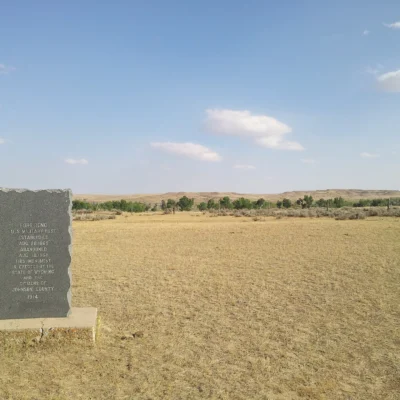
| Battlefield Site | Open grassland along the Tongue River where the attack and counterattack took place. The terrain is largely unchanged |
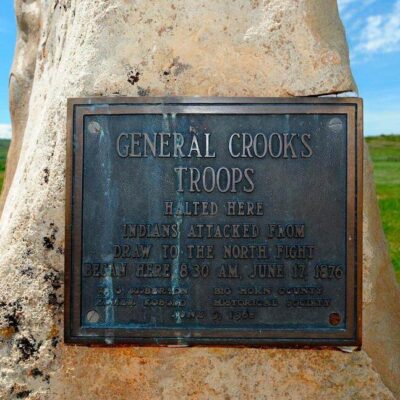
| Monument & Markers | Stone monument and interpretive markers telling the story of the battle from multiple perspectives |
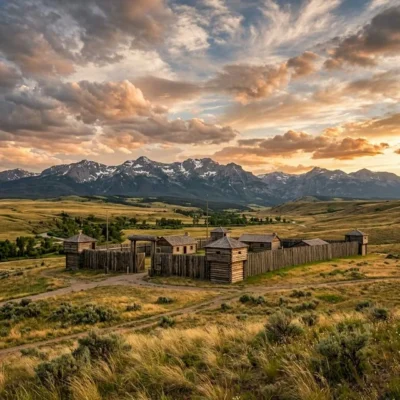
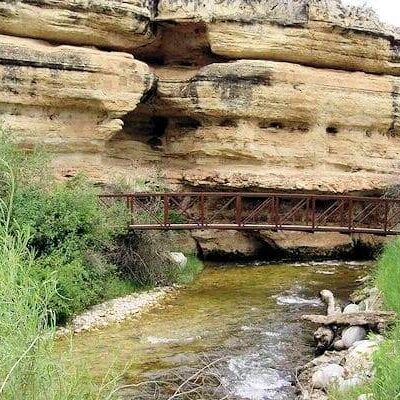
| Tongue River Valley | The beautiful river valley that drew the Arapaho here — rich hunting grounds at the base of the Bighorn Mountains |
| Bighorn Mountain Backdrop | The battlefield sits at the edge of the Bighorn Mountains. The same landscape the Arapaho, Lakota, and Cheyenne fought to protect |
Best Time to Visit
| Season | Best For |
|---|---|
| Summer (Jun–Aug) | ☀️ Battle anniversary is August 29. Green valley. Long days. Bighorn Mountains in full glory |
| Fall (Sep–Oct) | 🍂 Golden cottonwoods along the Tongue River. Cool weather. Spectacular Bighorn foliage |
| Spring (May–Jun) | Wildflowers. Snowmelt in the Bighorns. Green grasslands |
| Winter (Nov–Mar) | Cold and snowy. The site is accessible but isolated. This is what the Arapaho faced after their village was burned |
Frequently Asked Questions
Did Connor’s orders really say to kill every male over twelve?
Yes. Connor’s General Order No. 2 for the Powder River Expedition stated: “You will not receive overtures of peace or submission from Indians, but will attack and kill every male Indian over twelve years of age.” While this order was not fully carried out, it reveals the brutality of U.S. military policy on the Plains.
What happened to the Arapaho after the battle?
They lost their village, their horses, and their winter food — but they survived. The Northern Arapaho regrouped, allied with the Lakota and Cheyenne, and fought in the conflicts that followed, including Red Cloud’s War. Today, the Northern Arapaho live on the Wind River Reservation in central Wyoming.
Was the Powder River Expedition successful?
No — it was a military failure. Connor’s attack on the village was the expedition’s only engagement. Supply lines collapsed, other columns wandered aimlessly, and Connor was relieved of command. The expedition achieved nothing except hardening Native resistance.
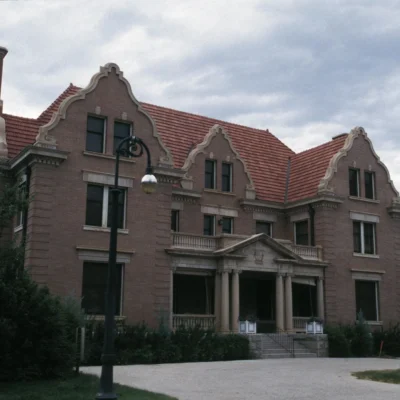
Keep exploring: The closest neighbors are Trail End (a short drive away) and Fort Phil Kearny (within about an hour’s drive).
⚔️ “Kill Every Male Over Twelve” — The Order That Started a Decade of War
250 tipis burned. 500 horses captured. Then the Arapaho counterattacked. The Powder River Expedition failed — but it lit a fuse that burned through Red Cloud’s War and all the way to Little Bighorn.
Wildlife & Nature
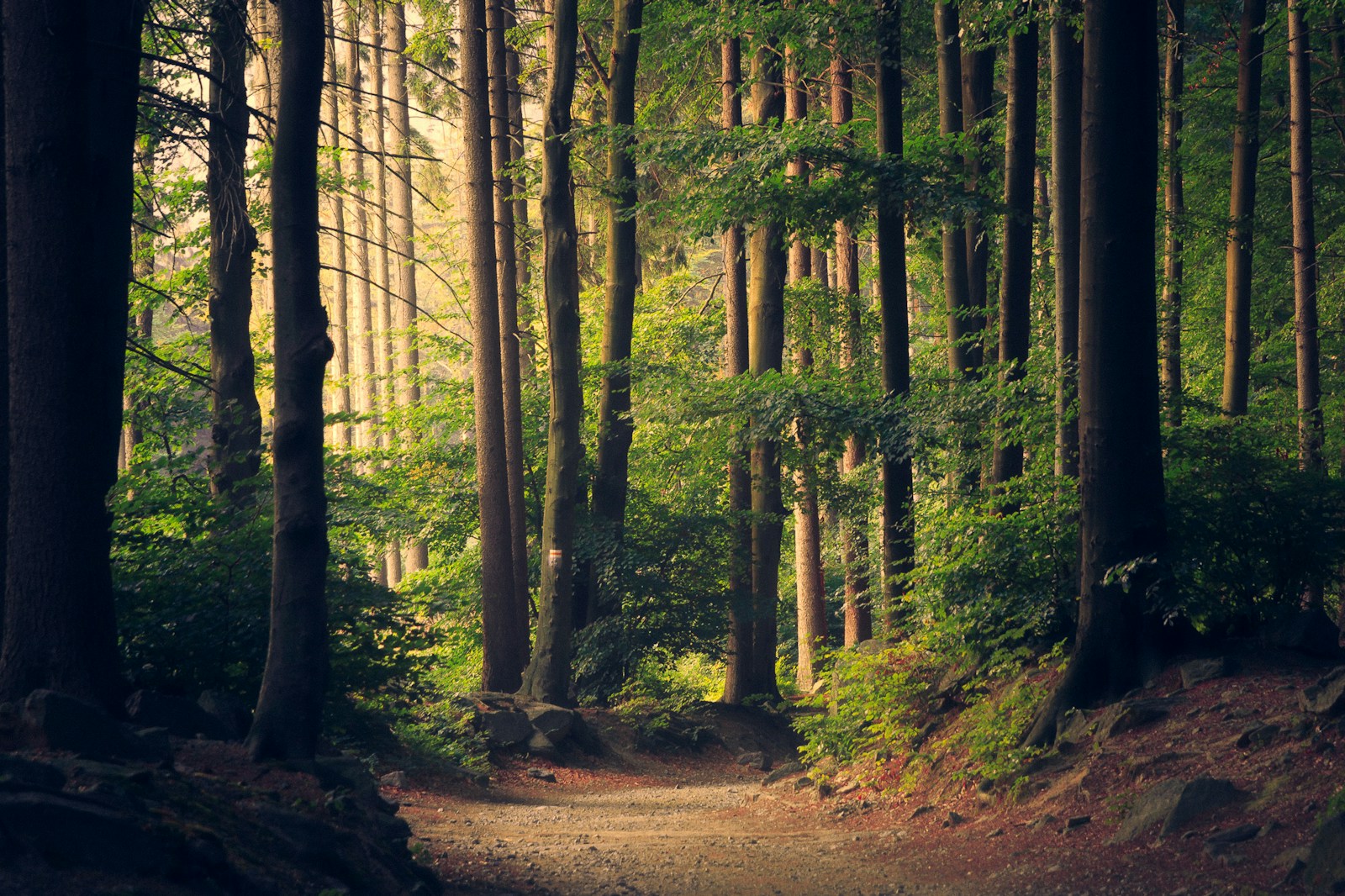
Connor Battlefield — the site of the 1865 Battle of Tongue River — General Patrick Connor’s attack on an Arapaho village during the Powder River Expedition. The battlefield’s Tongue River, prairie, and cottonwood groves support white-tailed deer, bald eagles, and pronghorn.
Nearby Attractions
Ranchester — adjacent. Sheridan — 15 miles south. Bighorn Mountains — to the west.

🐾 Dogs & Pets at Connor Battlefield
- Pets allowed? statewide rule
- Pets are welcome in Wyoming state parks, historic sites and recreation areas, but must be in a vehicle or on a leash whenever outside a camping unit.
- Leash rule statewide rule
- Leash no longer than 10 feet, physically controlled at all times (statewide rule)
- Beaches & swim areas statewide rule
- Pets are prohibited on designated beach areas statewide
- Cabins & lodging statewide rule
- Pets are prohibited in public buildings, eating places and food stores; no statewide pet-lodging policy published
- Statewide exceptions statewide rule
- Guide dogs are exempt; hunting dogs allowed where hunting is permitted; pets may not be left unattended longer than one hour; pets are prohibited in the reservoirs at Curt Gowdy State Park
Are dogs allowed at Connor Battlefield?
Pets are welcome in Wyoming state parks, historic sites and recreation areas, but must be in a vehicle or on a leash whenever outside a camping unit. Individual parks can post stricter rules — check signage on arrival.
Rules verified July 2026 via wyoparks.wyo.gov. More: Wyoming state parks guide · Dog rules in all 50 states compared
Park Location
Plan your gear for Connor Battlefield
From our editorial guides, matched to this park’s activities: