Dinosaur Valley State Park
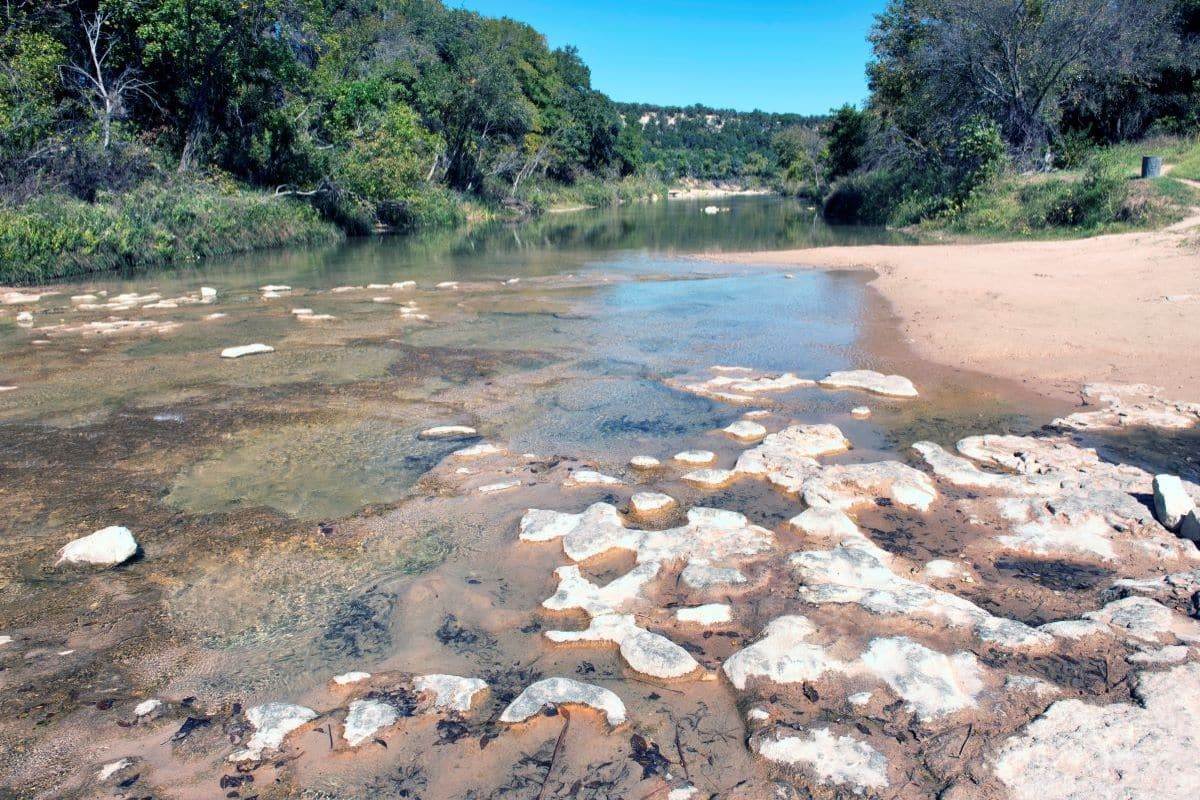
You’re standing in the Paluxy River, cool water flowing over your ankles, looking down at a three-toed footprint the size of a dinner platter pressed into the limestone. This print was made 113 million years ago—give or take a few million—by a theropod dinosaur that walked through soft mud along the shore of a vast shallow sea. That footprint dried, was buried under layers of sediment, turned to stone, and waited 113 million years for you to find it.
Welcome to Dinosaur Valley State Park, one of the most remarkable paleontological sites in the world and the only place on Earth where you can walk through a riverbed among hundreds of perfectly preserved dinosaur tracks. Located an hour southwest of Fort Worth in the small town of Glen Rose, this Texas treasure offers not just a glimpse into the age of dinosaurs, but also swimming holes, 20+ miles of trails, and camping among the limestone bluffs of the Hill Country.
The park preserves trackways of both theropods (meat-eating dinosaurs walking on two powerful legs) and sauropods (massive long-necked herbivores leaving elephant-sized footprints). When paleontologist R.T. Bird discovered the sauropod tracks here in 1938, it was the first proof that these giant dinosaurs walked on land rather than floating in swamps—a discovery that rewrote everything we thought we knew about sauropod behavior.
What Makes Dinosaur Valley Extraordinary
Real Dinosaur Tracks
113-million-year-old footprints in the riverbed—walk where dinosaurs walked.
Blue Hole
20-foot-deep swimming hole with crystal-clear water in the Paluxy River.
20+ Miles of Trails
Hiking and mountain biking through limestone bluffs and river valleys.
World’s Fair Dinosaurs
Life-size T-Rex and Brontosaurus replicas from the 1964 World’s Fair.
The Dinosaur Tracks: A 113-Million-Year Story
The tracks at Dinosaur Valley formed during the Early Cretaceous period, when this part of Texas was a shallow coastal zone along the edge of an ancient inland sea. Dinosaurs—both carnivores and herbivores—walked through soft, limy mud that perfectly preserved their footprints before hardening into limestone.
How the Tracks Were Made
- 🦖 Step 1: Dinosaurs walk through soft, wet mud along a tidal flat
- ☀️ Step 2: The mud dries and hardens in the sun
- 🌊 Step 3: Incoming tides deposit layers of sediment over the tracks
- ⛰️ Step 4: Over millions of years, layers compress into limestone
- 💧 Step 5: The Paluxy River erodes overlying rock, exposing the tracks
Types of Tracks
| Track Type | Description | Dinosaur |
|---|---|---|
| 🦖 Theropod | Three-toed, bird-like prints; up to 24″ long | Acrocanthosaurus (large carnivore) |
| 🦕 Sauropod | Massive, elephant-like; up to 3 feet across | Sauroposeidon or similar (giant herbivore) |
The Five Track Sites
The park contains five primary areas where dinosaur tracks are visible, all along the Paluxy River:
| Site | Track Types | Highlights |
|---|---|---|
| ⭐ Main Track Site | Sauropod + Theropod | R.T. Bird’s original discovery; best preserved sauropod trackway |
| 💧 Blue Hole | Theropod | Tracks on limestone ledge + deepest swimming hole (20ft) |
| 💃 Ballroom Site | Theropod | Hundreds of tracks in all directions—”dancing” dinosaurs |
| 🔍 Denio Branch Site | Various | Less visited; potentially lower water levels |
| 🦶 Other Sites | Various | Scattered tracks throughout riverbed |
⚠️ Track Visibility Warning
Water levels dramatically affect track visibility. After heavy rains, tracks may be underwater or covered in sediment. During droughts, tracks are exceptionally clear. Call the park (254-897-4588) before visiting to check current visibility conditions.
The R.T. Bird Discovery
In 1938, paleontologist Roland T. Bird was investigating reports of giant footprints near Glen Rose. What he found changed paleontology forever: a complete sauropod trackway showing a massive herbivore walking on solid ground. Until then, scientists believed sauropods were too heavy to walk on land and must have lived mostly in water. Bird’s discovery proved they were fully terrestrial—one of the most important paleontological finds of the 20th century.
Swimming: Blue Hole & Beyond
The Paluxy River provides excellent swimming, with the star attraction being the Blue Hole:
| Swim Spot | Depth | Features |
|---|---|---|
| 💙 Blue Hole | ~20 feet | Crystal clear; rope swing; dinosaur tracks on ledge |
| 🏊 Main Track Area | Shallow | Wading depth; excellent for kids; tracks visible |
| 💧 Various Pools | Varies | Scattered along Paluxy River |
🏊 Swimming Tips
- Water clarity is best during dry periods with low flow
- After rains, the river may be murky and higher
- No lifeguards—swim at your own risk
- Summer weekends are crowded; arrive early
- Bring water shoes—the riverbed is rocky
Hiking & Biking Trails
The park offers over 20 miles of trails for hiking and mountain biking through diverse Texas Hill Country terrain:
| Trail | Distance | Difficulty | Highlights |
|---|---|---|---|
| 🦖 Dinosaur Track Trail | 0.5 mi | Easy | Main access to track sites along river |
| 🌲 Limestone Bluff Trail | ~2 mi | Moderate | River overlooks, bluff views |
| 🚴 North/South Loop | ~10 mi | Moderate-Difficult | Mountain biking; technical sections |
| 🐴 South Primitive Area | Varies | Moderate | 100 acres; equestrian access |
The World’s Fair Dinosaurs
Near the park entrance stand two massive fiberglass dinosaur replicas—a T-Rex and a Brontosaurus—that have a remarkable history of their own. These sculptures were created for Sinclair Oil’s exhibit at the 1964 New York World’s Fair, where they wowed millions of visitors.
After the fair, they were donated to Texas and have stood sentinel at Dinosaur Valley since 1970. Though scientifically outdated (we now know Brontosaurus posture was different), they remain beloved icons and a perfect photo op for families.
Camping
Dinosaur Valley offers multiple camping options:
| Camp Type | Sites | Features |
|---|---|---|
| 🔌 Water/Electric | ~40 | RV-friendly, pads, fire rings |
| ⛺ Walk-In Tent | ~8 | More private, short walk from parking |
| 🥾 Hike-In Primitive | ~6 | Backcountry experience, 1-2 mile hike |
| 👥 Group Sites | 2 | For organized groups |
📅 Reservation Tips
- Weekends book quickly—reserve months in advance
- Summer and spring break are peak seasons
- Hike-in sites offer more solitude
When to Visit
☀️ Summer (June – August)
Peak season. Swimming in the Paluxy is at its best. Tracks may be underwater if summer storms hit, but dry periods offer excellent visibility. Expect crowds on weekends—arrive early. Hot and humid.
Best for: Swimming, families, full park experience
🌸 Spring (March – May)
Wildflower season in the Hill Country. Water levels vary—good track visibility between rain events. Spring break is extremely busy. Comfortable hiking temperatures. Excellent birding (Golden-cheeked Warblers arrive).
Best for: Hiking, birding, wildflowers
🍂 Fall (September – November)
Excellent. River levels typically drop, making tracks more visible. Crowds thin after summer. Comfortable temperatures for hiking and camping. Some fall color in hardwoods.
Best for: Track viewing, photography, camping
❄️ Winter (December – February)
Low season. Fewer visitors, excellent track visibility when river is low. Some days cold, but Texas winters are mild. Swimming is for the brave only. Best time for solitude.
Best for: Serious track viewing, hiking, avoiding crowds
Practical Information
| Item | Details |
|---|---|
| 🎟️ Entry Fee | $7/adult (13+); free under 12 |
| 🏕️ Camping | From $15/night (primitive) to $25+ (electric) |
| 🏪 Park Store | Snacks, souvenirs, kayak rentals |
| 📶 Cell Service | Limited in some areas |
| 📞 Track Conditions | Call (254) 897-4588 before visiting |
Getting There
- 📍 Address: 1629 Park Rd 59, Glen Rose, TX 76043
- 📍 From Fort Worth: ~1 hour southwest via US-67
- 📍 From Dallas: ~1.5 hours southwest via US-67
- 📍 From Waco: ~45 minutes northwest
Frequently Asked Questions
Are the dinosaur tracks always visible?
No. Visibility depends heavily on water levels. After heavy rains, tracks may be submerged or covered in sediment. During dry periods, visibility is excellent. Always call the park (254-897-4588) before visiting for current conditions.
Can I touch the dinosaur tracks?
Yes—you can walk among and touch the tracks. However, do not dig, pry, or attempt to remove anything. The tracks have survived 113 million years; treat them with respect.
Are the giant dinosaur statues real fossils?
No—they’re fiberglass replicas created for the 1964 New York World’s Fair. They’re scientifically outdated but remain popular photo opportunities.
Can I swim where the dinosaur tracks are?
Yes. The Blue Hole area has both dinosaur tracks and excellent swimming. The Main Track Site area is shallower and better for wading.
Is the park kid-friendly?
Absolutely. Kids love seeing real dinosaur footprints, wading in the river, and visiting the giant dinosaur statues. The main track areas are easily accessible.
When is the best time to see tracks?
Fall and winter typically have the lowest water levels and best visibility. Call ahead for current conditions.
Is Dinosaur Valley State Park worth visiting?
Absolutely. With a 4.7-star rating and over 4,600 reviews, Dinosaur Valley is one of Texas’s most unique parks. Where else can you wade through a river and touch 113-million-year-old footprints? Combine that with the Blue Hole swimming, beautiful Hill Country trails, and the kitschy World’s Fair dinosaurs—it’s an unforgettable experience for all ages.
Are the dinosaur tracks real or fake?
The tracks in the Paluxy River are 100% real—scientifically verified, 113-million-year-old footprints preserved in limestone. They are among the best-preserved dinosaur trackways in the world. The giant T-Rex and Brontosaurus statues near the entrance ARE fake (fiberglass replicas from 1964), but the actual tracks are absolutely authentic.
How long does it take to explore Dinosaur Valley State Park?
Plan 2-4 hours minimum to see the main dinosaur tracks, wade in the river, and visit the dinosaur statues. If you want to hike the trails, swim at Blue Hole, or camp overnight, you could easily spend a full day or weekend. Many families combine it with nearby Dinosaur World for a full “dino day.”
🦖 Walk Where Dinosaurs Walked
There is nowhere else on Earth quite like Dinosaur Valley State Park—a place where you can wade into a Texas river and stand in footprints made by creatures that vanished 65 million years ago. The tracks are real. The swimming is excellent. The trails are beautiful. And the fiberglass dinosaurs from the ’64 World’s Fair are wonderfully kitschy. Come for the paleontology, stay for the swimming holes, and leave with a memory of touching history that’s 113 million years old.
📍 Address: 1629 Park Rd 59, Glen Rose, TX 76043
📞 Phone: (254) 897-4588