🌤 Weather at Fisherman’s Island State Park by season
| Spring | Summer | Fall | Winter |
|---|---|---|---|
| 22–61 °F | 54–76 °F | 34–70 °F | 16–34 °F |
Each range runs from the coldest monthly average low to the warmest monthly average high in that season (1991-2020 climate normals), measured at Charlevoix, 4 mi away, elevation 593 ft. Conditions at the park can differ from the station, especially where elevation differs — check a forecast before you go.

🪨 Where Lake Michigan Hides Its Petoskey Stones — 5 Miles of Wild Shoreline, Ancient Fossils, and Northern Michigan’s Best-Kept Secret — Fisherman’s Island State Park near Charlevoix, Michigan, 5 miles of undeveloped Lake Michigan shoreline, Petoskey stone hunting, rocky and sandy beaches, dune formations, wildflower meadows, 81 rustic campsites, hiking trails through cedar forests and dunes, Beaver Island views, birding (Piping Plover habitat), 2,678 acres, limestone fossils — Charlevoix County, MI
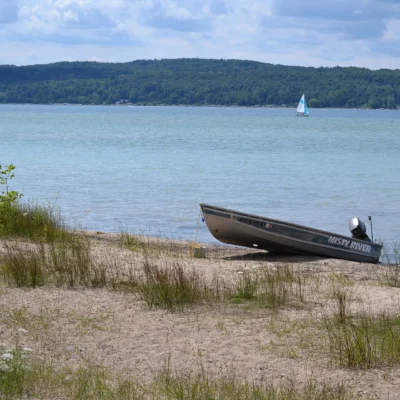
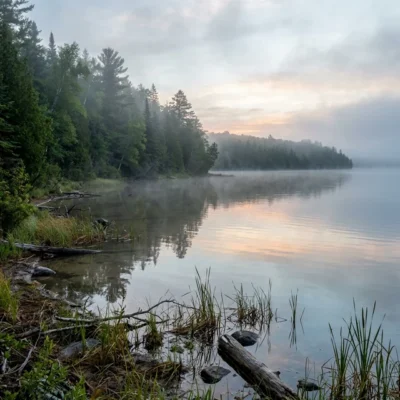
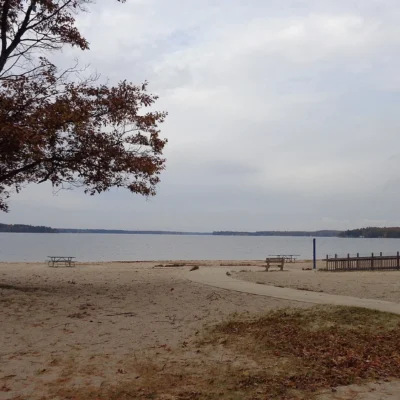
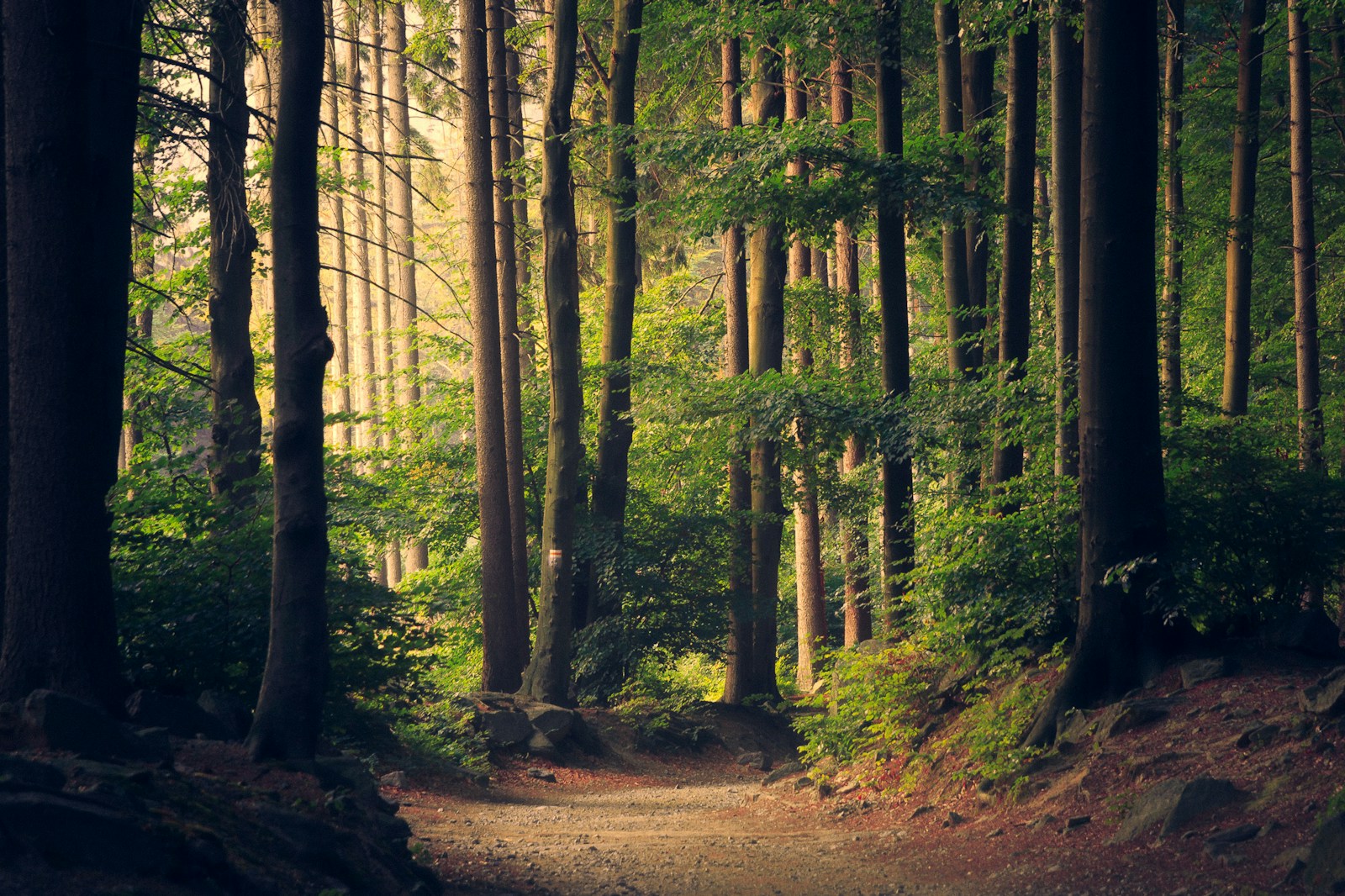
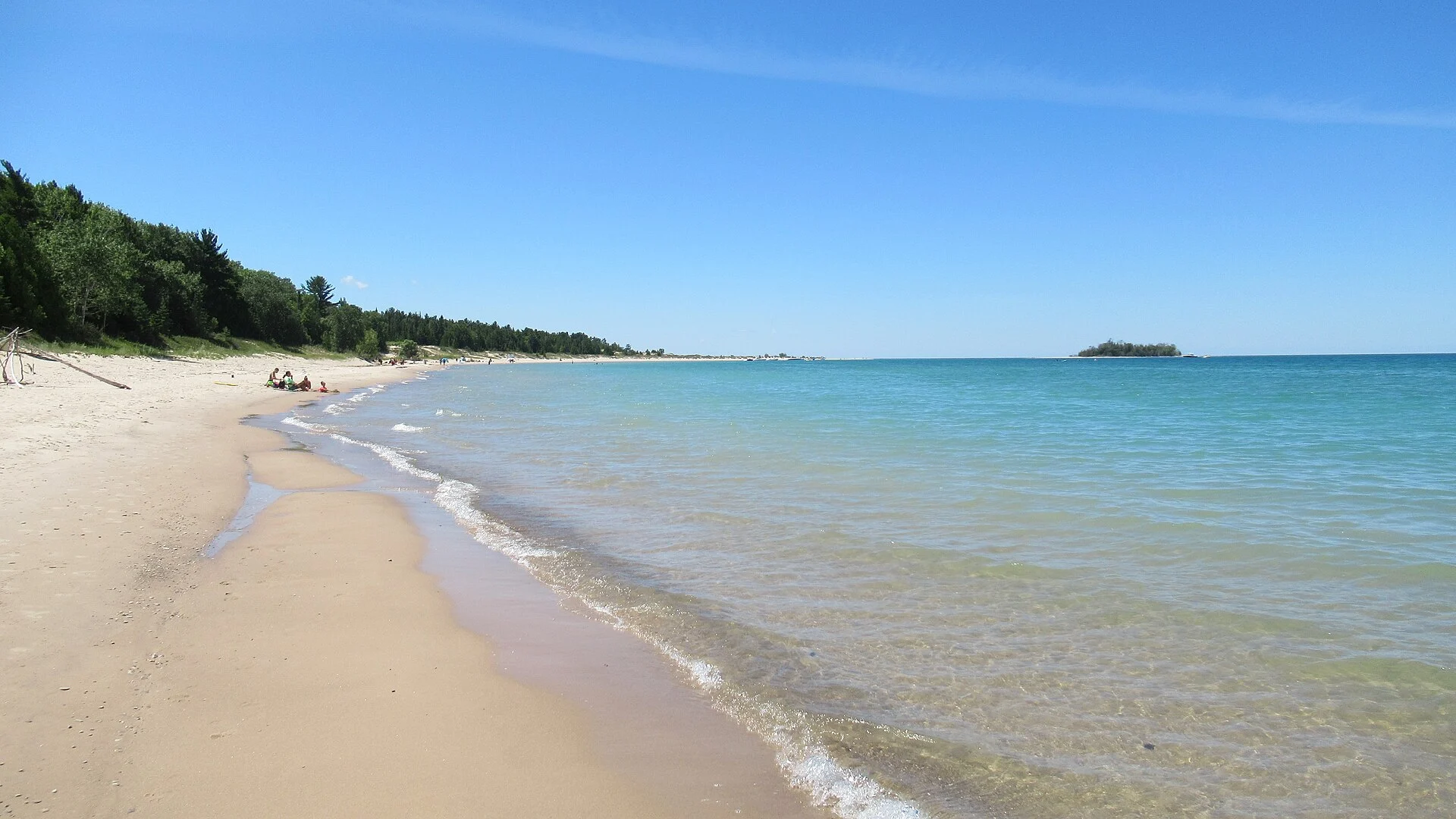
Five miles of Lake Michigan shoreline with no development, no boardwalk, no condos — just cobblestone beaches, sand dunes, cedar forests, and one of the best places in Michigan to find Petoskey stones, the state’s official fossil.
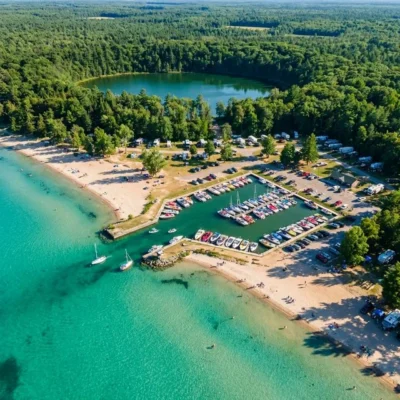
Fisherman’s Island sits just south of Charlevoix, but it feels like a different world. While the resort towns fill with tourists every summer, this 2,678-acre park remains Northern Michigan’s best-kept secret — quiet, wild, and largely undiscovered.
What to Do
| Activity | Details |
|---|---|
| Petoskey Stone Hunting | Rocky Lake Michigan shoreline is prime territory for Michigan’s state fossil — 350-million-year-old colonial coral (Hexagonaria percarinata). Best found when wet |
| Beachcombing | 5 miles of undeveloped shoreline mixing cobblestone, sand, and rocky stretches. Limestone fossils, Lake Michigan glass, driftwood |
| Hiking | Trails through cedar forests, dune ridges, and wildflower meadows. Moderate terrain with Lake Michigan views |
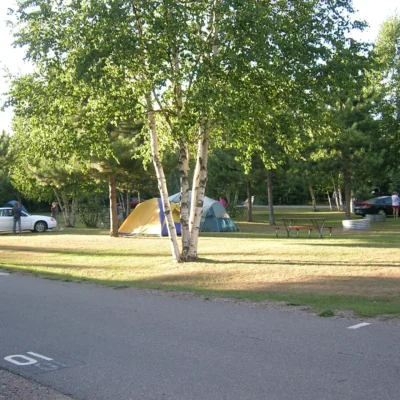
| Camping | 81 rustic sites — no electricity, no water hookups. Pit toilets. Close to the beach. Reservable through Michigan State Parks |
| Birding | Critical Piping Plover nesting habitat (federally endangered). Shorebirds, warblers, hawks during migration. Part of the Lake Michigan flyway |
| Swimming | Lake Michigan — cold, clean, clear. No lifeguards. Sandy stretches between rocky areas |
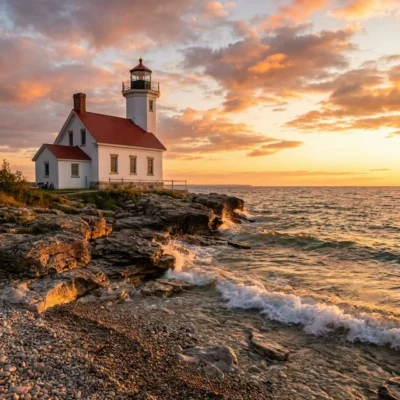
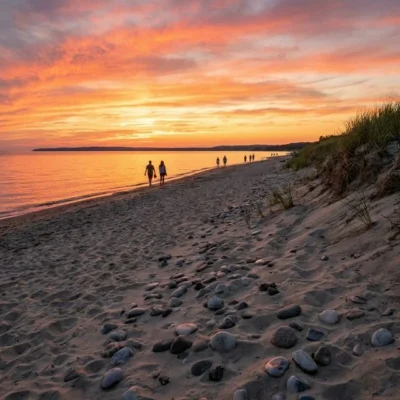
| Sunset Watching | West-facing shoreline. Lake Michigan sunsets from 5 miles of unobstructed horizon |
Petoskey Stones
The Petoskey stone is a fossilized colonial coral — Hexagonaria percarinata — that lived in the warm shallow seas covering Michigan 350 million years ago during the Devonian Period. When wet, the distinctive hexagonal pattern of individual coral organisms becomes visible on the surface of an otherwise ordinary-looking gray stone.
Fisherman’s Island is one of the best places to find them because the park’s rocky shoreline constantly exposes new stones through wave action. The trick: look for gray, rounded stones and wet them. If a honeycomb pattern appears, you’ve found one.
Natural Features
| Feature | Details |
|---|---|
| Dune Complex | Ancient Lake Michigan dunes covered in juniper, bearberry, and wildflowers. Fragile ecosystem — stay on trails |
| Cedar Forests | Mature northern white cedar stands — cool, shaded, moss-carpeted. Classic Northern Michigan forest |
| Wildflower Meadows | Lupine, dune grass, wild iris, bearberry. Peak bloom in June |
| Beaver Island Views | On clear days, the silhouette of Beaver Island — Michigan’s most remote inhabited island — is visible on the western horizon |
Best Time to Visit
| Season | Best For |
|---|---|
| Summer (Jun–Aug) | 🪨 Prime Petoskey stone hunting. Swimming (Lake Michigan warms to 65–70°F by August). Camping. Wildflowers |
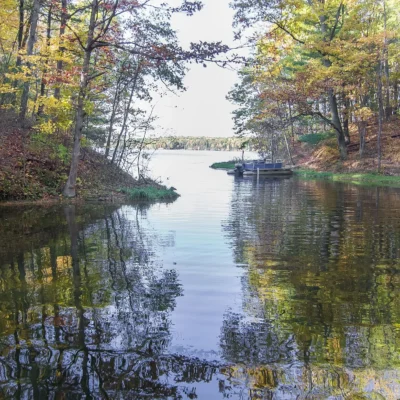
| Fall (Sep–Oct) | 🍂 Northern Michigan fall color. Empty beaches. Fewer campers. Hawk migration |
| Spring (May–Jun) | Wildflower bloom. Shorebird nesting. Lake too cold for most swimmers |
| Winter (Dec–Mar) | Lake Michigan ice formations. Snowshoeing. Park largely inaccessible |
Frequently Asked Questions
Is this actually an island?
No — despite the name, Fisherman’s Island State Park is on the mainland. The name refers to a small island just offshore. The park itself is a 5-mile stretch of Lake Michigan coastline south of Charlevoix.
How do I find Petoskey stones?
Walk the rocky shoreline and look for rounded gray stones. Wet them — if a hexagonal honeycomb pattern appears, it’s a Petoskey stone. After rain and wave action are the best times. The park’s cobblestone beaches are among the best hunting grounds in Michigan.
Is the camping really rustic?
Yes — no electricity, no water hookups, pit toilets. That’s the trade-off for camping steps from 5 miles of wild Lake Michigan shoreline. Bring water and be prepared for a true outdoor experience.
Can I see Piping Plovers?
Possibly — the park is critical nesting habitat for the federally endangered Piping Plover. Nesting areas are marked and closed to public access May–August. Observe from a distance and follow all posted guidelines.
More parks nearby: Young State Park is a short drive away, while Leelanau State Park lies within about an hour’s drive.
Camping reservations: Book campsites and cabins for Michigan state parks online at midnrreservations.com.
🪨 5 Miles of Wild Lake Michigan
Petoskey stones on cobblestone beaches. Cedar forests. Dune wildflowers. Lake Michigan sunsets from an undeveloped shoreline. Northern Michigan’s quietest secret.
Wildlife & Nature
Fisherman’s Island SP — 5 miles of pristine Lake Michigan beach — has Petoskey stone hunting and piping plover nesting habitat. Bald eagles and black bears inhabit the cedar forest. Limestone cobbles line the shore.
Nearby Attractions
Charlevoix — 5 miles north. Petoskey — 20 miles north. Beaver Island — by ferry from Charlevoix.

🐾 Dogs & Pets at Fisherman’s Island State Park
- Pets allowed? statewide rule
- Pets are welcome in Michigan state parks, campgrounds, harbors and state-designated trails, except designated swim beaches and other posted areas.
- Leash rule statewide rule
- Pets must always be on a 6-foot leash and under the owner's immediate control.
- Beaches & swim areas statewide rule
- Pets are prohibited in buoyed swim areas but allowed along the shoreline outside them (on a 6-ft leash, even in the water); 50+ parks have pet-friendly shoreline or designated dog beaches.
- Cabins & lodging statewide rule
- Up to two pets (cats and dogs only) allowed at ~12 parks' designated pet-friendly cabins, yurts and lodges; $10 per night per pet (cabins) or $15 (lodges); otherwise pets barred from overnight lodging.
- Pet fees statewide rule
- No day-use pet fee; pet-friendly lodging costs $10/night per pet (cabins) or $15/night per pet (lodges).
- Statewide exceptions statewide rule
- Leash laws do not apply to dogs used for hunting on land open to such use; pets may not be left unattended.
Are dogs allowed at Fisherman’s Island State Park?
Pets are welcome in Michigan state parks, campgrounds, harbors and state-designated trails, except designated swim beaches and other posted areas. Individual parks can post stricter rules — check signage on arrival.
Rules verified July 2026 via michigan.gov. More: Michigan state parks guide · Dog rules in all 50 states compared
Park Location
Plan your gear for Fisherman’s Island State Park
From our editorial guides, matched to this park’s activities: