🌤 Weather at Hartwick Pines State Park by season
| Spring | Summer | Fall | Winter |
|---|---|---|---|
| 16–67 °F | 51–80 °F | 26–71 °F | 9–32 °F |
Each range runs from the coldest monthly average low to the warmest monthly average high in that season (1991-2020 climate normals), measured at Grayling, 6 mi away, elevation 1,137 ft. Conditions at the park can differ from the station, especially where elevation differs — check a forecast before you go.

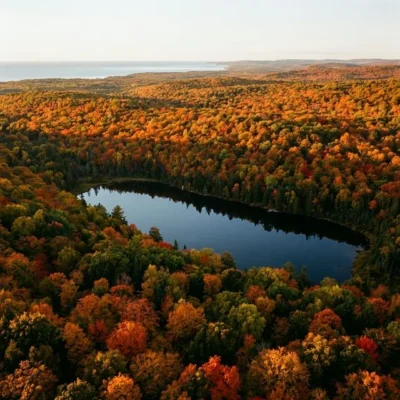
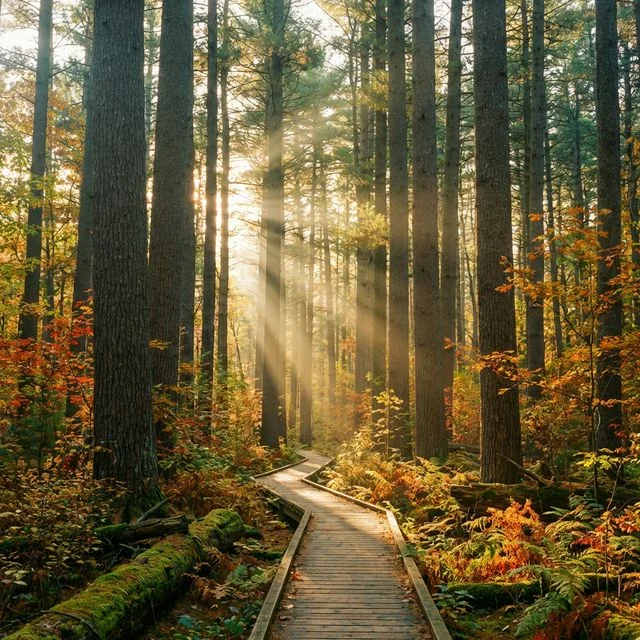
Hartwick Pines State Park protects the largest remaining stand of old-growth white pines in the Lower Peninsula—a 49-acre virgin forest with trees up to 350 years old and 150 feet tall! Walk the paved Old Growth Trail, explore Michigan’s incredible Logging Museum with its 1914 steam sawmill, and discover 21 miles of year-round trails through this 9,700-acre wilderness.
🔧 Visitor Center Renovation 2026
- Weekends Only: Jan 17 – April 2026 (partial)
- Closes again: May 2026 to finalize renovations
- Access: Use lower parking lot; trails/museum remain open
Old-Growth Forest
| Virgin Forest Facts | Details |
|---|---|
| 🌲 Grove Size | 49 acres (original 86, reduced by 1940 storm) |
| ⏳ Tree Age | 350-375 years old |
| 📏 Tree Height | 150-160 feet |
| 📐 Trunk Girth | 4+ feet diameter |
| 🏆 Significance | Largest old-growth in Lower Peninsula |
Logging Museum
| Museum Features | Details |
|---|---|
| 🏛️ Built By | CCC (1930s) |
| 🏕️ Recreated Camp | 1890s logging camp (bunkhouse, cook’s cabin, mess hall, blacksmith) |
| 🔧 Steam Sawmill | 1914 (occasionally fired up!) |
| 👨🍳 Interpreters | Costumed demos (summer) |
| 📅 Open | Daily May 1 – Sept 1; weekends Sept 2 – Oct 31 |
Trails
| Trail | Details |
|---|---|
| 🌲 Old Growth Forest Trail | 1.25mi, paved, accessible |
| 🥾 Total Miles | 21 miles year-round |
| 🚴 Mountain Biking | Multi-use trails |
| ⛷️ Cross-Country Skiing | Groomed mid-Dec – Feb |
Wildlife & Nature
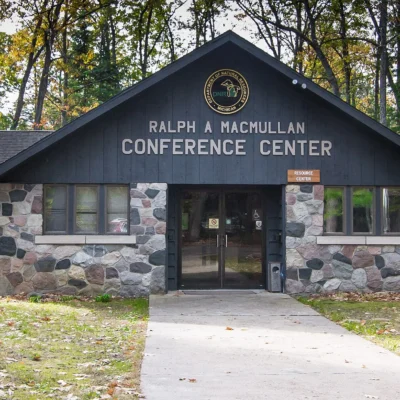
Hartwick Pines SP — 9,672 acres near Grayling — preserves the largest stand of old-growth white pines in the Lower Peninsula. The 49-acre Old Growth Forest — with trees up to 300 years old and 155 feet tall — survived Michigan’s logging era. The Michigan Forest Visitor Center tells the logging story. Pileated woodpeckers (the largest in N. America) drum the ancient trees. Black bears roam the surrounding forest.
Nearby Attractions
Grayling — adjacent — has the Au Sable River (canoeing capital of Michigan). Kirtland’s Warbler (endangered) — nests in the young jack pine forests near Grayling. North Higgins Lake SP — 20 miles south — has the “most beautiful lake in the world.”
How old are the white pines?
The old-growth white pines are estimated to be 350-375 years old, reaching heights of 150-160 feet with trunks over 4 feet in diameter. This 49-acre grove is the largest stand of virgin white pine remaining in Michigan’s Lower Peninsula.
What is the Logging Museum like?
The CCC-built Logging Museum features a recreated 1890s logging camp with bunkhouse, cook’s cabin, mess hall, and blacksmith shop. The centerpiece is a 1914 steam-powered sawmill that’s occasionally fired up during warm months. Costumed interpreters offer hands-on demos in summer.
Is the Visitor Center open?
The Visitor Center is under renovation ($3.25M project). It’s open weekends only from Jan 17 – April 2026, then closes again in May 2026 to complete work. Access trails and the Logging Museum via the lower parking lot during renovations.
What happened to the original 86-acre grove?
Karen Michelson Hartwick donated over 8,000 acres including 86 acres of old-growth pine in 1927, stipulating the forest could never be logged. A 1940 windstorm toppled many trees, reducing the virgin grove to its current 49 acres.
Can I camp at the park?
Hartwick Pines is a day-use park—there is no overnight camping. However, there are 21 miles of trails for hiking, mountain biking, and cross-country skiing (groomed mid-Dec through Feb). A vehicle permit is required for entry.
🌲 Michigan’s Ancient Forest
Walk among 350-year-old white pines and explore the 1890s logging heritage. Visit the official Hartwick Pines State Park website for current conditions.
Explore More Michigan State Parks
Hartwick Pines State Park is one of many outstanding state parks in Michigan. Discover more parks in our Best State Parks in Michigan guide, or use our Park Finder to search by activity, location, or features.
Make it a road trip: Pair a visit with Otsego Lake State Park (a short drive away) or Higgins Lake North State Park (within about an hour’s drive).

⛺ Camping at Hartwick Pines State Park: Campgrounds & Cabins
| Campsites | 100 sites — Hartwick Pines Modern Campground: 100 sites; 4 ADA-accessible sites (52, 54, 86, 87); amphitheater and concession/store on-site. |
|---|---|
| Cabins & Lodging | Hartwick Pines Rustic Cabin: adjacent to Bright Lake, one-room, sleeps up to 7; vault toilet nearby; bring own bedding/cooking supplies. |
| Pets | Not specifically stated in park amenities list. |
| Reservations | midnrreservations.com or 1-800-447-2757. Recreation Passport required for vehicle entry. |
| Special sites | Rustic group-use area for up to 100 people, 2 sites (call park, 989-348-7068); 2 undeveloped/gravel boating access sites (no skid piers) on Glory & Bright lakes. |
| Season notes | Snowmobiling permitted on open-land portion only, not on park trails; sanitation station in modern campground. |
Camping questions about Hartwick Pines State Park
Can you camp at Hartwick Pines State Park?
Yes. Hartwick Pines State Park has 100 campsites. Hartwick Pines Modern Campground: 100 sites; 4 ADA-accessible sites (52, 54, 86, 87); amphitheater and concession/store on-site.
How do you reserve a campsite at Hartwick Pines State Park?
midnrreservations.com or 1-800-447-2757. Recreation Passport required for vehicle entry.
Are there cabins at Hartwick Pines State Park?
Hartwick Pines Rustic Cabin: adjacent to Bright Lake, one-room, sleeps up to 7; vault toilet nearby; bring own bedding/cooking supplies.
Are pets allowed at the Hartwick Pines State Park campground?
Not specifically stated in park amenities list.
Source: michigan.gov (verified July 2026). Details change seasonally — confirm when booking.
🐾 Dogs & Pets at Hartwick Pines State Park
- Pets allowed? statewide rule
- Pets are welcome in Michigan state parks, campgrounds, harbors and state-designated trails, except designated swim beaches and other posted areas.
- Leash rule statewide rule
- Pets must always be on a 6-foot leash and under the owner's immediate control.
- Beaches & swim areas statewide rule
- Pets are prohibited in buoyed swim areas but allowed along the shoreline outside them (on a 6-ft leash, even in the water); 50+ parks have pet-friendly shoreline or designated dog beaches.
- Cabins & lodging statewide rule
- Up to two pets (cats and dogs only) allowed at ~12 parks' designated pet-friendly cabins, yurts and lodges; $10 per night per pet (cabins) or $15 (lodges); otherwise pets barred from overnight lodging.
- Pet fees statewide rule
- No day-use pet fee; pet-friendly lodging costs $10/night per pet (cabins) or $15/night per pet (lodges).
- Statewide exceptions statewide rule
- Leash laws do not apply to dogs used for hunting on land open to such use; pets may not be left unattended.
Are dogs allowed at Hartwick Pines State Park?
Pets are welcome in Michigan state parks, campgrounds, harbors and state-designated trails, except designated swim beaches and other posted areas. Individual parks can post stricter rules — check signage on arrival.
Rules verified July 2026 via michigan.gov. More: Michigan state parks guide · Dog rules in all 50 states compared
Park Location
Plan your gear for Hartwick Pines State Park
From our editorial guides, matched to this park’s activities: