🌤 Weather at Johnson-Sauk Trail State Recreation Area by season
| Spring | Summer | Fall | Winter |
|---|---|---|---|
| 27–72 °F | 60–84 °F | 30–76 °F | 14–36 °F |
Each range runs from the coldest monthly average low to the warmest monthly average high in that season (1991-2020 climate normals), measured at Kewanee 1 E, 6 mi away, elevation 780 ft. Conditions at the park can differ from the station, especially where elevation differs — check a forecast before you go.

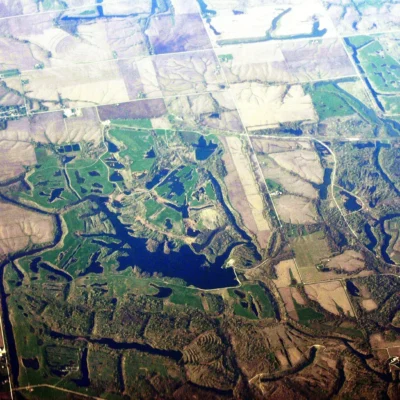
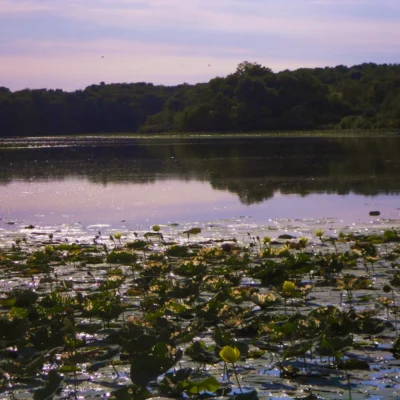
Named for the ancient Sauk Indian trail that once crossed this landscape, Johnson-Sauk Trail State Recreation Area encompasses 1,361 acres of rolling prairie, timber, and wetland in Henry County, west-central Illinois. At its center lies the 58-acre Sauk Trail Lake, ringed by woodland and open meadow — a quiet retreat that draws anglers, hikers, and history enthusiasts alike to one of the state’s most distinctive recreation areas.
The Historic Round Barn
The park’s most iconic feature is the Frank D. Lowden Round Barn, a massive three-story circular barn built in 1911 that is listed on the National Register of Historic Places. Originally part of the Sinnissippi Stock Farm — owned by former Illinois Governor Frank O. Lowden — the barn represents a peak in early 20th-century agricultural architecture. Its self-supporting roof spans 80 feet in diameter, and the building once housed prize-winning livestock. Today the barn serves as a historical exhibit and is a must-see stop for visitors to the park.
Hiking and Nature Trails
The park offers approximately 8 miles of marked trails that loop through oak-hickory forest, restored prairie, and along the lakeshore. The Sauk Trail follows a ridgeline through mature timber with views of the lake below. The Prairie Trail winds through a restored native grassland where big bluestem, compass plant, and purple coneflower bloom from June through September. A paved interpretive trail near the park office is wheelchair-accessible and features signage explaining the site’s natural and cultural history.
Fishing and Boating
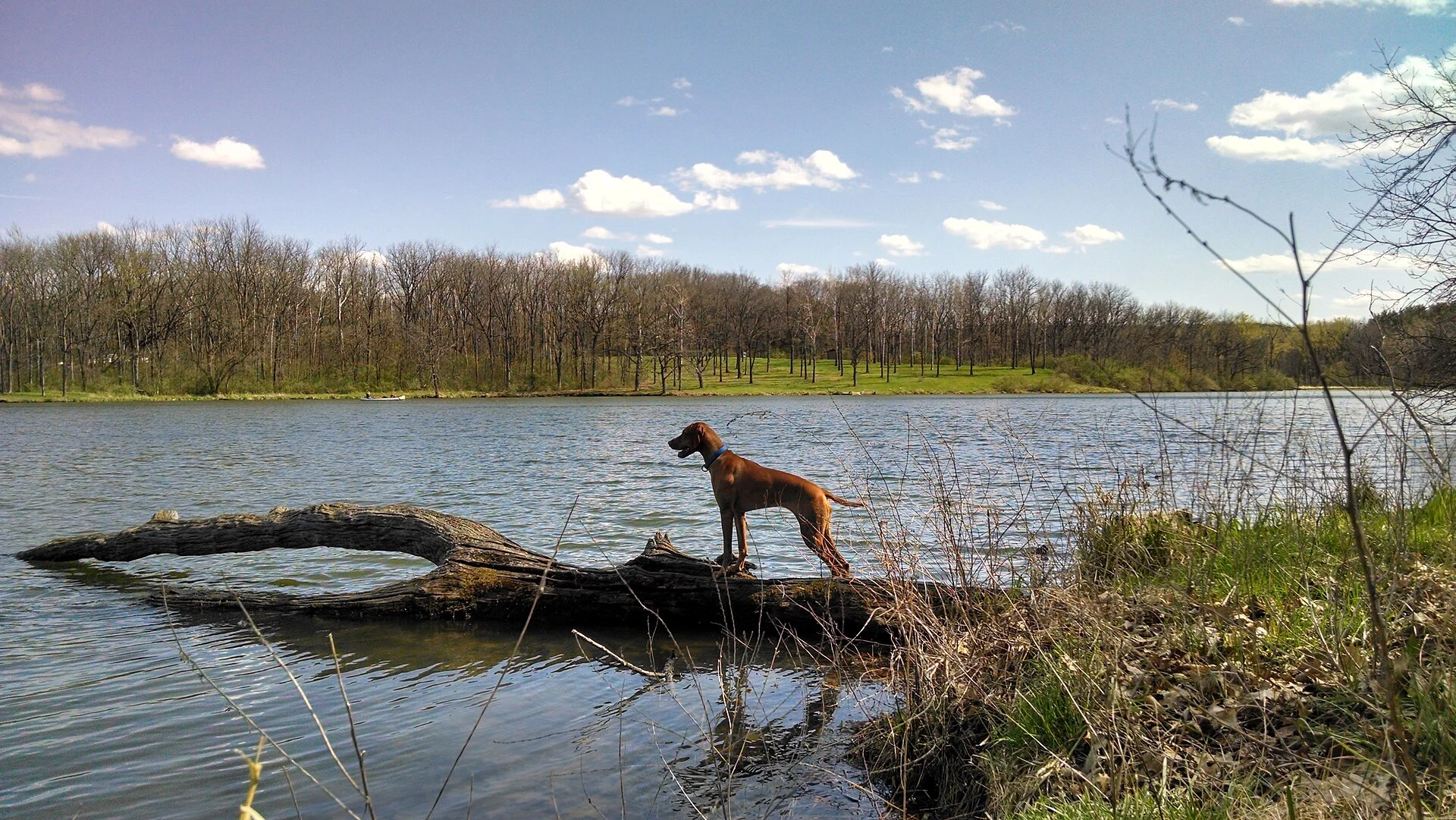
Sauk Trail Lake is regularly stocked and supports largemouth bass, channel catfish, bluegill, and crappie. Electric motors only are permitted, making the lake exceptionally peaceful for kayakers and canoeists. A concrete boat ramp and fishing dock provide easy lake access. Bank fishing is productive along the dam, near the inlet, and from a wheelchair-accessible fishing pier.
Camping
The park’s campground offers 87 Class A sites with electric hookups, modern restrooms with showers, and a sanitary dump station. Several walk-in tent sites provide a more secluded experience along the edge of the woods. An equestrian campground serves riders, with direct trail access from the sites. Reservations are available through the ExploreMoreIL™ system.
Winter Activities and Year-Round Access
Johnson-Sauk Trail is open year-round. Winter brings cross-country skiing and snowshoeing opportunities on the trail system, along with ice fishing on the lake. Spring mushroom hunting in the oak woods is a popular seasonal tradition, while autumn foliage transforms the Sauk Trail into one of the more scenic fall hikes in western Illinois.
Visitor Information
Johnson-Sauk Trail State Recreation Area is located 5 miles north of Kewanee on Route 78 in Henry County. The site office can be contacted at (309) 853-5589. Admission is free.
Wildlife & Nature
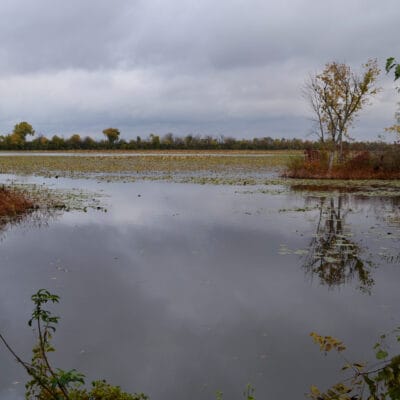
The Johnson-Sauk Trail area preserves a landscape shaped by the last Ice Age — the Wisconsin Glaciation (roughly 25,000-10,000 years ago) reached into northern Illinois, sculpting the rolling hills, depositing fertile drift soils, and creating the lakes and wetlands that characterize this region. South of the glacial boundary, the landscape transitions to older, more weathered terrain — a geological boundary visible in the topography. The park’s combination of forest, grassland, and wetland habitats supports high species diversity. American woodcock — chunky shorebirds that perform spectacular aerial courtship displays at dusk — breed in the forest edges. Their “sky dances” — spiral flights with twittering wingbeats — are one of spring’s most captivating wildlife performances.
Nearby Attractions
Henry County offers rural Illinois recreation in a scenic landscape of rolling hills. Bishop Hill — the Swedish utopian colony — is a National Historic Landmark. Galesburg has Lincoln-Douglas debate history and the Carl Sandburg Birthplace. Hennepin Canal provides 100+ miles of trail. Geneseo — a charming small town — has shops and restaurants. Wildlife Prairie Park near Peoria offers native animal exhibits. Quad Cities provide Mississippi River attractions.
Insider Tips
Pioneer heritage: Named for the Sauk Trail — a Native American route later used by pioneer settlers. The park features a round barn (1910), one of the best-preserved in Illinois. Pro tip: The 58-acre lake offers excellent bass fishing. Winter: Cross-country skiing and ice fishing make this a year-round destination.
Best Time to Visit
Fall: Foliage and fewer crowds. Summer: Camping and fishing. Spring: Wildflowers and fishing. Winter: Cross-country skiing and ice fishing.
Frequently Asked Questions
What is the round barn at Johnson-Sauk Trail?
The park’s round barn was built in 1910 and is one of the best-preserved round barns in Illinois. Round barns were an architectural innovation — they were believed to be more efficient for housing livestock and storing hay. The design fell out of favor but surviving examples are now valued as historic landmarks.
Nearby state parks: If you have extra time, Carl Sandburg State Historic Site is a short drive away, and Hennepin Canal State Park is a short drive away.

🐾 Dogs & Pets at Johnson-Sauk Trail State Recreation Area
- Pets allowed? statewide rule
- Pets are allowed in Illinois state parks and on trails as long as they are leashed at all times.
- Leash rule statewide rule
- Leash required at all times; state code caps leash length at 10 feet
- Beaches & swim areas statewide rule
- Pets are prohibited in areas posted 'NO PETS', reserved for beach areas, concession areas and crowded campground/picnic areas (e.g. no dogs on the beach at Illinois Beach State Park)
- Cabins & lodging statewide rule
- Pets are not allowed in campground cabins
- Statewide exceptions statewide rule
- Leash rule exceptions for hunting dogs, field trials and dog training areas; pets must not be left unattended
Are dogs allowed at Johnson-Sauk Trail State Recreation Area?
Pets are allowed in Illinois state parks and on trails as long as they are leashed at all times. Individual parks can post stricter rules — check signage on arrival.
Rules verified July 2026 via dnr.illinois.gov. More: Illinois state parks guide · Dog rules in all 50 states compared
Park Location
Plan your gear for Johnson-Sauk Trail State Recreation Area
From our editorial guides, matched to this park’s activities: