🌤 Weather at Kaw River State Park by season
| Spring | Summer | Fall | Winter |
|---|---|---|---|
| 33–76 °F | 64–88 °F | 32–80 °F | 19–45 °F |
Each range runs from the coldest monthly average low to the warmest monthly average high in that season (1991-2020 climate normals), measured at Topeka - Nws, 9 mi away, elevation 880 ft. Conditions at the park can differ from the station, especially where elevation differs — check a forecast before you go.

🏆 Kansas Urban River Park — A hidden gem along the Kansas River offering hiking, paddling, birding, and fishing just minutes from downtown Topeka
Most people drive past the Kansas River — also known as the Kaw — without giving it a second thought. It’s a wide, sandy, slow-moving prairie river that meanders 173 miles across northeastern Kansas from Junction City to Kansas City, where it joins the Missouri. It doesn’t command the drama of mountain rivers or the fame of the Mississippi. But the Kaw is one of the most ecologically important waterways in the Great Plains, and Kaw River State Park is proof that some of the best outdoor experiences in Kansas are hiding in plain sight.
Opened in 2010, Kaw River State Park is one of the newest state parks in the Kansas system and one of the few urban-adjacent state parks in the Great Plains. Located on the north bank of the Kansas River just west of Topeka in Shawnee County, the park protects 76 acres of riparian woodlands, native prairie remnants, and riverbank habitat that would otherwise have been consumed by development. It’s a place where you can kayak a prairie river, hike through bottomland hardwood forests, spot bald eagles and great blue herons, and fish for channel catfish and flathead — all within a 10-minute drive of the Kansas state capitol.
Table of Contents
About the Park
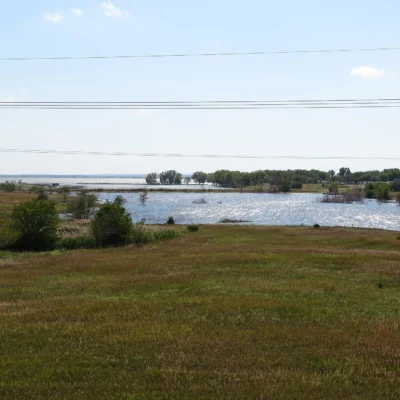
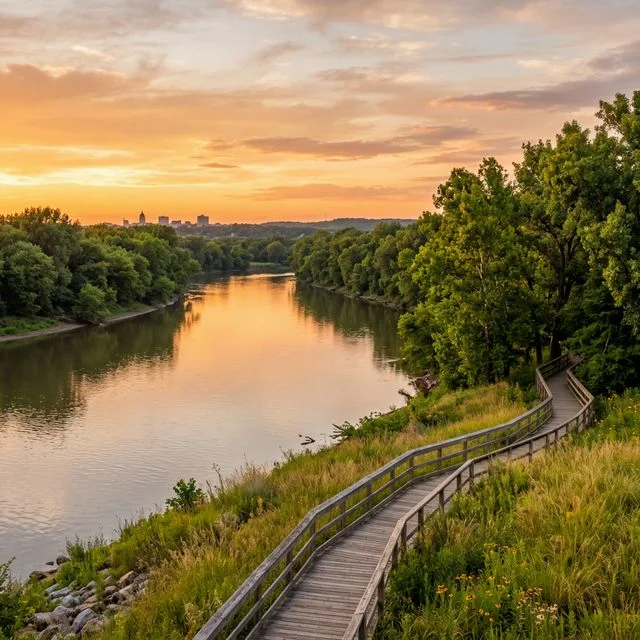
Kaw River State Park occupies a stretch of the Kansas River’s north bank where the floodplain meets upland prairies. The park’s landscape is a mosaic of habitats: bottomland hardwood forests dominated by cottonwoods, sycamores, and hackberries; patches of tallgrass prairie with big bluestem, Indian grass, and wildflowers; and the sandy, braided channels of the Kaw itself. This habitat diversity makes the park far more biologically rich than its modest acreage might suggest.
📊 Park Quick Facts
• Established: 2010
• Size: 76 acres
• County: Shawnee County, Kansas
• Elevation: Approximately 880 feet
• River: Kansas River (Kaw) — 173 miles long, drains 60,000+ square miles
• Managed by: Kansas Department of Wildlife & Parks (KDWP)
• Key activities: Hiking, kayaking, fishing, birdwatching, nature photography
Hiking Trails
The park features a developing trail system that winds through the riparian woodland and along the river bluffs. The trails are natural surface (dirt and mowed grass) and relatively flat, making them accessible for most fitness levels. Because the park is still relatively new in the Kansas state park system, trail development continues — but the existing network offers a rewarding experience, especially for birders and wildflower enthusiasts.
| Trail | Distance | Difficulty | Highlights |
|---|---|---|---|
| Riverbank Trail | 1.2 miles | Easy | River views, cottonwood groves, fishing access points |
| Prairie Loop | 0.8 miles | Easy | Native tallgrass prairie, wildflowers (spring/summer) |
| Woodland Trail | 0.6 miles | Easy | Bottomland hardwoods, birding, shade |
| Bluff Overlook Spur | 0.3 miles | Easy | Elevated river views, photography vantagepoint |
Trail tip: The bottomland trails can be muddy after rain and may flood during high-water events in spring. Check conditions before visiting if there has been recent rainfall. Mosquitoes and ticks are active from May through September — use insect repellent.
Paddling & Kayaking
The Kansas River is one of the most underappreciated paddling rivers in the Midwest. It’s wide, generally calm, and flows through a landscape that feels surprisingly wild despite running through the state’s population centers. Kaw River State Park provides river access for launching kayaks, canoes, and stand-up paddleboards.
🛶 Paddling Guide
• River character: Wide, sandy, braided channels with slow to moderate current
• Difficulty: Class I — suitable for beginners in normal conditions
• Best craft: Kayaks, canoes, SUPs (stand-up paddleboards)
• Launch point: Park river access area (carry-in only — no boat ramp for motorized boats)
• Popular routes: Downstream floats to Topeka access points (3–8 miles depending on takeout)
• Water level: Check USGS gauge at Topeka before paddling. The river can rise quickly after storms.
• Hazards: Submerged sandbars, shifting channels, low-head dams downstream. Scout your route and know the dam locations.
• Season: April through October (best flow and weather conditions)
The Friends of the Kaw (Kansas Riverkeeper) organization offers guided paddle trips, river cleanups, and detailed maps of public access points along the entire Kansas River. Their website (kansasriver.org) is the best resource for planning a Kaw River paddling trip.
Fishing
The Kansas River supports a surprisingly diverse fishery. The sandy, shifting channels and deep pools hold channel catfish, flathead catfish, blue catfish, freshwater drum, carp, and white bass. During spring spawning runs, white bass fishing on the Kaw can be excellent.
| Species | Season | Method | Notes |
|---|---|---|---|
| 🐟 Channel Catfish | Year-round (best May–Sep) | Cut bait, stink bait, worms | Most common species, good numbers |
| 🐟 Flathead Catfish | Summer (Jun–Aug) | Live bait (bluegill, shad) | Trophy potential — 30+ lb fish caught |
| 🐟 White Bass | Spring spawning run (Mar–Apr) | Jigs, spinners, live minnows | Excellent run fishing when water warms |
| 🐟 Freshwater Drum | Year-round | Worms, crawfish | Underrated sport fish, good fighters |
| 🐟 Blue Catfish | Year-round | Cut shad, skipjack | Less common but growing population |
A valid Kansas fishing license is required. Bank fishing is available from several points along the Riverbank Trail. For the best catfishing, target the deeper pools and channel bends during evening and nighttime hours.
Birdwatching & Wildlife
Kaw River State Park’s location at the intersection of riparian woodland, tallgrass prairie, and river habitats creates excellent birding opportunities. The park sits within the Central Flyway, one of the major North American migratory bird corridors, and the river corridor acts as a highway for migrating species.
| Season | Notable Species |
|---|---|
| 🌸 Spring | Migrating warblers, shorebirds, white pelicans, osprey |
| ☀️ Summer | Great blue herons, green herons, kingfishers, dickcissel, indigo buntings |
| 🍂 Fall | Migrating raptors, sandhill cranes (nearby), sparrows |
| ❄️ Winter | Bald eagles (regularly spotted along the Kaw), red-tailed hawks, northern harriers |
Bald eagles are regularly seen along the Kansas River during winter months, perching in the tall cottonwoods and hunting fish in open water. The stretch of river near the park is one of the most reliable eagle-watching locations in the Topeka area.
Mammals include white-tailed deer, coyotes, beavers, raccoons, and the occasional bobcat. The river supports muskrats, turtles (including snapping turtles and painted turtles), and a variety of snake species.
The Kansas River Ecology
The Kansas River — the Kaw — drains more than 60,000 square miles of the central Great Plains, making it one of the largest river systems in Kansas. Its name comes from the Kanza (Kaw) people, the Native American nation that inhabited the river valley for centuries and gave their name to the state of Kansas itself.
The river’s ecology is characterized by its sandy, braided channel — a wide, shallow river that constantly shifts its course across a broad floodplain. This dynamic, ever-changing character creates diverse microhabitats: sandbars for nesting least terns and piping plovers, backwater pools for fish spawning, and riparian forests that buffer the river from agricultural runoff.
Despite its ecological importance, the Kansas River faces significant challenges from agricultural pollution, urban runoff, and habitat fragmentation. Organizations like the Friends of the Kaw work to protect water quality, improve public access, and raise awareness of the river’s ecological value.
Visitor Information
| Detail | Information |
|---|---|
| 📍 Location | North bank of Kansas River, west of Topeka, Shawnee County, KS |
| 📞 Contact | Park Office: (785) 273-6740 |
| 🕐 Hours | Year-round, sunrise to sunset |
| 💰 Entry Fee | Kansas State Park Vehicle Permit required ($5.50/day or $25.50/annual) |
| 🅿️ Parking | Gravel parking area at trailhead |
| 🚻 Restrooms | Portable restrooms available |
| ⛺ Camping | No camping facilities at this time |
| 🐕 Pets | Allowed on leash |
| 📡 Cell Service | Good — proximity to Topeka |
Best Time to Visit
| Season | Weather | Best For |
|---|---|---|
| 🌸 Spring (Mar–May) | 50–75°F | White bass run, migrating birds, wildflowers, paddling season starts |
| ☀️ Summer (Jun–Aug) | 80–95°F | Kayaking, catfishing, full foliage, herons and kingfishers active |
| 🍂 Fall (Sep–Nov) | 50–75°F | Fall colors along river, comfortable hiking, bald eagles arrive (Nov) |
| ❄️ Winter (Dec–Feb) | 25–45°F | Bald eagle watching, solitude, winter photography |
The spring white bass run (March–April) draws anglers from across the region. For paddling and general outdoor recreation, the June through September window offers warm water temperatures and the most reliable conditions. Winter visitors should focus on bald eagle watching — the cottonwoods along the river provide excellent perching habitat, and eagles are regularly seen from late November through February.
Nearby Attractions
| Destination | Distance | Highlights |
|---|---|---|
| Kansas State Capitol | 10 miles | Topeka landmark, murals, dome tours |
| Gage Park & Topeka Zoo | 12 miles | Zoo, gardens, miniature train, playground |
| Clinton State Park | 30 miles | Clinton Lake, camping, mountain biking, swimming |
| Perry State Park | 25 miles | Perry Lake, fishing, camping, horseback trails |
| Flint Hills (Tallgrass Prairie NPres) | 75 miles | Last remaining tallgrass prairie, scenic drives |
Nearby parks: If you have extra time, Perry State Park is within about an hour’s drive, and Clinton State Park is within about an hour’s drive.
Camping reservations: Book campsites and cabins for Kansas state parks online at reserveamerica.com.
Frequently Asked Questions
Can you kayak at Kaw River State Park?
Yes — the park provides carry-in river access for kayaks, canoes, and stand-up paddleboards. The Kansas River at this location is a wide, generally calm Class I waterway suitable for beginners in normal conditions. Check the USGS water gauge at Topeka before launching, as the river can rise quickly after storms. There is no motorized boat ramp — this is a carry-in access point only.
Is there camping at Kaw River State Park?
No — Kaw River State Park is currently a day-use-only park with no camping facilities. For camping near Topeka, Clinton State Park (30 miles) and Perry State Park (25 miles) both offer full campgrounds with electric hookups, primitive sites, and cabin rentals.
What fish can you catch in the Kansas River?
The Kansas River supports channel catfish, flathead catfish, blue catfish, white bass, freshwater drum, and carp. The spring white bass run (March–April) is especially popular with anglers. Flathead catfish offer trophy potential — fish exceeding 30 pounds are caught regularly. A valid Kansas fishing license is required.
Can you see bald eagles at Kaw River State Park?
Yes — bald eagles are regularly spotted along the Kansas River during winter months (late November through February). They perch in the tall cottonwood trees along the river and hunt fish in open water. The stretch of river near the park is one of the most reliable eagle-watching locations in the greater Topeka area.
Do I need a permit to visit?
Yes — a valid Kansas State Park Vehicle Permit is required. Daily permits cost $5.50 and annual permits are $25.50. Permits can be purchased online through the KDWP website, at KDWP offices, or at many Kansas retail locations.
Is Kaw River State Park good for birdwatching?
Excellent — the park’s combination of riparian woodland, tallgrass prairie, and river habitats creates diverse birding opportunities year-round. Spring and fall migration bring warblers, shorebirds, and white pelicans. Summer features herons, kingfishers, and grassland species. Winter brings bald eagles and northern raptors. The park sits in the Central Flyway, one of North America’s major migratory corridors.
How do I get to Kaw River State Park?
The park is located on the north bank of the Kansas River, west of Topeka in Shawnee County. From downtown Topeka, take US-24 west approximately 8–10 miles to the park entrance. The park is well-signed from US-24. GPS coordinates: 39.0731°N, 95.7931°W. Note that the park is a developing facility — amenities are basic compared to larger Kansas state parks.
🛶 Discover Kaw River State Park
Paddle the Kaw, fish for trophy catfish, watch bald eagles soar above the cottonwoods, and explore one of Kansas’s newest and most promising state parks — all within minutes of Topeka.
🗺️ Official Park Information 🌊 Friends of the KawExplore More Kansas State Parks
Kaw River State Park is one of many outstanding state parks in Kansas. Discover more parks in our Best State Parks in Kansas guide, or use our Park Finder to search by activity, location, or features.

🐾 Dogs & Pets at Kaw River State Park
- Pets allowed? statewide rule
- Pets are allowed in Kansas state parks, including trails and campgrounds, but must always be restrained by a camper, cage, hand-held leash, or tether no longer than 10 feet.
- Leash rule statewide rule
- Hand-held leash or tethered chain no longer than 10 feet (or confined in camper/cage)
- Beaches & swim areas statewide rule
- Pets are not allowed on swimming beaches or in buoyed swimming areas, or in public buildings
- Cabins & lodging statewide rule
- Pets are not allowed inside cabins except in designated pet-friendly cabins (e.g. at Lovewell, Eisenhower, El Dorado, Clinton) with a $50 pet fee; at other cabins pets must stay outside
- Pet fees statewide rule
- No day-use pet fee; $50 pet fee for designated pet-friendly cabins
- Statewide exceptions statewide rule
- Dogs participating in authorized activities (such as hunting) or assisting the visually or hearing impaired are exempt
Are dogs allowed at Kaw River State Park?
Pets are allowed in Kansas state parks, including trails and campgrounds, but must always be restrained by a camper, cage, hand-held leash, or tether no longer than 10 feet. Individual parks can post stricter rules — check signage on arrival.
Rules verified July 2026 via ksoutdoors.gov. More: Kansas state parks guide · Dog rules in all 50 states compared
Park Location
Plan your gear for Kaw River State Park
From our editorial guides, matched to this park’s activities: