🌤 Weather at Mascot Mine Natural Area by season
| Spring | Summer | Fall | Winter |
|---|---|---|---|
| 17–68 °F | 50–82 °F | 25–72 °F | 7–35 °F |
Each range runs from the coldest monthly average low to the warmest monthly average high in that season (1991-2020 climate normals), measured at Wentworth, 3 mi away, elevation 653 ft. Conditions at the park can differ from the station, especially where elevation differs — check a forecast before you go.

🏆 Underground Crystal Mine — Historic mica and beryl mine with tunnels you can explore — one of the few walk-in mines in New England
Mascot Mine Natural Area in Groton protects a historic mica and beryl mine — part of the Grafton County pegmatite mining district that once supplied mica for insulation, windows (before glass was common), and electronics. The mine features walk-in tunnels where visitors can see pegmatite veins containing mica, quartz, feldspar, and occasionally beryl (the mineral family including emerald and aquamarine). New Hampshire’s Grafton County was one of the world’s most productive mica mining regions from the 1800s through World War II.
Visitor Information
| Detail | Information |
|---|---|
| Location | Groton, Grafton County, NH |
| Entry Fee | Free |
| Mine | Walk-in tunnels! |
| Minerals | Mica, beryl, quartz — emerald family! |
Frequently Asked Questions
Can I collect minerals?
Collecting is generally not permitted in the Natural Area, but the surrounding Grafton County region has several fee-dig sites where you can collect your own mica, quartz crystals, and beryl specimens. Ruggles Mine (nearby) was historically the most famous collecting site.
What was mica used for?
Mica is a silicate mineral that splits into thin, transparent, heat-resistant sheets — making it ideal for electrical insulation, windows in wood stoves, and peepholes in furnaces. Before plastics, mica was essential for the electrical industry. New Hampshire mica mines produced high-quality muscovite sheets. The mines closed as synthetic alternatives became cheaper, but mica remains important in electronics and cosmetics.
Make it a road trip: Pair a visit with Sculptured Rocks Natural Area (a short drive away) or Livermore Falls State Forest (a short drive away).
💎 Visit Mascot Mine Natural Area
Walk-in mine tunnels — mica, beryl, and pegmatite crystals!
About Mascot Mine
Mascot Mine Natural Area in Gorham preserves a historic feldspar and mica mine in the White Mountains. New Hampshire — the “Granite State” — was a major source of feldspar, mica, and beryl for over a century. The pegmatite deposits of the White Mountains produced mica for electrical insulation and feldspar for ceramics. The abandoned mine tunnels and waste rock piles illustrate the state’s mining heritage.
Things to Do
Exploring the historic mine area, mineral collecting (surface specimens), hiking, learning about New Hampshire’s mining heritage, and studying the geology of White Mountain pegmatites.
Insider Tips
Mica mine: Mascot Mine was once a major mica producer — the mineral was essential for electrical insulation before synthetic alternatives. Pro tip: New Hampshire’s White Mountains contain exceptional mineral deposits — the state has produced beryl, mica, feldspar, and rare earth minerals. Mineral collecting: The abandoned mine area is popular with rock hounds — but stay out of the mine shafts (dangerous).
Best Time to Visit
Summer: Best for exploring the grounds. Fall: Mountain foliage around the mine site. Spring: Wildflowers among mine ruins. Year-round: Interpretive trail accessible.
Wildlife & Nature
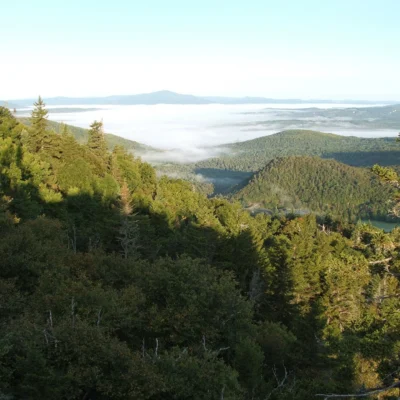
Mascot Mine Natural Area — in Gorham — preserves the remains of a 19th-century gold and silver mine in the White Mountains. Mining operations — active from the 1880s to early 1900s — extracted gold-bearing quartz from the metamorphic rock. The mine tunnels, tailings, and foundations remain. The surrounding forest of spruce, fir, and birch supports black bears, moose, and snowshoe hares. Dark-eyed juncos and white-throated sparrows sing from the understory.
Nearby Attractions
Gorham — adjacent — is a White Mountains gateway with access to the Presidential Range. Mount Washington Auto Road — 10 miles south — ascends to the highest peak in the Northeast. Pinkham Notch — 10 miles south — has the AMC Visitor Center and Tuckerman Ravine trailhead. Shelburne Birches — 5 miles east — has scenic white birch groves.

🐾 Dogs & Pets at Mascot Mine Natural Area
- Pets allowed? statewide rule
- Many NH state parks allow pets year-round, but policies vary by park and some parks prohibit pets entirely.
- Leash rule statewide rule
- Standard or retractable leash not greater than 6 feet required; animals may not be left unattended.
- Beaches & swim areas statewide rule
- Pets are prohibited at beaches and designated swim areas seasonally from May 1 through September 30.
- Cabins & lodging statewide rule
- Pets are permitted at 13 campgrounds (including Bear Brook, Coleman, Greenfield, Lake Francis, Milan, Mollidgewock, Moose Brook, Pawtuckaway, Pillsbury, Sunapee and Umbagog); cabin/yurt rules vary by park — check before booking.
- Statewide exceptions statewide rule
- Monadnock, North Hampton State Beach, Odiorne Point and most of Rhododendron State Park prohibit pets year-round; Crawford Notch, Franconia Notch and Mount Washington allow pets only on hiking trails and designated dog-walk areas.
Are dogs allowed at Mascot Mine Natural Area?
Many NH state parks allow pets year-round, but policies vary by park and some parks prohibit pets entirely. Individual parks can post stricter rules — check signage on arrival.
Rules verified July 2026 via nhstateparks.org. More: New Hampshire state parks guide · Dog rules in all 50 states compared
Park Location
Plan your gear for Mascot Mine Natural Area
From our editorial guides, matched to this park’s activities: