🌤 Weather at Mermet Lake State Fish and Wildlife Area by season
| Spring | Summer | Fall | Winter |
|---|---|---|---|
| 37–77 °F | 65–89 °F | 39–83 °F | 26–48 °F |
Each range runs from the coldest monthly average low to the warmest monthly average high in that season (1991-2020 climate normals), measured at Grand Chain Dam 53, 11 mi away, elevation 385 ft. Conditions at the park can differ from the station, especially where elevation differs — check a forecast before you go.

Southern Illinois Waterfowl and Cypress Swamp
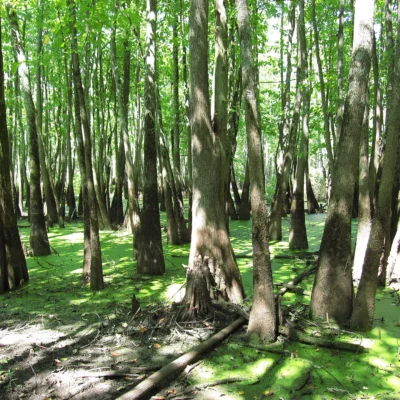
Mermet Lake State Fish and Wildlife Area encompasses 2,600 acres of wetlands, bottomland forest, and open water in Massac County at the very southern tip of Illinois. This site is renowned among hunters and birders for its outstanding waterfowl habitat and unique cypress swamp ecosystem—a landscape more reminiscent of the Deep South than the Prairie State.
The centerpiece is the 450-acre Mermet Lake, a shallow, cypress-studded body of water that provides critical resting and feeding habitat for migrating waterfowl along the Mississippi Flyway. The bald cypress and tupelo trees growing from the lake create a hauntingly beautiful landscape that is rare this far north.
Hunting
Mermet Lake is one of Illinois’ premier public waterfowl hunting destinations. The managed wetlands and flooded timber attract massive concentrations of mallards, wood ducks, and other waterfowl during fall and winter migration. The Illinois DNR actively manages water levels to optimize waterfowl habitat. Deer, turkey, squirrel, and dove hunting are also available on the upland portions of the property.
Fishing
The cypress-studded lake provides atmospheric fishing for largemouth bass, bluegill, crappie, and catfish. Anglers often paddle among the cypress knees in canoes or small boats, casting into the shaded pockets around submerged timber. The shallow lake warms quickly in spring, producing early-season bass action.
Birdwatching and Wildlife
Beyond waterfowl season, Mermet Lake attracts birders year-round. The cypress swamp supports nesting prothonotary warblers, barred owls, and red-shouldered hawks. Great blue heron rookeries dot the area. During migration, the wetlands host an impressive diversity of shorebirds, wading birds, and songbirds. The site is listed as an Important Bird Area by the National Audubon Society.
Visitor Information
Mermet Lake State Fish and Wildlife Area is located in Massac County, approximately 10 miles north of Metropolis on Route 45. The area is open year-round. A boat ramp provides lake access; electric motors only are permitted on portions of the lake during certain seasons. Contact the site office for current hunting regulations and water level conditions.
Frequently Asked Questions
Are there cypress trees at Mermet Lake? Yes. Mermet Lake features bald cypress and tupelo trees growing from the water—a rare cypress swamp ecosystem for Illinois, more typical of the Deep South.
What kind of hunting is best at Mermet Lake? Mermet Lake is one of Illinois’ top public waterfowl hunting areas, with excellent duck hunting in flooded timber and managed wetlands.
Can I use a motorboat on Mermet Lake? Boat access is available via a public ramp. Motor restrictions may apply during certain seasons—check current IDNR regulations before visiting.
Wildlife & Nature
Mermet Lake State Fish and Wildlife Area — 2,510 acres in extreme southern Illinois — provides outstanding waterfowl hunting and fishing in the cypress-tupelo swamps of the Ohio River floodplain. The lake — surrounded by ancient bald cypress trees — supports one of the most productive fisheries in southern Illinois. Largemouth bass, crappie, and bluegill thrive in the warm, nutrient-rich waters. The area’s southern location at latitude 37°N gives it a distinctly southern ecological character — Spanish moss drapes from the cypress, prothonotary warblers flash golden-yellow in the swamp, and green tree frogs call from the vegetation. Bobcats — secretive and rarely seen — prowl the forest. Great egrets and little blue herons wade in the shallows.
Nearby Attractions
Cache River State Natural Area — a Ramsar Wetland of International Importance — features 1,000-year-old bald cypress. Fort Massac State Park on the Ohio River preserves frontier fortifications. Metropolis — “Hometown of Superman.” Paducah (Kentucky) is a UNESCO Creative City. Dixon Springs State Park has a swimming pool in sandstone. Shawnee National Forest offers Garden of the Gods and Cave-in-Rock. Massac County hosts the annual Fort Massac Encampment.
Keep exploring: The closest neighbors are Sielbeck Forest State Natural Area (a short drive away) and Fort Massac State Park (a short drive away).

🐾 Dogs & Pets at Mermet Lake State Fish and Wildlife Area
- Pets allowed? statewide rule
- Pets are allowed in Illinois state parks and on trails as long as they are leashed at all times.
- Leash rule statewide rule
- Leash required at all times; state code caps leash length at 10 feet
- Beaches & swim areas statewide rule
- Pets are prohibited in areas posted 'NO PETS', reserved for beach areas, concession areas and crowded campground/picnic areas (e.g. no dogs on the beach at Illinois Beach State Park)
- Cabins & lodging statewide rule
- Pets are not allowed in campground cabins
- Statewide exceptions statewide rule
- Leash rule exceptions for hunting dogs, field trials and dog training areas; pets must not be left unattended
Are dogs allowed at Mermet Lake State Fish and Wildlife Area?
Pets are allowed in Illinois state parks and on trails as long as they are leashed at all times. Individual parks can post stricter rules — check signage on arrival.
Rules verified July 2026 via dnr.illinois.gov. More: Illinois state parks guide · Dog rules in all 50 states compared
Park Location
Plan your gear for Mermet Lake State Fish and Wildlife Area
From our editorial guides, matched to this park’s activities: