🌤 Weather at Mount Ascutney State Park by season
| Spring | Summer | Fall | Winter |
|---|---|---|---|
| 20–70 °F | 52–82 °F | 27–73 °F | 9–35 °F |
Each range runs from the coldest monthly average low to the warmest monthly average high in that season (1991-2020 climate normals), measured at N Springfield Lake, 8 mi away, elevation 560 ft. Conditions at the park can differ from the station, especially where elevation differs — check a forecast before you go.

🏆 Official Guide: Mount Ascutney State Park — A 3,144-foot monadnock in Vermont’s Connecticut River Valley with a 3.7-mile scenic auto road, 12+ miles of hiking trails, hang gliding launches, and a 360° observation tower at the summit.
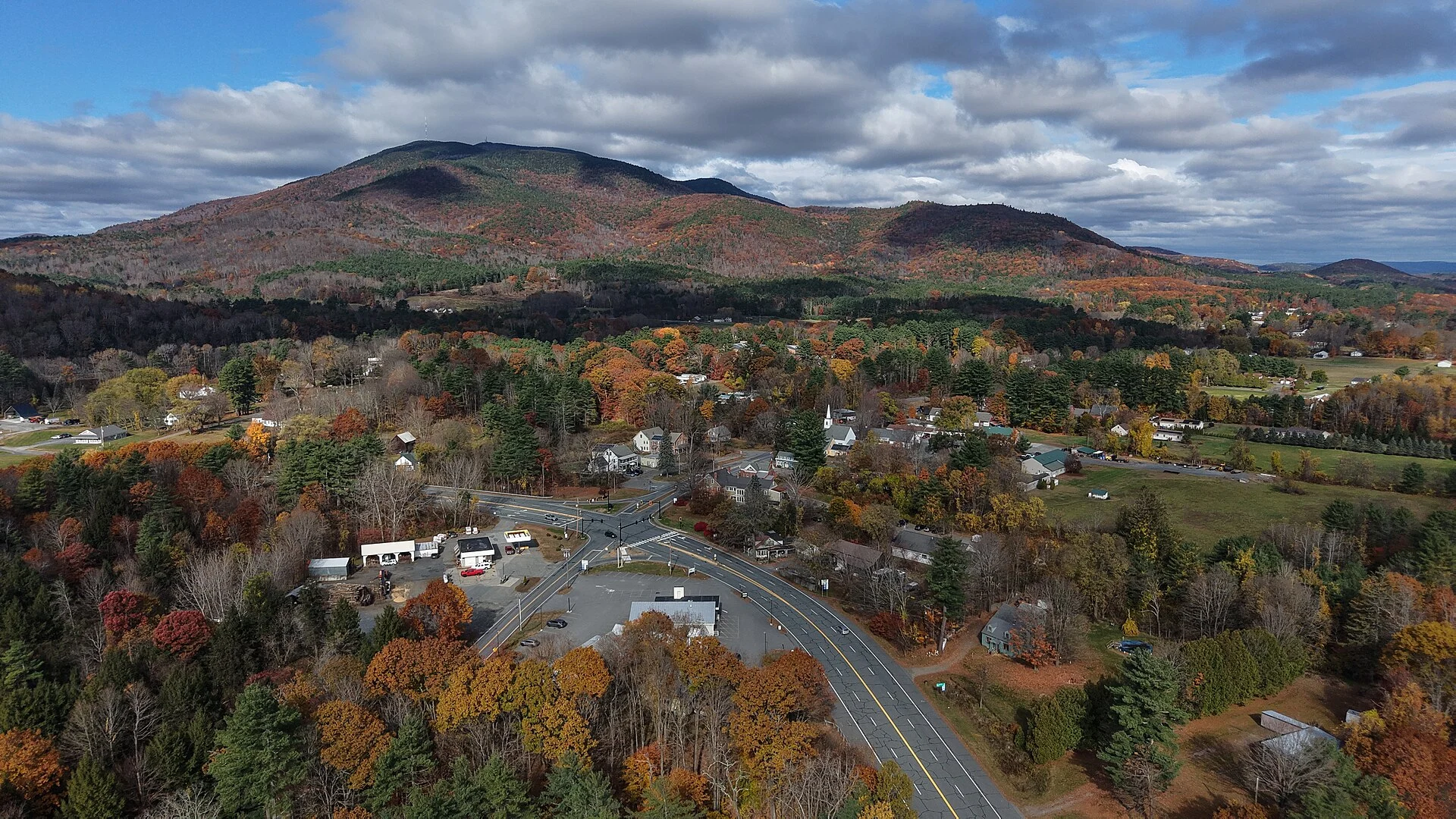
Mount Ascutney State Park in Windsor, Vermont, centers on Mount Ascutney — an isolated granite peak (monadnock) rising dramatically above the Connecticut River Valley. The mountain hosted what is believed to be America’s first public recreation trail, cut in 1825. Today the park offers camping, a paved auto road to near the summit, and an extensive trail network.
Visitor Information
| Detail | Information |
|---|---|
| Location | 1826 Back Mountain Rd, Windsor, VT |
| Summit Elevation | 3,144 feet |
| Season | Late May – mid-October |
| Auto Road | 3.7-mile paved toll road to 2,800 ft |
| Campsites | 39 tent/RV sites + 10 lean-tos + 5 cabins |
| Observation Tower | 25-foot tower at summit — 360° views |
Hiking Trails
| Trail | Distance | Difficulty | Notes |
|---|---|---|---|
| Slot Trail (from auto road) | 0.6 mi | Moderate | Shortest summit route from parking |
| Slab Trail (from auto road) | 0.8 mi | Moderate | Exposed granite slabs, views |
| Weathersfield Trail | 2.9 mi | Strenuous | Base-to-summit, north side |
| Windsor Trail | 2.7 mi | Strenuous | Historic trail (est. 1825), east side |
| Brownsville Trail | 3.2 mi | Strenuous | West side, connects to hang gliding launches |
| Futures Trail | 2.3 mi | Moderate | Links lower parking to upper trails |
Hang Gliding & Paragliding
Mount Ascutney is one of the premier hang gliding and paragliding sites in New England. Two authorized launch sites — Brownsville Rock and South Peak — offer excellent thermal conditions from the exposed granite faces.
Getting There
From I-91: Exit 8 (Ascutney), follow Route 44A west to park entrance. From Windsor: 5 miles south via Route 44A.
Frequently Asked Questions
Can I drive to the summit of Mount Ascutney?
You can drive most of the way via the 3.7-mile paved Mount Ascutney Parkway, which climbs to a parking area at approximately 2,800 feet. From there, short trails (0.6–0.8 miles) lead to the 3,144-foot summit and its 25-foot observation tower with 360-degree views of Vermont and New Hampshire.
Is Mount Ascutney good for hang gliding?
Yes. Mount Ascutney is one of New England’s top hang gliding and paragliding sites. Two authorized launch sites — Brownsville Rock and South Peak — offer reliable thermal conditions from exposed granite faces. Experienced pilots regularly fly from the mountain.
When is Mount Ascutney State Park open?
The campground and auto road are typically open from the third weekend in May through mid-October. The hiking trails are accessible outside of this season, but the auto road and campground facilities close for winter.
More parks nearby: Wilgus State Park lies a short drive away.
Camping reservations: Book campsites and cabins for Vermont state parks online at vtstateparks-visit.com.

🐾 Dogs & Pets at Mount Ascutney State Park
- Pets allowed? statewide rule
- Pets are allowed at all Vermont State Parks campgrounds and on trails unless otherwise posted, but are not permitted on beaches or in most picnic areas.
- Leash rule statewide rule
- Leash shorter than 10 ft required (or pet safely confined) at all times
- Beaches & swim areas statewide rule
- Pets are not permitted on beaches; limited exceptions let pets use the far side of the beach away from swim areas at Branbury, Lake Shaftsbury and Silver Lake
- Cabins & lodging statewide rule
- Pets are permitted in designated pet-friendly cabins only (full list on the Vermont State Parks cabins page); cottages do not allow pets
- Statewide exceptions statewide rule
- Pets allowed in picnic areas at Allis, Camp Plymouth, Elmore, Kill Kare, Knight Point, Lake Shaftsbury, Mt. Philo, Osmore Pond and Owl's Head; at Camp Plymouth pets may swim only at the cartop boat launch; current rabies vaccination expected
Are dogs allowed at Mount Ascutney State Park?
Pets are allowed at all Vermont State Parks campgrounds and on trails unless otherwise posted, but are not permitted on beaches or in most picnic areas. Individual parks can post stricter rules — check signage on arrival.
Rules verified July 2026 via vtstateparks.com. More: Vermont state parks guide · Dog rules in all 50 states compared
Park Location
Plan your gear for Mount Ascutney State Park
From our editorial guides, matched to this park’s activities: