Paynes Prairie Preserve State Park
🏆 America’s Ultimate Paynes Prairie Guide — Built from 4,120+ Google reviews, ranger insights, and dozens of visits to Florida’s first state preserve
Why Paynes Prairie Preserve Is Special
The first thing you notice at Paynes Prairie isn’t something you see — it’s what you don’t. Standing on the 50-foot observation tower south of Gainesville, looking across a sea of grass that stretches to every horizon, there are no buildings, no roads, no power lines. Just 23,000 acres of raw Florida savannah where wild bison graze alongside feral horses and alligators sun themselves on the banks of shallow marshes. It feels less like Florida and more like the Serengeti.
Designated as Florida’s very first state preserve in 1971 and recognized as a National Natural Landmark in 1974, Paynes Prairie Preserve State Park protects one of the most significant natural and historical landscapes in the southeastern United States. When naturalist William Bartram passed through in 1774, he called it “the great Alachua Savannah” and described herds of wild horses and cattle so vast they darkened the prairie. Two and a half centuries later, remarkably, you can still witness a similar scene — a free-roaming herd of American bison and a band of Florida Cracker horses still call this prairie home.
What makes Paynes Prairie truly extraordinary is its biological diversity. More than 20 distinct biological communities coexist within the preserve, supporting nearly 300 species of birds — from towering sandhill cranes and soaring bald eagles to thousands of migrating waterfowl that blanket the wetlands in winter. Alligators patrol every waterway, white-tailed deer browse the hammock edges, and on lucky mornings, you might spot a bobcat slinking through the palmettos. For nature lovers, wildlife photographers, and anyone who wants to experience what Florida looked like before the highways, Paynes Prairie is as essential as it gets.
Best Hiking Trails at Paynes Prairie
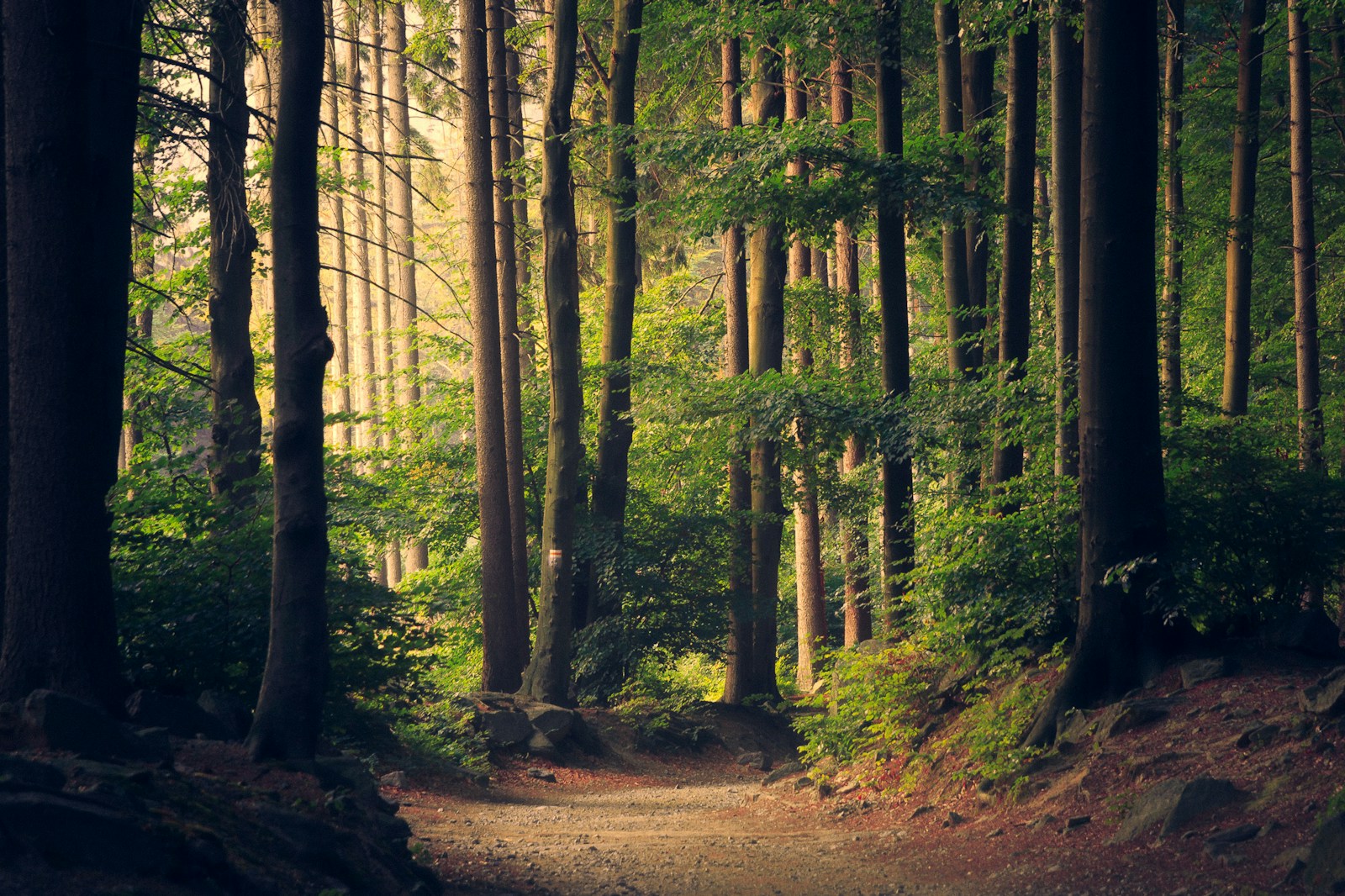
Paynes Prairie offers over 30 miles of trails that wind through habitats as varied as anything in Florida — open prairie, cypress swamp, hardwood hammock, pine flatwoods, and freshwater marsh. Each trail has its own personality, and choosing the right one depends on what you want to see and how far you want to walk. The La Chua Trail is the park’s crown jewel for wildlife, but the longer Cone’s Dike and Chacala trails reward patient hikers with bison sightings and deep-prairie solitude that most visitors never experience.
| Trail Name | Distance | Difficulty | Highlights |
|---|---|---|---|
| La Chua Trail | 3.0 mi RT | Easy | Alligator hotspot, boardwalk, wildlife viewing platform |
| Cone’s Dike Trail | 8.25 mi RT | Moderate | Deep prairie access, bison sightings, open savannah views |
| Chacala Trail | 6.5 mi | Moderate | Pine flatwoods, hammocks, Chacala Pond, deer and eagles |
| Bolen Bluff Trail | 2.6 mi RT | Easy | Hardwood forest, marsh overlook, wildlife viewing deck |
| Jackson Gap Trail | 1.3 mi | Easy | Connector trail, wetland wildlife, wild horses |
| Lake Trail | 1.0 mi | Easy | Lake Wauburg access, shaded walk |
| Wacahoota Trail | 0.25 mi RT | Easy | Visitor center to observation tower |
| Gainesville-Hawthorne Trail | 16.0 mi | Easy | Paved multi-use trail, biking, inline skating |
La Chua Trail — The Must-Do
If you only hike one trail at Paynes Prairie, make it La Chua. Accessed from the park’s north entrance on Camp Ranch Road, this 3-mile roundtrip follows a paved path and boardwalk through some of the densest alligator habitat outside of the Everglades. On a typical morning, you’ll count dozens of gators basking along the trail edges — some within arm’s reach of the boardwalk railing. The trail culminates at an elevated wildlife observation platform where the prairie opens up and binoculars reveal bison, herons, and roseate spoonbills wading in the shallows. Important: La Chua closes one hour before sunset because active alligators make the trail genuinely dangerous after dark. Pets are strictly prohibited — this is not a suggestion, it’s a safety rule.
Cone’s Dike Trail — For the Bison
At 8.25 miles roundtrip from the main visitor center, Cone’s Dike is the longest and most immersive trail in the preserve. It follows a historic dike straight into the heart of the prairie, and it’s your best shot at seeing the park’s bison herd up close. The animals tend to congregate in the central basin, and patient hikers who reach the trail’s midpoint in the early morning hours are often rewarded with the surreal sight of American bison grazing against a backdrop of Florida palm trees. Bring plenty of water — there’s zero shade once you leave the hammock edge, and summer temperatures regularly exceed 95°F.
Chacala Trail — For Solitude
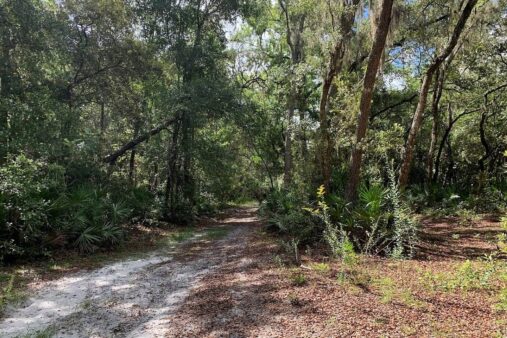
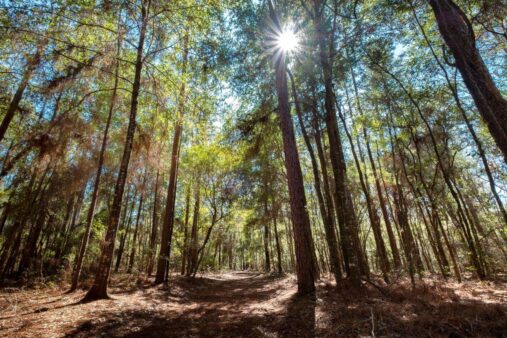
The Chacala Trail is the park’s best-kept secret. At 6.5 miles with several loop options, it winds through tall slash pines, saw palmettos, and shady hardwood hammocks before emerging at Chacala Pond — a quiet wetland where bald eagles nest in the tall cypress trees and white-tailed deer browse the understory. Unlike La Chua, which draws crowds on weekends, Chacala sees maybe a dozen hikers on a busy day. It’s also the only trail open to horseback riders and mountain bikers, making it a multi-use destination.
Wildlife Watching — Florida’s Serengeti
Paynes Prairie has earned the nickname “Florida’s Serengeti” for good reason. The preserve is one of only a handful of places anywhere in the state where visitors can see wild-roaming American bison and feral Florida Cracker horses in a completely natural, unfenced landscape. These aren’t zoo animals behind barriers — the bison herd of roughly 40-60 animals moves freely across the open prairie, and you may encounter them crossing a trail, grazing beside a boardwalk, or standing in the middle of the road. The Cracker horse herd, descendants of Spanish colonial stock, exhibits the same wild behavior and adds to the surreal, out-of-time atmosphere that pervades the preserve.
| Wildlife | Best Months | Where to Look | Tips |
|---|---|---|---|
| 🦬 American Bison | Year-round | Cone’s Dike, central basin | Early morning, maintain 50+ ft distance |
| 🐴 Wild Cracker Horses | Year-round | Prairie basin, Jackson Gap Trail | Often near water sources at dawn |
| 🐊 American Alligators | Mar–Oct | La Chua Trail, Alachua Sink | Most active in warm months, never approach |
| 🦅 Bald Eagles | Nov–Mar | Chacala Trail, observation tower | Nesting season, look for large stick nests |
| 🦩 Sandhill Cranes | Nov–Mar | Open prairie, Bolen Bluff | Listen for distinctive rattling call |
| 🦌 White-tailed Deer | Year-round | Hammock edges, Chacala Trail | Dawn and dusk feeding times |
| 🐢 Gopher Tortoises | Mar–Oct | Sandy uplands, pine flatwoods | Look for burrow entrances along trail edges |
| 🦎 River Otters | Year-round | Wetlands, Lake Wauburg | Watch for bubble trails in calm water |
Birding at Paynes Prairie
With nearly 300 documented bird species, Paynes Prairie is one of Florida’s premier birding destinations and holds an important place on the Great Florida Birding and Wildlife Trail. Winter is the peak season, when thousands of migrating waterfowl — including wood ducks, blue-winged teal, and northern shovelers — fill the wetlands alongside resident populations of sandhill cranes, great blue herons, and limpkins. The observation tower provides a commanding vantage point for spotting raptors riding thermals over the open prairie, while the La Chua Trail boardwalk puts you eye-level with wading birds and their nests. Serious birders should plan at least two full mornings — one at La Chua for waterbirds and one on the Chacala Trail for woodland species like pileated woodpeckers, barred owls, and painted buntings.
Camping at Paynes Prairie
The campground at Paynes Prairie sits in a shady hardwood hammock near Lake Wauburg, and it’s one of those campgrounds that manages to feel remote despite being just 15 minutes from downtown Gainesville. The sites are well-spaced on limestone pads beneath a canopy of live oaks draped with Spanish moss, and on quiet evenings, you can hear barred owls calling across the lake and the distant bellowing of alligators from the prairie basin. It’s not a large campground — just 28 sites plus a handful of primitive options — so reservations are essential, particularly between November and April when the weather is mild and wildlife watching is at its peak.
| Site Type | Sites | Amenities | Price |
|---|---|---|---|
| Water/Electric (30 amp) | 28 | Water, electric, table, fire ring, grill | $18/night + tax |
| Walk-in Tent Sites | Several | Table, fire ring, shared facilities | $18/night + tax |
| Equestrian Primitive | Group | For horse campers along Chacala Trail | By reservation |
| Primitive Group | Up to 20 | Along Chacala Trail, no hookups | By reservation |
Campground Tips
The campground features flush toilets, hot showers, and an RV dump station. Firewood is available for purchase at the ranger station. If you’re coming in an RV, be aware that most sites are back-in only with varying lengths — larger rigs (35+ feet) should call ahead to confirm availability. Some sites offer 50-amp service, but they’re limited. The best sites for sunset views are those closest to Lake Wauburg, where the sky turns orange and pink over the water. Primitive campers along the Chacala Trail should note the 48-hour advance reservation requirement and must arrive at least two hours before sunset — the trail is not safe to navigate in darkness.
Florida residents who are 65 or older or hold a social security disability award qualify for a 50% camping discount — one of the best deals in the state park system.
Fishing and Paddling on Lake Wauburg
Lake Wauburg covers roughly 300 acres at the preserve’s southern edge and provides the park’s only access to open water recreation. The lake supports healthy populations of largemouth bass, bluegill bream, and speckled perch (black crappie), and the fishing pressure here is remarkably light compared to more popular Florida fishing destinations. A public boat ramp provides access for canoes, kayaks, and small boats with electric motors only — gas-powered engines are strictly prohibited to protect the lake’s ecosystem and nesting wildlife. A valid Florida freshwater fishing license is required for anglers 16 and older.
Paddling Lake Wauburg on a calm morning is one of the park’s underrated experiences. The shoreline is fringed with cypress knees and overhanging oaks, and it’s common to spot otters, wading birds, and the occasional alligator gliding silently through the water lilies. The park does not offer canoe or kayak rentals, so you’ll need to bring your own or rent from one of the outfitters in Gainesville.
The Observation Tower — Panoramic Prairie Views
The 50-foot observation tower near the visitor center is the single best vantage point in the entire preserve and should be your first stop on any visit. From the top, you get a sweeping 360-degree panorama of the prairie basin — an unbroken carpet of grasses, wetlands, and tree islands that extends to the horizon in every direction. On clear days, you can spot the bison herd as dark shapes moving slowly across the open grassland, and binoculars will reveal sandhill cranes, hawks circling on thermals, and the occasional wild horse band near the tree line.
The tower is accessible via the short Wacahoota Trail (0.25 miles) from the visitor center parking area and requires climbing stairs — it is not wheelchair accessible. The best lighting for photography is in the first two hours after sunrise or the hour before sunset, when the low-angle light paints the prairie in warm golden tones and the wildlife is most active.
History — 10,000 Years of Human Connection
Paynes Prairie’s human history reaches back more than 10,000 years, making it one of the oldest continuously occupied landscapes in North America. Archaeological evidence shows that Paleo-Indians hunted here during the last ice age, and the Seminole people who followed developed complex societies around the prairie’s reliable water sources and abundant game. The name “Paynes Prairie” comes from King Payne, a Seminole chief who maintained a thriving village and cattle ranch on the prairie’s rim in the late 1700s.
When William Bartram, America’s first native-born naturalist, traveled through in 1774 during his famous southeastern expedition, he described the prairie as “the great Alachua Savannah” and recorded herds of wild horses and cattle so vast they seemed to stretch beyond sight. His journals — still in print today — provide one of the most detailed records of pre-colonial Florida’s ecology and remain a foundational text in North American natural history. Standing on the observation tower today, reading Bartram’s words, you realize that the view has changed remarkably little in 250 years.
The prairie’s most dramatic chapter occurred in the 1870s, when the natural sinkhole that drains the basin became plugged. Over the next several years, the entire prairie flooded to create Alachua Lake — a body of water large enough for steamboat traffic between Gainesville and Micanopy. In 1891, the sink unplugged just as suddenly, draining the lake and stranding two steamboats on the newly exposed mud. The remains of one vessel are still buried somewhere beneath the prairie grass.
Seasonal Guide: When to Visit
Paynes Prairie is open 365 days a year from 8 AM until sundown, and each season offers a distinctly different experience. The preserve’s character shifts dramatically throughout the year — from a dry golden savannah in spring to a flooded wetland in late summer — and understanding these rhythms is key to planning the best possible visit.
| Season | Weather | Crowds | Best For |
|---|---|---|---|
| Winter (Dec–Feb) | 55–72°F, dry, cool mornings | Moderate | Wildlife watching, birding, comfortable hiking |
| Spring (Mar–May) | 65–88°F, dry season ends | Moderate-High | Wildflowers, alligator season begins, photography |
| Summer (Jun–Aug) | 80–95°F, afternoon storms | Low | Kayaking, fishing, fewer crowds |
| Fall (Sep–Nov) | 70–85°F, hurricane risk | Low-Moderate | Migrating birds arrive, cooler mornings |
The sweet spot for most visitors is November through March, when temperatures are comfortable for long hikes, mosquito pressure drops significantly, and the preserve’s wintering bird populations are at their peak. This is also when ranger-led programs are offered on weekends. Summer visits are entirely possible but require early morning starts to beat the heat and afternoon thunderstorms — plan to be back at the visitor center by 2 PM on most summer days.
Visitor Information & Essential Tips
Open daily 8 AM – sundown, 365 days/year. $6/vehicle (up to 8 people), $4 single-occupant, $2 pedestrians/bicyclists. La Chua Trail: $4/vehicle.
100 Savannah Blvd, Micanopy, FL 32667. Located 13 miles south of Gainesville off I-75. Phone: (352) 466-3397.
Open daily 9 AM – 4 PM. Hands-on exhibits, audio-visual programs, and sweeping views of the prairie from the deck.
Reserve via ReserveAmerica or call 800-326-3521. Book early for Nov–Apr peak season.
Pet Policy — Read This Before You Visit
Pets are welcome in designated areas of the park and must be kept on a 6-foot leash at all times. However — and this is critically important — pets are NOT allowed on La Chua Trail, Bolen Bluff Trail, or Cone’s Dike Trail. This isn’t just a rule; it’s a genuine safety measure. These trails pass through active alligator habitat and areas where bison roam, and encounters between dogs and either species can turn fatal quickly. The Chacala Trail and the Gainesville-Hawthorne Trail do allow leashed pets.
Budget Planning
| Expense | Day Trip | Weekend (2 nights) | Week (5 nights) |
|---|---|---|---|
| Park Entry | $6 | $6 | $6 |
| Camping | — | $36 + tax | $90 + tax |
| Fishing License | $17 (3-day) | $17 | $47 (annual) |
| Firewood | — | $7 | $14 |
| Gas (from Gainesville) | $5 | $5 | $5 |
| Total (per person) | $6–28 | $48–65 | $115–162 |
Paynes Prairie is one of the most affordable outdoor destinations in Florida. Entry is just $6 per vehicle for up to 8 people, making it an exceptional value for families. The campground rates are among the lowest in the Florida State Parks system, and with Gainesville’s grocery stores and restaurants just 15 minutes north, you have easy access to supplies without paying resort-area prices.
Safety & Hazards
| Hazard | Risk Level | Prevention |
|---|---|---|
| 🐊 Alligators | High (La Chua) | Never approach, stay on boardwalk, no pets on restricted trails |
| 🦬 Bison | Moderate | Maintain 50+ ft distance, never position between cow and calf |
| 🐴 Wild Horses | Moderate | Do not feed or approach, they can kick |
| 🐍 Venomous Snakes | Moderate | Watch where you step, stay on marked trails |
| ☀️ Heat/Dehydration | High (Summer) | Carry 1L water per hour, start before 9 AM in summer |
| ⛈️ Thunderstorms | High (Jun–Sep) | Check radar, return to vehicle by 2 PM |
| 🦟 Mosquitoes | High (Summer) | DEET repellent, long sleeves at dawn/dusk |
The most important safety rule at Paynes Prairie: never leave the trail. The prairie basin may look like a harmless meadow, but tall grass hides deep holes, standing water conceals alligators, and the marshy substrate can trap an ankle in seconds. La Chua Trail in particular deserves respect — the alligator density there rivals anything in the Everglades, and they are not afraid of humans. The trail closes an hour before sunset for very good reason.
Photography Guide
Paynes Prairie is a landscape and wildlife photography paradise, offering the kind of African-savannah-in-America shots that stop people mid-scroll on Instagram. The open prairie basin, dramatic cloud formations, and charismatic megafauna create images unlike anything else in the eastern United States.
Best shooting locations: The observation tower offers unobstructed panoramic shots, especially at golden hour. La Chua Trail is the place for close-up alligator portraits and wading bird shots — bring a 200-400mm telephoto and shoot from the boardwalk at eye level. Cone’s Dike Trail provides the classic bison-on-the-prairie composition, but you’ll need to hike 3-4 miles in for the best opportunities. Bolen Bluff at sunset delivers silhouette shots of the prairie against dramatic Florida skies.
Best times: The first hour after sunrise is unbeatable for wildlife activity and warm light. The hour before sunset transforms the prairie into molten gold. Winter mornings often produce ground fog that adds an ethereal quality to the open grassland shots — plan to be at the observation tower by 7 AM on cool mornings.
Nearby Attractions
Paynes Prairie’s location between Gainesville and Micanopy puts it within easy reach of several other destinations worth exploring. The historic town of Micanopy — one of Florida’s oldest inland settlements — sits just 2 miles south and offers antique shops, a charming main street, and the Herlong Mansion for overnight stays. Gainesville itself is home to the University of Florida’s excellent Florida Museum of Natural History (free admission), the Butterfly Rainforest, and the Harn Museum of Art. The Devil’s Millhopper Geological State Park, a dramatic 120-foot-deep sinkhole with a rainforest at the bottom, is 20 minutes north and pairs perfectly with a Paynes Prairie visit.
Frequently Asked Questions
Can you really see wild bison at Paynes Prairie?
Yes — Paynes Prairie maintains a free-roaming herd of roughly 40-60 American bison that graze across the open prairie basin. They are not fenced or confined in any way. The best trail for bison sightings is Cone’s Dike (8.25 miles roundtrip), which leads directly into the central basin where the herd tends to congregate. The observation tower near the visitor center also offers long-range views of the herd on clear days. Sightings are never guaranteed since the animals move freely, but patient visitors who arrive early on the Cone’s Dike Trail see them on most visits.
Is La Chua Trail safe for kids?
La Chua Trail is safe for children who can stay on the boardwalk and follow instructions, but it requires parental awareness. There are dozens of alligators visible from the trail on any given day, and some bask within a few feet of the walking surface. Children should never be allowed to lean over the boardwalk railing or throw anything at the alligators. The trail is flat and paved, making it physically easy for kids of all ages, and the wildlife viewing is genuinely exciting for young nature enthusiasts. Strollers work on the paved section but not on the boardwalk.
What’s the best time of year to visit Paynes Prairie?
The ideal window is November through March. Temperatures are comfortable (55-75°F), mosquito pressure is minimal, migratory birds are in residence, and the ranger-led programs run on weekends. Winter mornings produce stunning fog-covered prairie landscapes. Summer visits are possible but challenging — expect 90°F+ heat, daily afternoon thunderstorms, and aggressive mosquitoes. If you visit in summer, start hiking by 7 AM and plan to finish by early afternoon.
Can I bring my dog to Paynes Prairie?
Leashed pets are allowed in the campground, on the park drive, and on certain trails including the Chacala Trail and the Gainesville-Hawthorne State Trail. However, dogs are strictly prohibited on La Chua Trail, Bolen Bluff Trail, and Cone’s Dike Trail due to the presence of alligators and bison. This restriction is strictly enforced and exists to protect both your pet and the wildlife. If you’re visiting with a dog, plan your hiking around the pet-friendly trails and never leave your pet unattended at your campsite.
How do I get to La Chua Trail?
La Chua Trail has its own entrance and parking area separate from the main park entrance. Access it from Camp Ranch Road off NW 43rd Street in Gainesville (north side of the preserve). The trailhead parking area charges $4 per vehicle. The main park entrance on US-441 provides access to the observation tower, visitor center, campground, and all other trails — but not La Chua. GPS the exact address: 4801 Camp Ranch Road, Gainesville, FL 32603.
Is Paynes Prairie good for fishing?
Lake Wauburg at the park’s southern edge offers decent freshwater fishing for largemouth bass, bluegill bream, and speckled perch (black crappie). The lake sees relatively low fishing pressure compared to other Florida destinations, which means the fish populations are healthy. You can launch canoes, kayaks, and small boats with electric motors from the public boat ramp — gas-powered engines are not allowed. A valid Florida freshwater fishing license is required for anglers 16 and older. The best fishing is typically early morning or late afternoon, targeting the shaded shoreline near cypress knees and fallen trees.
Are there any ranger-led programs?
Yes — the park offers ranger-led programs on weekends from November through April. These include guided nature walks, wildlife talks at the visitor center, and occasionally special events like full moon hikes or birding walks. Check the park’s official website or call (352) 466-3397 for the current schedule. The newly renovated visitor center also offers self-guided exhibits, an audio-visual program about the preserve’s history and ecology, and panoramic views of the prairie from its observation deck — all included with your park admission.
🏕️ Ready to Experience Paynes Prairie?
Florida’s first state preserve offers wild bison, 300 bird species, and 30+ miles of trails — all just minutes from Gainesville. Book your campsite early for peak season (November–March) when wildlife watching is at its best.