🌤 Weather at State Indian Museum by season
| Spring | Summer | Fall | Winter |
|---|---|---|---|
| 47–81 °F | 59–94 °F | 45–89 °F | 41–62 °F |
Each range runs from the coldest monthly average low to the warmest monthly average high in that season (1991-2020 climate normals), measured at Sacramento 5 Ese, 3 mi away, elevation 38 ft. Conditions at the park can differ from the station, especially where elevation differs — check a forecast before you go.

🪶 Before Gold, Before Settlers — 10,000 Years of California’s First People — State Indian Museum State Historic Park in Sacramento, California, adjacent to Sutter’s Fort SHP, California Native American history and culture, Maidu, Miwok, Yokuts, and other nations, world-class basket collection, ceremonial regalia, traditional tools, beadwork, contemporary Native perspectives, 10,000+ years of continuous habitation — Sacramento County, CA
Before the Gold Rush. Before the missions. Before the Spanish arrived. California’s Indigenous peoples had been living here for at least 10,000 years. They developed some of the most sophisticated basket-weaving traditions in the world, managed the land with fire, built complex trade networks, and created cultures so diverse that California contained more languages than all of Europe.
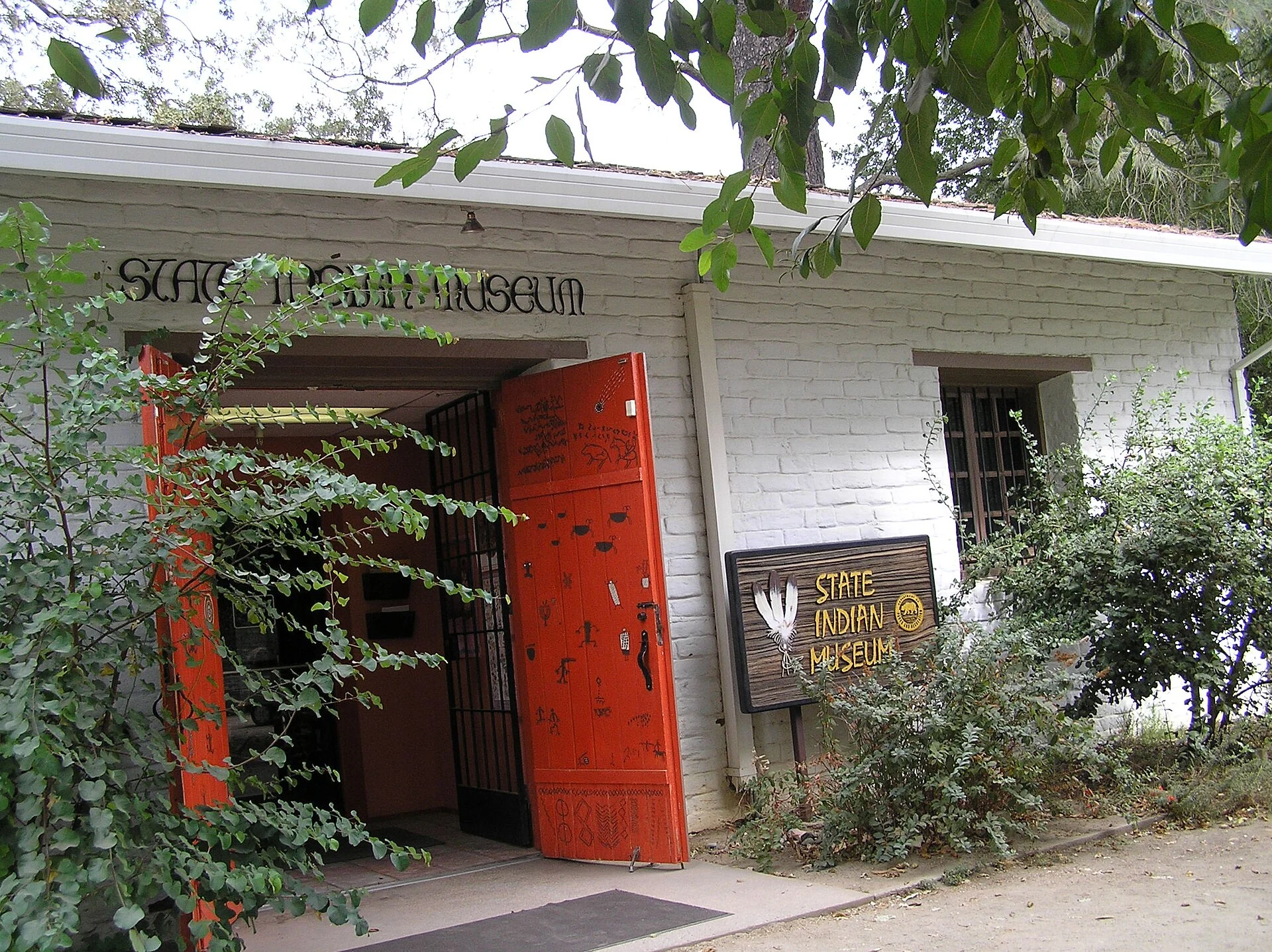
The State Indian Museum, adjacent to Sutter’s Fort in Sacramento, is dedicated to telling the stories of California’s Native peoples — the Maidu, Miwok, Yokuts, Pomo, Chumash, and dozens of other nations — through one of the finest collections of Native Californian artifacts in existence.
What to See
| Feature | Details |
|---|---|
| Basket Collection | World-class collection of California Indian baskets — among the finest in the world. Coiled, twined, and woven baskets representing dozens of tribal traditions. Some baskets are watertight enough to boil water |
| Ceremonial Regalia | Dance regalia, feathered headdresses, and ceremonial objects from California’s diverse Native nations. These items carry deep spiritual significance |
| Traditional Tools & Technology | Hunting implements, fishing equipment, food processing tools, and other technologies that sustained California’s Native peoples for millennia |
| Beadwork & Trade | Shell bead currency, trade goods, and decorative beadwork illustrating the extensive trade networks that connected California’s Native communities |
| Contemporary Perspectives | Exhibits incorporating the voices and perspectives of contemporary Native Californians — connecting the ancient past to the living present |
California’s Native Peoples
| Nation/Region | Significance |
|---|---|
| Maidu | Sacramento Valley and Sierra Nevada foothills. Complex basket traditions. Managed forests with controlled burns |
| Miwok | Central California — Sierra to Coast. Elaborate dance traditions. Managed oak woodlands for acorn harvest |
| Yokuts | San Joaquin Valley. One of the largest Native populations in pre-contact California. Complex village systems |
| Pomo | North Coast and Clear Lake. Masters of basket weaving — their baskets are considered among the finest in the world |
| Chumash | Southern Coast. Built ocean-going plank canoes (tomols). Complex maritime culture |
Best Time to Visit
| Season | Best For |
|---|---|
| Spring (Mar–May) | 🌸 Comfortable Sacramento weather. Combine with Sutter’s Fort next door. Cultural events |
| Fall (Sep–Nov) | 🍂 Acorn harvest season — the staple food of many California tribes. Cultural demonstrations. Cool weather |
| Summer (Jun–Aug) | Hot in Sacramento but the museum is air-conditioned. Full hours. Summer programming |
| Winter (Dec–Feb) | Mild Sacramento winter. Indoor museum. Fewer visitors |
Frequently Asked Questions
How many Native nations were in California?
Over 100 distinct tribal groups speaking more than 80 languages from at least six language families. Pre-contact California had more linguistic diversity than all of Europe. Each nation had its own territory, traditions, and cultural practices.
What happened to California’s Native peoples?
California’s Indigenous population collapsed by approximately 90% between 1769 and 1900. The mission system, the Gold Rush, state-sponsored violence, and disease devastated Native communities. Today, California has more Native Americans than any other state — but many communities are still rebuilding.
Is this connected to Sutter’s Fort?
Yes — the museum is adjacent to Sutter’s Fort State Historic Park. The two sites together tell the story of California before and after European contact. Sutter’s Fort represents the arrival of settlers; the State Indian Museum represents the 10,000+ years before that arrival.
Make it a road trip: Pair a visit with Sutter’s Fort State Historic Park (a short drive away) or Governor’s Mansion State Historic Park (a short drive away).
🪶 10,000 Years Before the Gold Rush
Baskets that hold water. Languages that outnumber Europe’s. Cultures that managed a continent. California’s first people — and the museum that honors them.
Wildlife & Nature
State Indian Museum — in Sacramento adjacent to Sutter’s Fort — documents the cultures of California’s Native American peoples — the most linguistically diverse and densely populated indigenous region north of Mexico. The museum houses baskets, beadwork, and ceremonial regalia from tribes across the state. Highlights include Ishi artifacts — Ishi was the last member of the Yahi people, who emerged from hiding in 1911 as the “last wild Indian in North America.”
Nearby Attractions
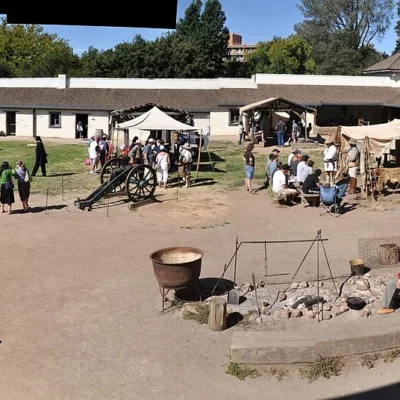
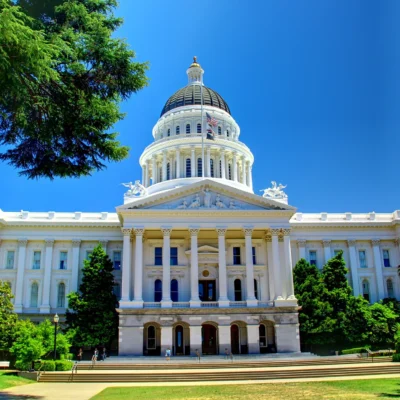
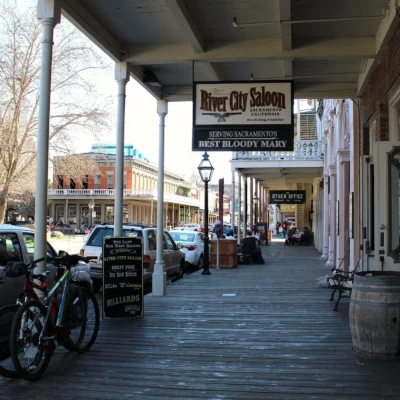
Sutter’s Fort SHP — adjacent — has the reconstructed 1839 fort (the first non-native settlement in California’s Central Valley). Sacramento State Capitol — 1 mile west — has the museum. Old Sacramento — 1 mile west — has the Railroad Museum. California State Fair — at Cal Expo — has the annual summer fair.

🐾 Dogs & Pets at State Indian Museum
- Pets allowed? statewide rule
- Dogs are permitted in California State Parks only in developed areas — campgrounds, picnic areas, parking lots and paved roads — and are prohibited on most trails, beaches and undeveloped areas unless specifically designated as dog-friendly.
- Leash rule statewide rule
- Maximum 6-foot leash at all times; dogs may not be left unattended.
- Beaches & swim areas statewide rule
- Dogs are prohibited on most state beaches; only beaches specifically designated as dog-allowed permit them (varies by park).
- Cabins & lodging statewide rule
- Pets are generally not allowed in buildings or cabins; overnight campers must keep dogs inside a tent or vehicle at night.
- Statewide exceptions statewide rule
- Designated dog-friendly trails and beaches vary park by park; misrepresenting a pet as a service animal is a misdemeanor.
Are dogs allowed at State Indian Museum?
Dogs are permitted in California State Parks only in developed areas — campgrounds, picnic areas, parking lots and paved roads — and are prohibited on most trails, beaches and undeveloped areas unless specifically designated as dog-friendly. Individual parks can post stricter rules — check signage on arrival.
Rules verified July 2026 via parks.ca.gov. More: California state parks guide · Dog rules in all 50 states compared
Park Location
Plan your gear for State Indian Museum
From our editorial guides, matched to this park’s activities: