Sue Meg State Park
Gateway to the Redwoods
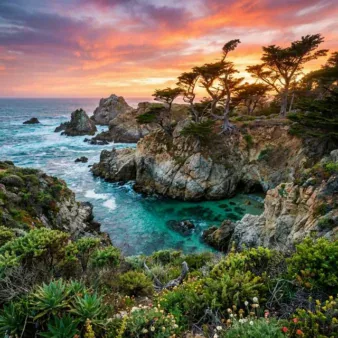
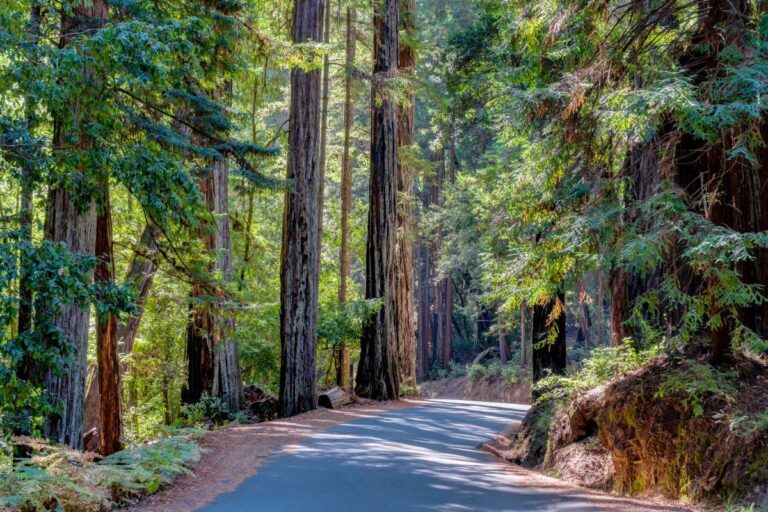
Sue Meg State Park (formerly Patrick’s Point) sits on a forested headland overlooking the Pacific Ocean, about 30 miles north of Eureka in Humboldt County. The park provides easy access to both coastal redwoods and Redwood National and State Parks.
124 Campsites in Three Loops
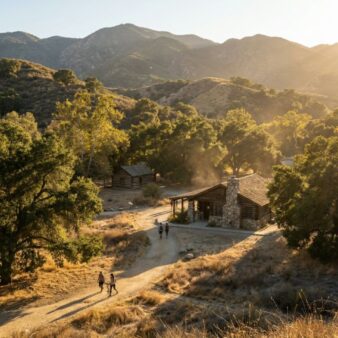
The campground offers sites across Abalone, Penn, and Agate loops, all nestled among old-growth spruce and alder forests.
| Feature | Details |
|---|---|
| Total Sites | 124 campsites + 4 cabins |
| Amenities | Picnic table, fire pit, coin showers |
| RV Limit | 31 feet (no hookups) |
| Cabins | ADA accessible, sleep 6 |
| Reservations | Up to 6 months in advance |
Peak season (May-Sept): Reserve early. Off-peak (Oct-Apr): First-come, first-served available.
Coastal Trails & Tide Pools
Explore headland trails to dramatic overlooks, sea stacks, and excellent tide pooling at low tide. The Rim Trail offers stunning Pacific views, while Agate Beach is perfect for hunting for semi-precious stones.
Sumêg Village
This recreated Yurok village within the park offers an authentic glimpse into the culture of the region’s indigenous people, with traditional plank houses and a sweat house.
What happened to Patrick’s Point State Park?
In 2021, the park was officially renamed Sue Meg State Park to honor the Yurok ancestral name for the area. The park is often still searchable under its former name.
How far in advance should I book camping?
For summer weekends (May-September), book as soon as reservations open–6 months in advance. Sites sell out quickly. Off-season visitors may find walk-up availability.
Things to Do
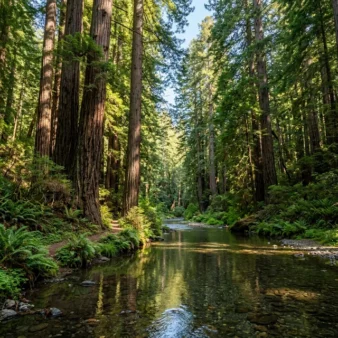
California state parks span an extraordinary range of landscapes — from ancient redwood forests and rugged Pacific coastline to Mojave Desert dunes and Sierra Nevada alpine meadows. Depending on the park, visitors can enjoy hiking through old-growth groves, swimming and surfing along miles of wild beaches, camping beneath towering sequoias, kayaking coastal sea caves, mountain biking oak-studded foothills, fishing in alpine lakes, rock climbing granite formations, and wildlife watching for everything from elephant seals to California condors. Many parks also preserve important cultural and historic sites, including Native American heritage areas, Gold Rush-era settlements, and Spanish mission ruins.
Best Time to Visit
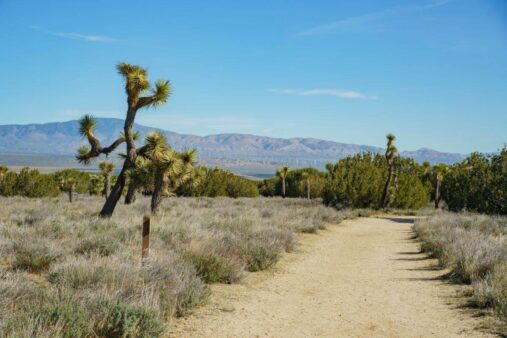
California’s parks are a year-round destination, though the ideal season depends on the region. Coastal parks enjoy mild weather from spring through fall, with summer fog keeping temperatures comfortable along the central and northern coast. Desert parks like Anza-Borrego are best visited October through April — summer temperatures can exceed 110°F. Mountain parks in the Sierra Nevada are most accessible June through October, when snow melts and trails open. Spring (March–May) brings wildflower super blooms in the southern deserts. Fall offers warm days, thinner crowds statewide, and stunning foliage at higher elevations. Winter is the quiet season at most parks and brings excellent whale watching along the coast.
Visitor Tips
Most California state parks charge a day-use parking fee of $10 per vehicle: purchasing an annual pass ($125) is highly recommended if you plan to visit multiple parks. Camping reservations can be made through ReserveCalifornia up to 6 months in advance — popular coastal campgrounds book within minutes of opening. Cell service is limited or nonexistent in many parks, so download maps and directions before you leave. Bring layers: California’s microclimates can shift dramatically even within a single park. Dogs are generally allowed in campgrounds and on paved roads but not on most trails or beaches in state parks.
Explore More California State Parks
Sue Meg State Park is one of many outstanding state parks in California. Discover more parks in our Best State Parks in California guide, or use our Park Finder to search by activity, location, or features.