🌤 Weather at West Bend Recreation Area by season
| Spring | Summer | Fall | Winter |
|---|---|---|---|
| 20–71 °F | 55–88 °F | 23–78 °F | 7–35 °F |
Each range runs from the coldest monthly average low to the warmest monthly average high in that season (1991-2020 climate normals), measured at Lake Sharpe Prj, 6 mi away, elevation 1,461 ft. Conditions at the park can differ from the station, especially where elevation differs — check a forecast before you go.

🏆 Big Bend Country — Recreation area at the dramatic Big Bend of the Missouri River — where the river makes a 25-mile loop to cover just 1.5 miles of distance
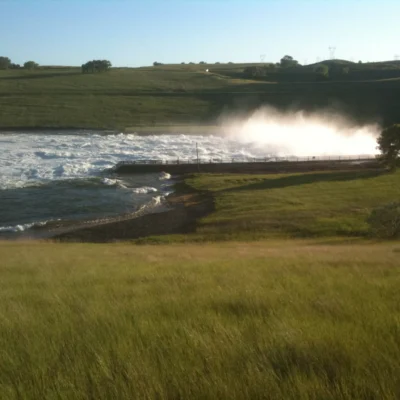
West Bend Recreation Area sits at the dramatic Big Bend of the Missouri River in Lyman County — one of the most remarkable geographic features on the entire Missouri. At the Big Bend, the river makes a 25-mile loop around a narrow neck of land just 1.5 miles wide. Lewis and Clark portaged across this neck in September 1804, saving a full day of paddling. Big Bend Dam (completed 1963) flooded much of the bend, creating Lake Sharpe. The Crow Creek Sioux Tribe’s reservation borders the area — the Crow Creek people suffered the devastating Whitestone Hill and Crow Creek internment in the 1860s, one of the darkest chapters in Dakota history.
Visitor Information
| Detail | Information |
|---|---|
| Location | Lyman County, SD |
| Entry Fee | SD Park Entrance License required |
| Geography | 25-mile loop for 1.5 miles! |
| Lewis & Clark | Portaged here 1804! |
About West Bend
West Bend Recreation Area in Lyman County provides recreation at the western side of the Missouri River’s Big Bend — the dramatic 25-mile loop that so impressed Lewis and Clark in 1804. The bend nearly creates an island — the river comes within 1.5 miles of itself while traveling 25 miles around the loop. It’s one of the most remarkable geographic features on the Missouri.
Things to Do
Fishing for walleye and bass on Lake Sharpe, camping (90+ sites), boating, exploring the Big Bend geography, and tracing the Lewis and Clark expedition route.
Insider Tips
Big Bend: West Bend sits near the Big Bend of the Missouri — where the river makes a dramatic 25-mile loop that covers only 1.5 miles as the crow flies. Pro tip: Lewis and Clark noted the Big Bend in 1804 — they walked across the narrow neck while the boats went around the loop. Native American history: The Big Bend area was home to the Arikara — agricultural people who lived in earth lodge villages along the Missouri.
Best Time to Visit
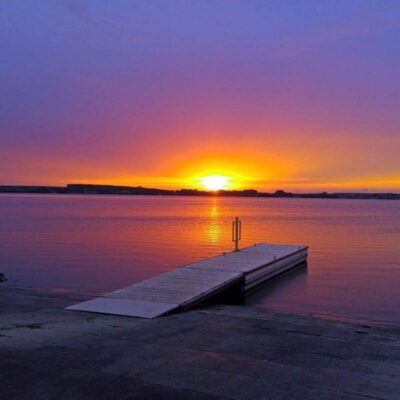
Summer: Lake recreation. Fall: Dramatic sky photography. Spring: Fishing and birding. Winter: Austere prairie beauty.
Frequently Asked Questions
Who were the Arikara?
The Arikara were agricultural people who lived in permanent earth lodge villages along the Missouri River — growing corn, beans, squash, and sunflowers. They were related to the Pawnee. Smallpox epidemics (1780s, 1830s) devastated their population — reducing them from 20,000+ to fewer than 2,000. The Arikara eventually merged with the Mandan and Hidatsa at Fort Berthold Reservation in North Dakota.
Keep exploring: The closest neighbors are Sandy Shore Recreation Area (a short drive away) and North Wheeler Recreation Area (a short drive away).
🌊 Visit West Bend Recreation Area
Big Bend — 25-mile river loop, Lewis & Clark portage of 1804!
Wildlife & Nature
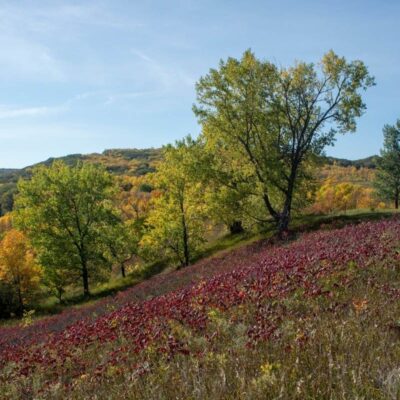
West Bend RA — on Lake Sharpe. The area’s Missouri River bluffs, prairie, and lake support bald eagles, white-tailed deer, and ring-necked pheasants.
Nearby Attractions
Pierre — nearby. Missouri River — at the park. Lower Brule Indian Reservation — nearby.

⛺ Camping at West Bend Recreation Area: Campgrounds & Cabins
| Campsites | 120 sites — 120 campsites across 3 campgrounds: Campgrounds 1 and 2 have 50-amp electric pedestals ($30/night); Campground 3 has 30-amp electric and no-electric sites ($23/night non-electrical). Dump station, flush toilets and showers (may close Oct. 1-April 30); vault toilets remain open year-round. |
|---|---|
| Cabins & Lodging | 4 camping cabins at $60/night: heat, A/C, electricity, bunk bed plus double bed, table and benches, fire grate, picnic table, porch; no restroom, running water, linens or kitchen. |
| Pets | Statewide SD GFP rule applies: April 1-Sept. 30 pets must be under immediate control on a leash no longer than 10 ft; Oct. 1-March 31 leash not mandatory but pet must be under immediate control. Pets (except service animals) prohibited on swimming beaches and in park buildings. |
| Reservations | Book online at reservations.gooutdoorssouthdakota.com or call 1.800.710.2267. Reservation window opens 90 days before arrival. South Dakota park entry license required per vehicle: residents $10/day or $40/year, nonresidents $15/day or $60/year. |
| Special sites | ADA-accessible camping cabins, boat ramp, fish cleaning station, flush toilets, group picnic shelters, picnic tables, showers and vault toilets. Located on Lake Sharpe, a Missouri River reservoir formed by Big Bend Dam (U.S. Army Corps of Engineers), southeast of Pierre; recreation area operated by South Dakota Game, Fish and Parks. |
| Season notes | Open year-round. Between Oct. 1 and April 30, showers, flush toilets and other water systems may be closed; vault toilets remain open year-round. |
Camping questions about West Bend Recreation Area
Can you camp at West Bend Recreation Area?
Yes. West Bend Recreation Area has 120 campsites. 120 campsites across 3 campgrounds: Campgrounds 1 and 2 have 50-amp electric pedestals ($30/night); Campground 3 has 30-amp electric and no-electric sites ($23/night non-electrical). Dump station, flush toilets and showers (may close Oct. 1-April 30); vault toilets remain open year-round.
How do you reserve a campsite at West Bend Recreation Area?
Book online at reservations.gooutdoorssouthdakota.com or call 1.800.710.2267. Reservation window opens 90 days before arrival. South Dakota park entry license required per vehicle: residents $10/day or $40/year, nonresidents $15/day or $60/year.
Are there cabins at West Bend Recreation Area?
4 camping cabins at $60/night: heat, A/C, electricity, bunk bed plus double bed, table and benches, fire grate, picnic table, porch; no restroom, running water, linens or kitchen.
Are pets allowed at the West Bend Recreation Area campground?
Statewide SD GFP rule applies: April 1-Sept. 30 pets must be under immediate control on a leash no longer than 10 ft; Oct. 1-March 31 leash not mandatory but pet must be under immediate control. Pets (except service animals) prohibited on swimming beaches and in park buildings.
Source: gfp.sd.gov (verified July 2026). Details change seasonally — confirm when booking.
🐾 Dogs & Pets at West Bend Recreation Area
- Pets allowed? statewide rule
- Pets are allowed in South Dakota state parks and recreation areas, including campgrounds and most trails, but not in park buildings or on designated swim beaches.
- Leash rule statewide rule
- April 1 - September 30: leash no longer than 10 ft required at all times; October 1 - March 31: leash optional but pets must be under immediate control
- Beaches & swim areas statewide rule
- Pets (except service animals) are not allowed on designated swimming beaches
- Cabins & lodging statewide rule
- Dogs and cats allowed in pet-designated lodges, cabins and suites (roughly 40 parks/recreation areas have designated pet-friendly cabins) with payment of a pet accommodation fee
- Pet fees statewide rule
- No day-use or camping pet fee; a pet accommodation fee is charged for pet-designated lodging
- Statewide exceptions statewide rule
- Pets prohibited in all park buildings and on the Summit Trail at Bear Butte State Park
Are dogs allowed at West Bend Recreation Area?
Pets are allowed in South Dakota state parks and recreation areas, including campgrounds and most trails, but not in park buildings or on designated swim beaches. Individual parks can post stricter rules — check signage on arrival.
Rules verified July 2026 via gfp.sd.gov. More: South Dakota state parks guide · Dog rules in all 50 states compared
Park Location
Plan your gear for West Bend Recreation Area
From our editorial guides, matched to this park’s activities: