
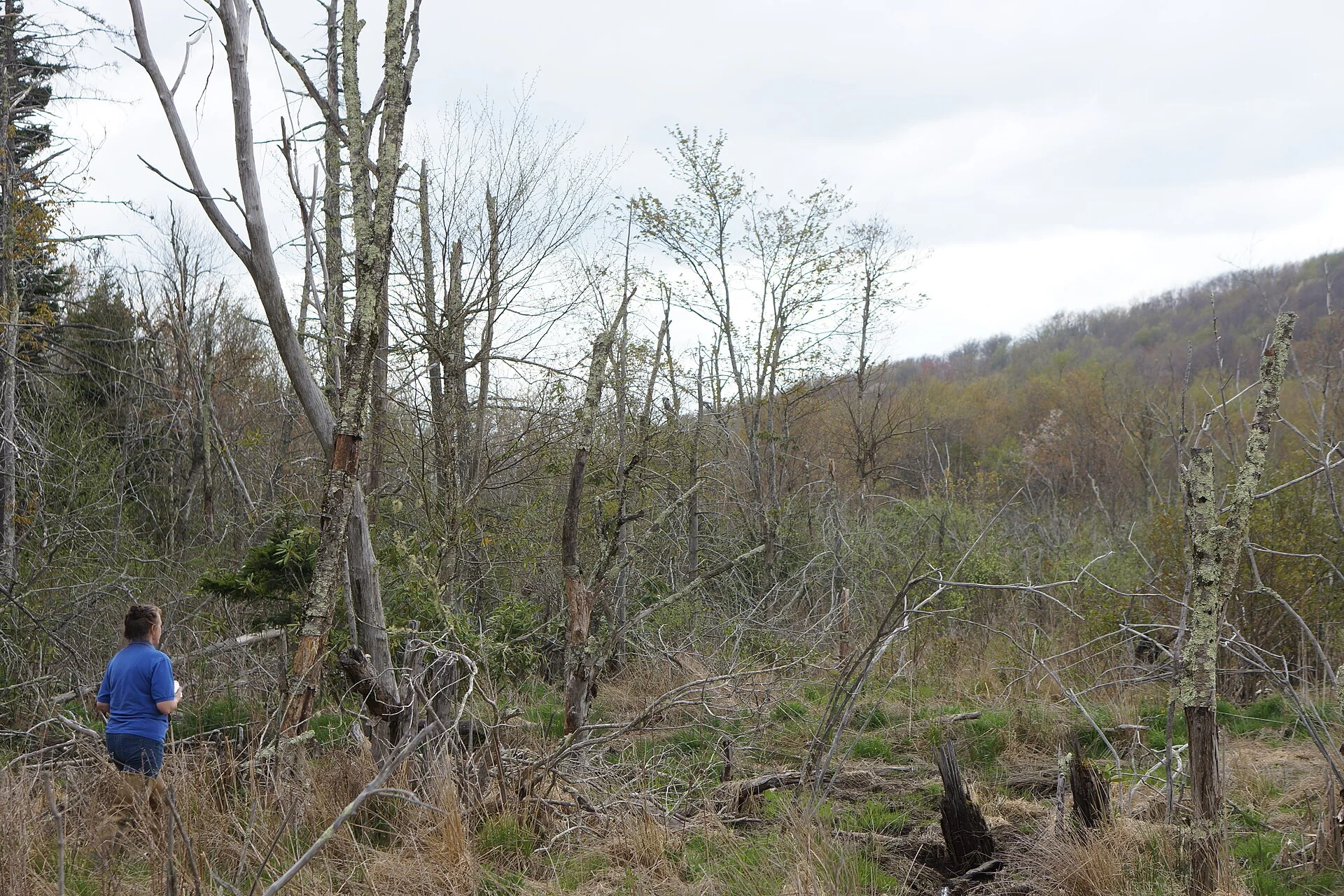
🌤 Weather at Beech Creek Bog State Natural Area by season
| Spring | Summer | Fall | Winter |
|---|---|---|---|
| 30–66 °F | 55–77 °F | 32–70 °F | 21–42 °F |
Each range runs from the coldest monthly average low to the warmest monthly average high in that season (1991-2020 climate normals), measured at Blowing Rock 1NW, 3 mi away, elevation 3,850 ft. Conditions at the park can differ from the station, especially where elevation differs — check a forecast before you go.

🌿 A Pocket of the Ice Age Trapped in the Appalachian Mountains — Where Sundews and Cranberries Survive 1,000 Miles South of Home — Beech Creek Bog State Natural Area in Watauga County, North Carolina, rare Southern Appalachian mountain bog, sphagnum moss wetland, boreal relict plant community, sundew (carnivorous plant), cranberry, endangered species habitat, high-elevation bog ecosystem, Blue Ridge Conservancy protected — Watauga County, NC
When the glaciers retreated 10,000 years ago, they left behind pockets of cold, wet habitat in the highest hollows of the Appalachians. Most of these bogs have disappeared — drained for farmland, filled for development, or simply dried out as the climate warmed. Beech Creek Bog is one of the survivors.
It’s a sphagnum bog at 3,000 feet in North Carolina — a place where plants that belong in Canada somehow persist in the South. Sundews — tiny carnivorous plants — trap insects in sticky leaves. Cranberries — yes, cranberries — fruit in the acidic water. And the sphagnum moss that built this bog keeps growing, one millimeter at a time, as it has for millennia.
What Makes It Special
| Feature | Details |
|---|---|
| Boreal Relict Community | Plants that belong in Canada, Vermont, or Maine — stranded here since the Ice Age. The cold, acidic, waterlogged conditions of the bog preserve a plant community that time forgot |
| Sundew | Round-leaved sundew (Drosera rotundifolia) — a carnivorous plant that traps insects with sticky droplets on its leaves. It digests them for nitrogen that the nutrient-poor bog can’t provide |
| Cranberry | Wild cranberries growing in a North Carolina mountain bog — 1,000 miles south of the commercial cranberry bogs of Massachusetts. A living relic of colder times |
| Sphagnum Moss | The foundation of the bog. Sphagnum holds 20 times its weight in water, acidifies the soil, and builds peat over centuries. Without it, there is no bog |
| Rare Plants | Multiple state-listed rare and endangered plant species find refuge here. The bog’s specific pH, hydrology, and temperature create conditions found almost nowhere else in the Southeast |
How a Bog Works
| Process | What Happens |
|---|---|
| Water | Groundwater seeps into a hollow with poor drainage. The water table stays at or near the surface year-round. Standing water saturates the soil, cutting off oxygen |
| Sphagnum | Sphagnum moss colonizes the wet ground. It acidifies the water (pH 3.5–4.5 — as acidic as vinegar). The acid slows decomposition. Dead plant material accumulates as peat |
| Nutrients | The acidic, oxygen-poor peat locks up nitrogen and phosphorus. Plants can’t access nutrients through their roots. Some evolve carnivory — sundews digest insects for what the soil won’t give |
| Time | Peat accumulates at roughly 1 millimeter per year. A 3-foot peat layer represents 1,000 years of growth. Beech Creek Bog has been building since the last Ice Age |
Best Time to Visit
| Season | Best For |
|---|---|
| Summer (Jun–Aug) | 🌸 Sundew at peak — sticky traps glistening in the sun. Cranberry flowering. Bog at its most active. Best conditions for viewing the plant community |
| Fall (Sep–Oct) | 🍂 Cranberry fruiting. Bog grasses turning gold. Blue Ridge foliage framing the bog. Cool temperatures |
| Spring (Apr–May) | Bog greening up. Sphagnum bright green. Wildflowers in the surrounding forest. Wet underfoot — very wet |
| Winter (Dec–Feb) | Bog dormant. Frozen sphagnum. Snow on the ground. The ice that made this place visible in the landscape |
Frequently Asked Questions
Can I walk in the bog?
Access is limited to protect this fragile ecosystem. Mountain bogs are among the rarest habitats in the Southeast — walking on sphagnum can damage centuries of growth. Check with NC Natural Heritage Program for current access policies and guided visits.
Why are there carnivorous plants?
Because the soil is too poor for normal nutrition. Bog soil is so acidic and nutrient-depleted that some plants evolved to get their nitrogen from insects instead of the ground. Sundews trap bugs with sticky leaves. Pitcher plants drown them in tubes. It’s evolution’s answer to bad soil.
More parks nearby: Moses H. Cone Memorial Park is a short drive away, while Grandfather Mountain State Park lies a short drive away.
🌿 The Ice Age Left a Garden in the Mountains
Cranberries in North Carolina. Carnivorous plants trapping insects for food. Sphagnum moss building peat one millimeter at a time. A 10,000-year-old ecosystem surviving in a warming world.
Wildlife & Nature
Beech Creek Bog SNA — preserves a rare Southern Appalachian bog — one of the most endangered ecosystems in North America. The bog’s sphagnum moss, cranberry, and sundew represent Ice Age relict species stranded when glaciers retreated. Bog turtles (the smallest and rarest turtle in North America) may inhabit similar bogs in the region.
Nearby Attractions
Watauga County — surrounding. Grandfather Mountain — nearby.

🐾 Dogs & Pets at Beech Creek Bog State Natural Area
- Pets allowed? statewide rule
- Pets are permitted in all North Carolina state parks as long as they are on an attended leash and under the constant control of the owner.
- Leash rule statewide rule
- Attended leash or other restraint no longer than 6 feet required at all times
- Beaches & swim areas statewide rule
- Pets are not permitted at swim areas or in bathhouses
- Cabins & lodging statewide rule
- Pets are strictly prohibited from entering any building, including cabins; no pet-friendly cabin program
- Statewide exceptions statewide rule
- Not all campgrounds allow pets (contact the park office first); pets must be confined to tent or vehicle during quiet hours (10 p.m.-7 a.m.); at Hammocks Beach visitors must arrange their own transportation for pets to Bear Island
Are dogs allowed at Beech Creek Bog State Natural Area?
Pets are permitted in all North Carolina state parks as long as they are on an attended leash and under the constant control of the owner. Individual parks can post stricter rules — check signage on arrival.
Rules verified July 2026 via ncparks.gov. More: North Carolina state parks guide · Dog rules in all 50 states compared
Park Location
Plan your gear for Beech Creek Bog State Natural Area
From our editorial guides, matched to this park’s activities:
Top Tours & Activities Near Boone
 from $125
 from $29
 from $10