Ecola State Park
Where Ancient Rainforest Meets the Pacific on Oregon’s Most Cinematic Coastline
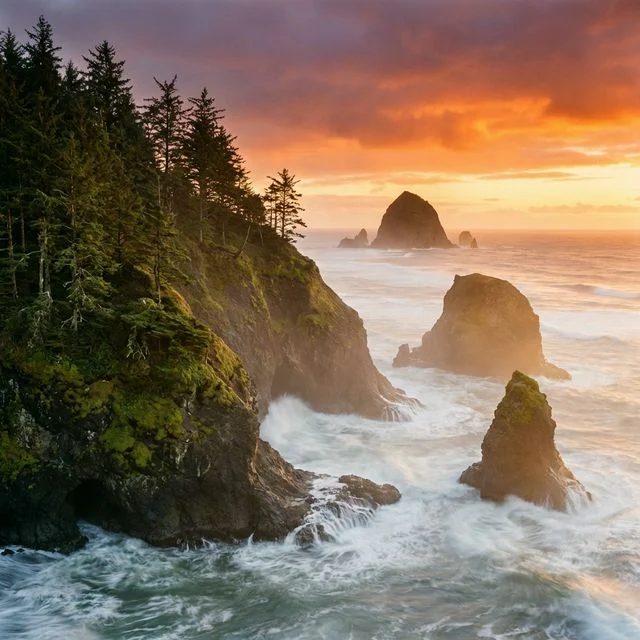
Ecola State Park is the Oregon coast at its most magnificent, most cinematic, and most achingly beautiful — nine miles of wild, windswept headlands, towering sea stacks, hidden crescent coves, and ancient old-growth Sitka spruce forest perched on dramatic basalt cliffs above the Pacific Ocean between the resort town of Cannon Beach and the seaside community of Seaside. The name comes from the Chinook word ekoli, meaning “whale,” bestowed by Captain William Clark of the Lewis and Clark Expedition, who crossed this very headland in January 1806 with a party of eleven men to trade with the Tillamook people for blubber from a beached whale on the shore below — and who wrote in his journal that the view from the summit was “the grandest and most pleasing prospects” he had witnessed on the entire transcontinental expedition. If you’ve ever seen a photograph of a rugged Oregon headland carpeted in emerald forest, with Haystack Rock rising from the surf in the distance and a procession of sea stacks fading into coastal mist — there is an excellent chance you were looking at Ecola State Park.
This is also one of the most culturally significant filming locations in American cinema history. The Goonies dispatched its kids down the park road through these very forests on their bicycles. Point Break staged its climactic final beach scene at Indian Beach, where Keanu Reeves releases Patrick Swayze into the storm. Twilight filmed its brooding coastal scenes on these headlands. But long before Hollywood discovered Ecola, the landscape was already the stuff of legend — Lewis and Clark’s trail across Tillamook Head remains one of the most historically significant footpaths in the United States, a tangible connection between our modern world and the moment when American exploration first reached the Pacific shore and looked westward across an ocean with nothing beyond it but horizon.
Ecola Point: The Defining Oregon Coast Viewpoint
The main overlook at Ecola Point delivers what is arguably — and many would say unarguably — the single most iconic viewpoint on the entire 363-mile Oregon coast. From the parking area and short paved path to the bluff edge, you look south across the sweeping arc of Crescent Beach to the sea stacks of Cannon Beach, with Haystack Rock — a 235-foot basalt monolith, the third-tallest intertidal structure in the world, and one of the most photographed natural features in the Pacific Northwest — rising from the surf in the middle distance like a cathedral emerging from the ocean. On clear days, the view extends past Haystack Rock to Cape Meares, past Cape Meares to Neahkahnie Mountain, past Neahkahnie to Cape Lookout — wave after wave of forested headland receding into increasingly ethereal, increasingly blue, increasingly dreamlike layers of coastal atmosphere.
At sunrise, the headlands and sea stacks are backlit in gold and rose, with long shadows stretching across the beach and the surf catching fire. At sunset, the Pacific ignites in horizontal bands of coral, vermillion, and molten copper that reflect off the wet sand below. But in the mist and fog and soft rain that define the Oregon coast for perhaps 200 days of the year, the scene takes on a moody, atmospheric, almost Japanese quality that many photographers and painters consider more beautiful than the clear-sky version — layers of grey, silver, and every shade of green merging into a composition that looks like a watercolor painting slowly coming to life in front of your eyes.
Roosevelt elk — the largest elk subspecies in North America, with bulls exceeding 1,000 pounds and carrying massive, multi-tined racks during the autumn rut — are frequently spotted grazing in the grassy meadows near the Ecola Point parking area, particularly at dawn and dusk. These are genuinely wild animals living in their native habitat; maintain at least 100 feet of distance and never approach, especially during rut season (September–October) when bulls are aggressive and unpredictable. A Roosevelt elk bull is easily capable of killing a human being and has occasionally done so.
Indian Beach: Surfer’s Cove, Tidepool Paradise, and Film Set
Indian Beach is a sheltered crescent cove accessible via a separate spur road within the park — a dramatic pocket beach flanked by forested headlands and exposed basalt formations, with consistent surf that makes it one of the premier surfing destinations on the Oregon coast. The beach faces northwest, catching Pacific swells that wrap around Tillamook Head before meeting the headland at Indian Beach, producing smooth, well-shaped waves that attract surfers year-round. Winter brings the biggest and most powerful swells — overhead to double-overhead waves that demand experience, a thick wetsuit (Pacific water temperature hovers around 50°F year-round), and genuine ocean awareness. Summer surf is smaller but more consistent, making it accessible to intermediate surfers and ambitious beginners with appropriate instruction.
At both headlands of Indian Beach, low tide reveals extensive tidepools that constitute one of the richest intertidal ecosystems on the northern Oregon coast. The pools teem with giant green anemones opening and closing with the surge, purple sea urchins packed into self-carved holes in the basalt, vivid ochre sea stars (recovering from a devastating wasting disease), colonies of mussels and goose barnacles clinging to wave-washed rock, hermit crabs carrying their borrowed shells, and nudibranchs — shell-less marine snails in improbable colors — gliding across surfaces invisible to the casual glance. The tidepools here are among the most accessible and diverse on the entire Oregon coast. Check tide tables before visiting — tides below +1.0 feet provide the best access to the richest pools. Never turn your back to the ocean at Indian Beach — sneaker waves are a documented hazard and have killed people on Oregon beaches, including beaches that appear calm.
Indian Beach gained lasting cinematic fame as the filming location for the emotionally devastating final scene of the 1991 Kathryn Bigelow surf film Point Break — the scene where FBI agent Johnny Utah (Keanu Reeves) releases fugitive spiritual surfer Bodhi (Patrick Swayze) to paddle into a once-in-a-generation storm swell rather than arrest him. The beach, the headlands, the grey-green waves, and the rain are all authentically Ecola. Indian Beach also appeared in the 1985 classic The Goonies — the Lighthouse Lounge (the Fratellis’ hideout) was a temporary set constructed at nearby Ecola Point, and the exuberant bicycle ride through the forest was filmed on the winding park road that connects Ecola Point to Indian Beach.
Tillamook Head: Walking in Lewis and Clark’s Footsteps
The Tillamook Head Trail is a strenuous, spectacular 6.3-mile segment of the Oregon Coast Trail that traverses the massive headland separating Seaside from Cannon Beach — a route that directly and verifiably follows the path taken by Captain William Clark and a party of eleven men (including Sacagawea, who insisted on joining the expedition to see the ocean and the whale) in January 1806. Clark crossed this headland from the expedition’s winter camp at Fort Clatsop to reach a beached whale on the shore near present-day Cannon Beach, and his journal entry describes the view from the summit — with the Pacific stretching infinitely westward, the coast curving sinuously north and south, and the distant snow-covered peaks of the Cascade Range visible on the eastern horizon — as one of the defining moments of the entire Corps of Discovery expedition.
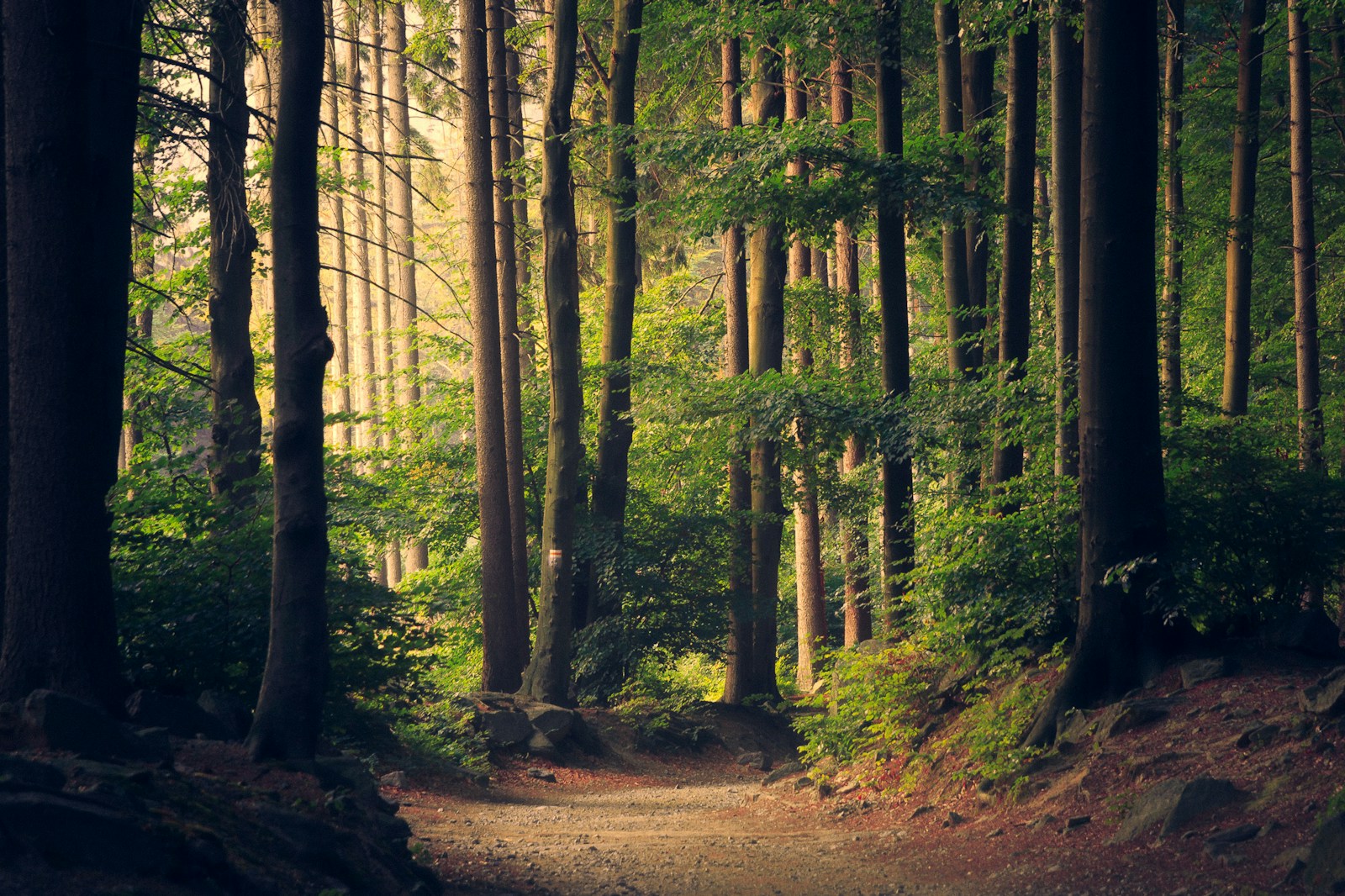
The trail climbs through magnificent, cathedral-like old-growth Sitka spruce forest — trees spanning over 200 years old and 8 feet in diameter, with massive, buttressed trunks draped in cascading curtains of bright green moss, licorice fern, and lungwort lichen. The understory is a dense, impenetrable tangle of sword fern, salal, salmonberry, and Oregon grape — a temperate rainforest ecosystem receiving over 80 inches of precipitation annually that supports one of the highest concentrations of biomass per acre of any ecosystem on Earth. The forest floor is a deep, spongy layer of decomposing needles, fallen branches, and massive nurse logs that support entire successive ecosystems of hemlock seedlings, huckleberry bushes, bracket fungi, and invertebrates. In the fog and mist that frequently envelop the headland — sometimes for days at a time — the forest takes on an ethereal, primeval, almost sacred quality: all greens, greys, and profound silence broken only by the distant bass of the ocean below and the descending spiral song of the Pacific wren.
At the headland’s western edge, trail viewpoints reveal the Tillamook Rock Lighthouse — known locally and affectionately as “Terrible Tilly” — perched on an isolated basalt sea stack one mile offshore. Built in 1881 under some of the most brutal and dangerous construction conditions in the history of American lighthouse engineering (workers endured four months of winter storms during construction, with massive waves regularly sweeping the 90-foot-high rock and killing one surveyor before a single stone was laid), Tilly operated until 1957, enduring decades of Pacific storms that hurled rocks through its lantern room windows and once deposited a boulder weighing over 100 pounds on the gallery deck. The lighthouse is now a privately owned columbarium — a repository for cremated remains, the most unusual final resting place imaginable. Tilly is not accessible to visitors, but its dramatic, storm-battered, moss-encrusted silhouette against the Pacific horizon — sometimes clear, sometimes wrapped in fog, sometimes barely visible through curtains of rain — is one of the most photographed and most poignant features on the Oregon coast.
A primitive hiker’s camp with rough wooden shelters is available at the trail’s midpoint for overnight backpackers — one of the few backcountry camping opportunities directly on the immediate Oregon coastline. The camp provides no water (carry your own) and no services, but falling asleep to the sound of the Pacific crashing against the cliffs hundreds of feet below is an experience that marks a person permanently. Overnight vehicle parking is not permitted within the state park gates.
Crescent Beach Trail: The Secret Beach
The Crescent Beach Trail (2.5 miles round trip) descends from Ecola Point through a dense corridor of Sitka spruce forest to a secluded, driftwood-strewn beach accessible only by trail — no road reaches this beach from any direction. The trail is moderate in overall difficulty but includes steep, frequently muddy sections where exposed roots create natural stair steps and winter storms regularly deposit new obstacles. The reward at the bottom is a crescent of untouched Oregon coastline backed by forested cliffs, with sea stacks scattered offshore and virtually no other visitors on weekdays — a pocket of coastal wilderness that feels genuinely remote despite being less than two miles from a parking lot.
At low tide, the southern headland of Crescent Beach reveals excellent tidepools, and Sea Lion Rocks — the prominent offshore stack formation visible from both the beach and Ecola Point — is often occupied by massive Steller sea lions whose barking, roaring, and occasional fighting carries across the water with startling clarity. A Steller sea lion bull can weigh over 2,500 pounds and produce a vocalization audible at a quarter mile — standing on Crescent Beach listening to a colony of them argue is a primal experience that reminds you how wild this coastline remains despite its proximity to civilization.
Wildlife and Marine Ecology
The convergence of old-growth forest, rocky headlands, and the incredibly productive California Current marine ecosystem makes Ecola one of the premier wildlife-viewing locations on the Oregon coast — and one of the finest coastal wildlife sites on the entire Pacific seaboard.
Gray whales migrate south from Arctic feeding grounds in December–January and north again in March–May, passing within a mile of the headlands in a procession that has repeated annually for at least 10,000 years. Ecola Point and the Tillamook Head viewpoints are premier whale-watching stations — bring binoculars and scan the mid-distance ocean for the distinctive heart-shaped blow, which rises 10–15 feet and disperses quickly in the wind. A small group of “resident” gray whales feeds along the Oregon coast all summer, occasionally visible from Ecola Point even outside the migration windows.
Bald eagles nest in the old-growth spruce canopy and are frequently visible soaring on updrafts above the headlands, their white heads flashing against the grey sky. Brown pelicans — once nearly extinct from DDT poisoning and now fully recovered — cruise the wave tops in formations, while common murres, pigeon guillemots, pelagic cormorants, tufted puffins (rare but present on offshore rocks), and multiple gull species nest in dense, noisy colonies on the sea stacks and cliff faces visible from every trail and overlook.
In the offshore waters, harbor seals rest on wave-washed rocks with their characteristic banana-shaped posture, Steller sea lions haul out in boisterous colonies on Sea Lion Rocks, and sea otters — once extirpated from Oregon and now slowly, tentatively returning after a century of absence — are occasionally spotted rafting in the kelp beds visible from the headlands, floating on their backs and cracking sea urchins on their chests. Every confirmed sea otter sighting off Ecola is a small ecological miracle — evidence of an ecosystem slowly healing from historical exploitation.
Visitor Guide: Planning Your Ecola Adventure
Getting There
Ecola State Park is located at the northern end of Cannon Beach, Oregon — approximately 80 miles (1.5 hours) west of Portland via US-26 through the Coast Range. The park entrance is accessed from the north end of Cannon Beach via Ecola State Park Road (signed from downtown Cannon Beach). The park road is narrow, steeply winding, and passes through dense forest — not recommended for large RVs, trailers, or wide vehicles. There are two main destinations within the park: Ecola Point (main overlook, Crescent Beach trailhead, elk meadow) and Indian Beach (surfing, tidepools, Clatsop Loop trailhead), connected by a 2.5-mile park road.
Fees and Hours
Day-use parking is $10 per vehicle (self-pay at kiosks, card accepted). Annual Oregon State Parks Day-Use Permits ($30) are accepted and represent extraordinary value for repeat visitors. The park is open year-round from dawn to dusk. No advance reservations are needed for day use, but parking is extremely limited — on summer weekends, holidays, and during whale migration season, both the Ecola Point and Indian Beach parking lots can fill by 10:00 a.m. or earlier, at which point the park closes to additional vehicles until spaces open. Arrive before 9:00 a.m. or visit on weekdays for a reasonable expectation of parking.
Best Times to Visit
Year-round — Ecola is spectacular and rewarding in every season, and regular visitors often argue passionately about which season is “best.” Summer (June – August): Warmest and driest, with temperature highs of 60–68°F, the longest days, and the most dramatic sunset light — but also the most crowded and frequently wrapped in coastal fog that may or may not burn off. Fall (September – October): Many locals’ favorite — the clearest weather, moderate crowds, excellent storm-watching as the first Pacific storms arrive, and the beginning of southbound gray whale migration. Winter (November – February): Dramatic storm watching from the headlands (never from the beach), peak gray whale migration, the fewest visitors of any season, and moody, atmospheric light beloved by photographers — but trails can be very muddy and sections occasionally close for storm damage or landslides. Spring (March – May): Wildflowers on the headlands, northbound whale migration, and increasing daylight — the forest is lushest in spring.
Essential Safety Tips
Layer clothing aggressively — the Oregon coast is cool, windy, and wet even in summer (typical highs 60–65°F; winter 45–50°F with wind chill in the 30s). Bring waterproof rain gear year-round — a clear morning can become a soaking downpour within an hour. Wear sturdy shoes with good traction for any trail — mud is a constant companion from October through May. Check tide tables before visiting Indian Beach tidepools — you need tides below +1.0 feet for the best access, and you must time your return before the tide rises. Never turn your back on the ocean and never walk on logs in the surf zone — sneaker waves are a real, documented, and periodically fatal hazard on Oregon beaches.
Frequently Asked Questions
Where exactly were The Goonies scenes filmed?
The Goonies bike ride through the forest was filmed on Ecola State Park Road. The “Lighthouse Lounge” exterior — the Fratellis’ hideout — was a temporary set built at a now-demolished structure near Ecola Point; it no longer exists. The panoramic ocean views visible from the park overlook are exactly what appears in the film. Haystack Rock, visible from Ecola Point, also appears in the movie. Note that the majority of Goonies filming locations are in Astoria (25 miles north), not in the park itself — a comprehensive Goonies filming locations map covering all sites is available from the Astoria Visitors Bureau.
Is Indian Beach safe for swimming?
The Oregon coast ocean is cold (50–55°F year-round), has strong rip currents, unpredictable wave sets, and a steeply sloped beach profile that creates powerful shore break. Swimming without a wetsuit is impractical due to cold, and casual swimming is not recommended at Indian Beach or any Oregon coast beach. An experienced surfer in a full wetsuit is the norm here. Wading in ankle-deep water is fine with constant ocean awareness, but never wade deeper than your knees and never turn your back to the incoming waves.
Can I see Terrible Tilly from the park?
Yes — the Tillamook Rock Lighthouse (“Terrible Tilly”) is visible from the Clatsop Loop Trail viewpoint, from multiple points on the Tillamook Head Trail, and occasionally from Ecola Point on very clear days. Binoculars or a telephoto lens significantly enhance the view. The lighthouse sits on an isolated rock one mile offshore and is not open to visitors — access requires a boat landing on an exposed, wave-swept rock face that effectively prevents casual visitation.
Are dogs allowed?
Dogs on leash (maximum 6 feet) are allowed on all trails within the park. Keep dogs controlled, leashed at all times, and away from wildlife, tidepools, and cliff edges. Dogs are not recommended on the full 6.3-mile Tillamook Head Trail due to the length, steep terrain, and muddy conditions that make it unpleasant for most dogs — and most dog owners. Always clean up after your pet.
How crowded does the park get?
Very crowded on summer weekends and holidays — parking lots fill by mid-morning and the park may temporarily close to additional vehicles until spaces open. Even on crowded days, the Tillamook Head Trail and Crescent Beach Trail are dramatically quieter than the Ecola Point overlook and Indian Beach — most visitors don’t hike beyond 0.5 miles from a parking lot. For the best experience, visit on weekdays, arrive before 9:00 a.m. on any weekend, or visit in the shoulder season (September–October or March–April) when crowds are manageable and the weather is often at its most dramatic and photogenic.