🌤 Weather at Lake Hiddenwood Recreation Area by season
| Spring | Summer | Fall | Winter |
|---|---|---|---|
| 19–67 °F | 55–84 °F | 21–74 °F | 4–28 °F |
Each range runs from the coldest monthly average low to the warmest monthly average high in that season (1991-2020 climate normals), measured at Selby, 5 mi away, elevation 1,908 ft. Conditions at the park can differ from the station, especially where elevation differs — check a forecast before you go.

🏆 Northern Prairie Oasis — Wooded lake in the treeless northern prairie — a surprising oasis of timber in the Great Plains
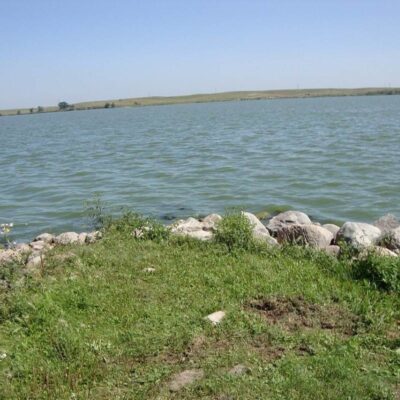
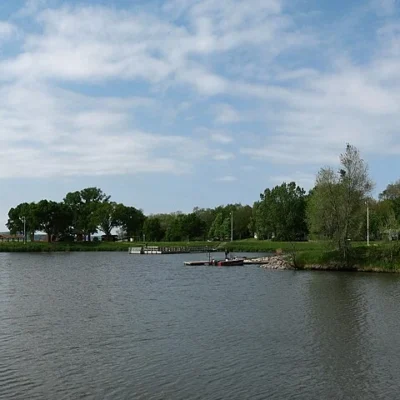
Lake Hiddenwood Recreation Area is an oasis of woodland surrounding a 63-acre lake in Walworth County — remarkable because this part of north-central South Dakota is otherwise treeless prairie. The “hidden wood” that gives the lake its name is a natural grove of elm, ash, and cottonwood in a sheltered valley — trees that survive here only because the terrain protects them from the relentless prairie winds. Early settlers prized these rare timber groves for firewood and building material. The area lies near the historic Yellowstone Trail — America’s first transcontinental highway (1912).
Visitor Information
| Detail | Information |
|---|---|
| Location | Walworth County, SD |
| Entry Fee | SD Park Entrance License required |
| Lake | 63 acres — hidden woodland! |
| Near | Yellowstone Trail — 1st US highway 1912! |
About Lake Hiddenwood
Lake Hiddenwood Recreation Area in Walworth County provides lake recreation near Selby in north-central South Dakota. The lake is “hidden” in a wooded draw on the Missouri Plateau — a surprise of trees and water in the otherwise open grassland. The area provides a scenic oasis in the prairie landscape.
Things to Do
Fishing for bass, northern pike, and bluegill, camping (40 sites), swimming, hiking, and enjoying the hidden oasis of trees and water in the northern prairie.
Insider Tips
Hidden gem: Lake Hiddenwood is a small prairie lake surrounded by cottonwood groves — the “hidden wood” in an otherwise treeless landscape. Pro tip: Trees on the Great Plains grow only along waterways — these riparian corridors provide crucial wildlife habitat and shelter. Cottonwood: The plains cottonwood was the most important tree on the prairie — providing shade, building material, and horse feed (Native Americans fed cottonwood bark to horses in winter).
Best Time to Visit
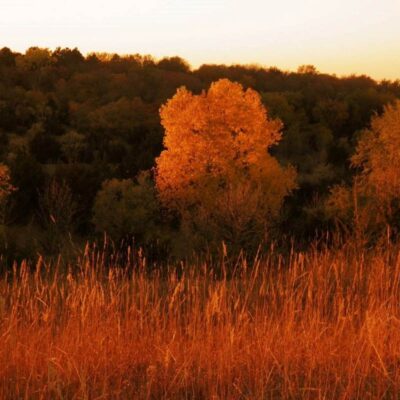
Summer: Lake swimming and fishing. Fall: Cottonwood golden foliage. Spring: Migrating birds. Winter: Quiet prairie solitude.
Frequently Asked Questions
Why were cottonwood trees so important?
On the treeless Great Plains, cottonwoods along river bottoms were vital — they provided the only shade, wood for building and fuel, and landmarks for navigation. Native Americans fed the inner bark to horses during winter when grass was buried in snow. Lewis and Clark noted cottonwoods as a sign of water. The trees grow fast (3-5 feet per year) and can reach massive size — some historic cottonwoods exceeded 100 feet tall.
More parks nearby: Swan Creek Recreation Area is a short drive away, while Little Moreau Recreation Area lies within about an hour’s drive.
Camping reservations: Book campsites and cabins for South Dakota state parks online at reservations.gooutdoorssouthdakota.com.

⛺ Camping at Lake Hiddenwood Recreation Area: Campgrounds & Cabins
| Campsites | 13 sites — 13 electrical campsites, $23/night. Dump station, drinking water, group picnic shelter, playground. |
|---|---|
| Pets | Statewide SD GFP leash rule applies (leash required April 1–Sept. 30, immediate control year-round; pets excluded from buildings and designated swim areas). |
| Reservations | Reserve online or call 1.800.710.2267. Statewide 90-day advance reservation window. South Dakota park entrance license required per vehicle: daily $10 resident/$15 nonresident, annual $40 resident/$60 nonresident. |
| Special sites | The dam (built 1927) failed and the park closed after flooding in May 2018; the dam and lake have not been rebuilt/restored. The entrance road was restored and the park reopened in 2022. Camping, hiking trails, and day-use facilities are currently open, but the lake itself remains absent. |
| Season notes | Between Oct. 1 and April 30, the dump station and other water systems may be closed; vault toilets usually remain open. |
Camping questions about Lake Hiddenwood Recreation Area
Can you camp at Lake Hiddenwood Recreation Area?
Yes. Lake Hiddenwood Recreation Area has 13 campsites. 13 electrical campsites, $23/night. Dump station, drinking water, group picnic shelter, playground.
How do you reserve a campsite at Lake Hiddenwood Recreation Area?
Reserve online or call 1.800.710.2267. Statewide 90-day advance reservation window. South Dakota park entrance license required per vehicle: daily $10 resident/$15 nonresident, annual $40 resident/$60 nonresident.
Are pets allowed at the Lake Hiddenwood Recreation Area campground?
Statewide SD GFP leash rule applies (leash required April 1–Sept. 30, immediate control year-round; pets excluded from buildings and designated swim areas).
Source: gfp.sd.gov (verified July 2026). Details change seasonally — confirm when booking.
🐾 Dogs & Pets at Lake Hiddenwood Recreation Area
- Pets allowed? statewide rule
- Pets are allowed in South Dakota state parks and recreation areas, including campgrounds and most trails, but not in park buildings or on designated swim beaches.
- Leash rule statewide rule
- April 1 - September 30: leash no longer than 10 ft required at all times; October 1 - March 31: leash optional but pets must be under immediate control
- Beaches & swim areas statewide rule
- Pets (except service animals) are not allowed on designated swimming beaches
- Cabins & lodging statewide rule
- Dogs and cats allowed in pet-designated lodges, cabins and suites (roughly 40 parks/recreation areas have designated pet-friendly cabins) with payment of a pet accommodation fee
- Pet fees statewide rule
- No day-use or camping pet fee; a pet accommodation fee is charged for pet-designated lodging
- Statewide exceptions statewide rule
- Pets prohibited in all park buildings and on the Summit Trail at Bear Butte State Park
Are dogs allowed at Lake Hiddenwood Recreation Area?
Pets are allowed in South Dakota state parks and recreation areas, including campgrounds and most trails, but not in park buildings or on designated swim beaches. Individual parks can post stricter rules — check signage on arrival.
Rules verified July 2026 via gfp.sd.gov. More: South Dakota state parks guide · Dog rules in all 50 states compared
Park Location
Plan your gear for Lake Hiddenwood Recreation Area
From our editorial guides, matched to this park’s activities: