
🌤 Weather at Nerstrand Big Woods State Park by season
| Spring | Summer | Fall | Winter |
|---|---|---|---|
| 20–68 °F | 57–82 °F | 24–73 °F | 5–29 °F |
Each range runs from the coldest monthly average low to the warmest monthly average high in that season (1991-2020 climate normals), measured at Faribault, 8 mi away, elevation 970 ft. Conditions at the park can differ from the station, especially where elevation differs — check a forecast before you go.

Hidden Falls and the Last Big Woods — Minnesota’s Ancient Forest
Nerstrand Big Woods State Park preserves one of the last significant remnants of the historic “Big Woods” — the dense maple-basswood forest that once blanketed much of south-central Minnesota before settlement cleared 99% of it for agriculture. Walking beneath the towering sugar maples and basswoods here is walking through a landscape that has been essentially unchanged for thousands of years.
The park’s crown jewel is Hidden Falls — a scenic 20-foot limestone waterfall on Prairie Creek, accessible via a half-mile hike through the forest. But what truly sets this park apart for naturalists is something you might walk past without knowing: this is the only state park in the world where the federally endangered Minnesota Dwarf Trout Lily grows. Each spring, a boardwalk and volunteer “Wildflower Ambassadors” help visitors witness one of the rarest wildflower blooms in North America — alongside carpets of hepatica, bloodroot, Dutchman’s breeches, and trillium.
Things to Do
Hiking
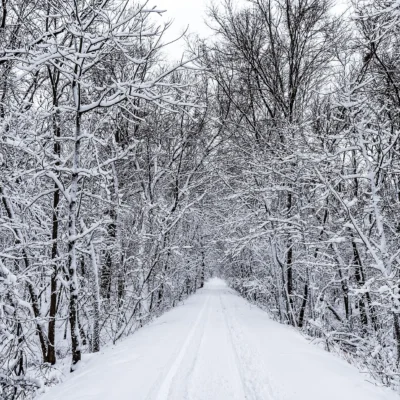
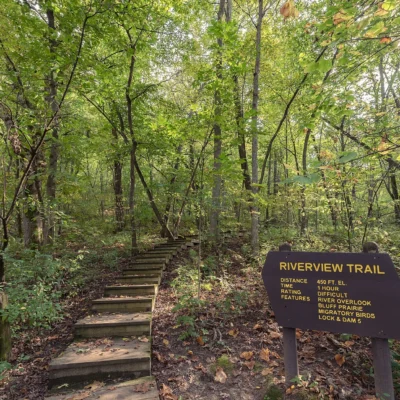
Approximately 11 miles of trails wind through old-growth forest, ravines, prairies, and creek bottoms. The trail to Hidden Falls (0.5 miles one way) is the most popular route. The Big Woods Trail offers an easy, flat loop through the heart of the ancient forest canopy. In winter, trails are popular for snowshoeing and cross-country skiing.
Wildflower Season
Spring (mid-April through mid-May) is the park’s premier season. Before the canopy leafs out, the forest floor erupts with spring ephemeral wildflowers: trillium, bloodroot, hepatica, Dutchman’s breeches, and the critically endangered Minnesota Dwarf Trout Lily. A dedicated boardwalk protects the Trout Lily colonies. Volunteer “Wildflower Ambassadors” are stationed on spring weekends to help visitors identify blooms.
Fall Foliage
The maple-basswood canopy creates brilliant fall color — the dense old-growth forest of sugar maples turns blazing orange, gold, and scarlet, typically peaking in early to mid-October.
Trails
| Trail | Distance | Difficulty | Highlights |
|---|---|---|---|
| Hidden Falls Trail | 1 mi RT | Easy | 20-ft limestone waterfall; Prairie Creek; scenic overlook |
| Big Woods Trail | 1.5 mi loop | Easy | Old-growth maple-basswood canopy; interpretive signs |
| Prairie Trail | 2 mi | Easy–Moderate | Native prairie restoration; wildflowers; open meadows |
| White Oak Trail | 3 mi | Moderate | Ravines; wildlife viewing; diverse forest types |
Camping
The campground offers both electric and non-electric sites, plus walk-in and cart-in sites for a more secluded experience. Open approximately early April through mid-October. Located near the towns of Northfield and Faribault, which offer dining, shopping, and services.
| Type | Season | Amenities |
|---|---|---|
| Electric sites | Apr–Oct | 30-amp electric, fire ring, picnic table, showers |
| Non-electric sites | Apr–Oct | Fire ring, picnic table, showers, vault toilets |
| Walk-in / cart-in | Apr–Oct | Secluded; basic amenities; must carry gear in |
Best Time to Visit
| Season | Highlights | Considerations |
|---|---|---|
| Spring (Apr–May) | ⭐ Wildflower peak! Trout Lily bloom; Hidden Falls at best flow; birding | Trails may be muddy; bring waterproof footwear |
| Summer (Jun–Aug) | Lush canopy; cool shade; full facilities; hiking | Less dramatic falls flow; standard visitation |
| Fall (Sep–Oct) | ⭐ Brilliant maple foliage; quiet atmosphere; photography | Campground closes mid-Oct; cold mornings |
| Winter (Nov–Mar) | Cross-country skiing; snowshoeing; frozen falls; solitude | No camping; limited facilities |
Visitor Tips
- Wildflower timing: The Dwarf Trout Lily typically blooms mid-April through early May. Peak is brief — follow the Minnesota DNR’s wildflower updates for timing. Arrive early on spring weekends to secure parking.
- Stay on boardwalks: The Trout Lily exists nowhere else on Earth — stepping off the boardwalk can destroy plants. This is not just a suggestion; it’s critical for species survival.
- Hidden Falls after rain: The waterfall is most dramatic after heavy rains or during spring snowmelt. By late summer, flow can slow to a trickle.
- Nearby towns: Northfield (15 minutes north) is a historic college town known for the failed Jesse James bank raid of 1876. Excellent restaurants and the Carleton/St. Olaf campus.
- Winter visit: The groomed cross-country ski trails through snow-covered old-growth forest are a hidden gem — far less crowded than North Shore trails.
Frequently Asked Questions
What is the Minnesota Dwarf Trout Lily?
The Minnesota Dwarf Trout Lily (Erythronium propullans) is a federally endangered wildflower that grows only in three counties in southeastern Minnesota — and Nerstrand Big Woods State Park is the only state park where it can be found. It blooms briefly in mid-April to early May. A dedicated boardwalk allows visitors to view the colonies without damaging the fragile habitat.
How tall is Hidden Falls at Nerstrand Big Woods?
Hidden Falls is a 20-foot limestone waterfall on Prairie Creek. It is accessible via a short, easy 0.5-mile hike from the main parking area. The falls are most dramatic during spring snowmelt and after heavy rains. By late summer in dry years, the flow can be significantly reduced.
Last updated: April 2026
Make it a road trip: Pair a visit with Mill Towns State Trail (a short drive away) or Kaplan Woods State Park (within about an hour’s drive).

🐾 Dogs & Pets at Nerstrand Big Woods State Park
- Pets allowed? statewide rule
- Pets are welcome in Minnesota state parks and recreation areas as long as they are leashed and personally attended at all times.
- Leash rule statewide rule
- Leash six feet or shorter (or portable enclosure) required at all times.
- Beaches & swim areas statewide rule
- Only service animals are allowed in beach areas — pets are prohibited on swim beaches statewide.
- Cabins & lodging statewide rule
- Only service animals are allowed in state park lodging, camper cabins, yurts and tipis — no pet-friendly cabin program.
- Statewide exceptions statewide rule
- Emotional support/therapy animals do not qualify as service animals and are prohibited from park buildings.
Are dogs allowed at Nerstrand Big Woods State Park?
Pets are welcome in Minnesota state parks and recreation areas as long as they are leashed and personally attended at all times. Individual parks can post stricter rules — check signage on arrival.
Rules verified July 2026 via dnr.state.mn.us. More: Minnesota state parks guide · Dog rules in all 50 states compared
Park Location
Plan your gear for Nerstrand Big Woods State Park
From our editorial guides, matched to this park’s activities:


Top Tours & Activities Near Minneapolis-Saint Paul
 from $79
 from $110
 from $195