
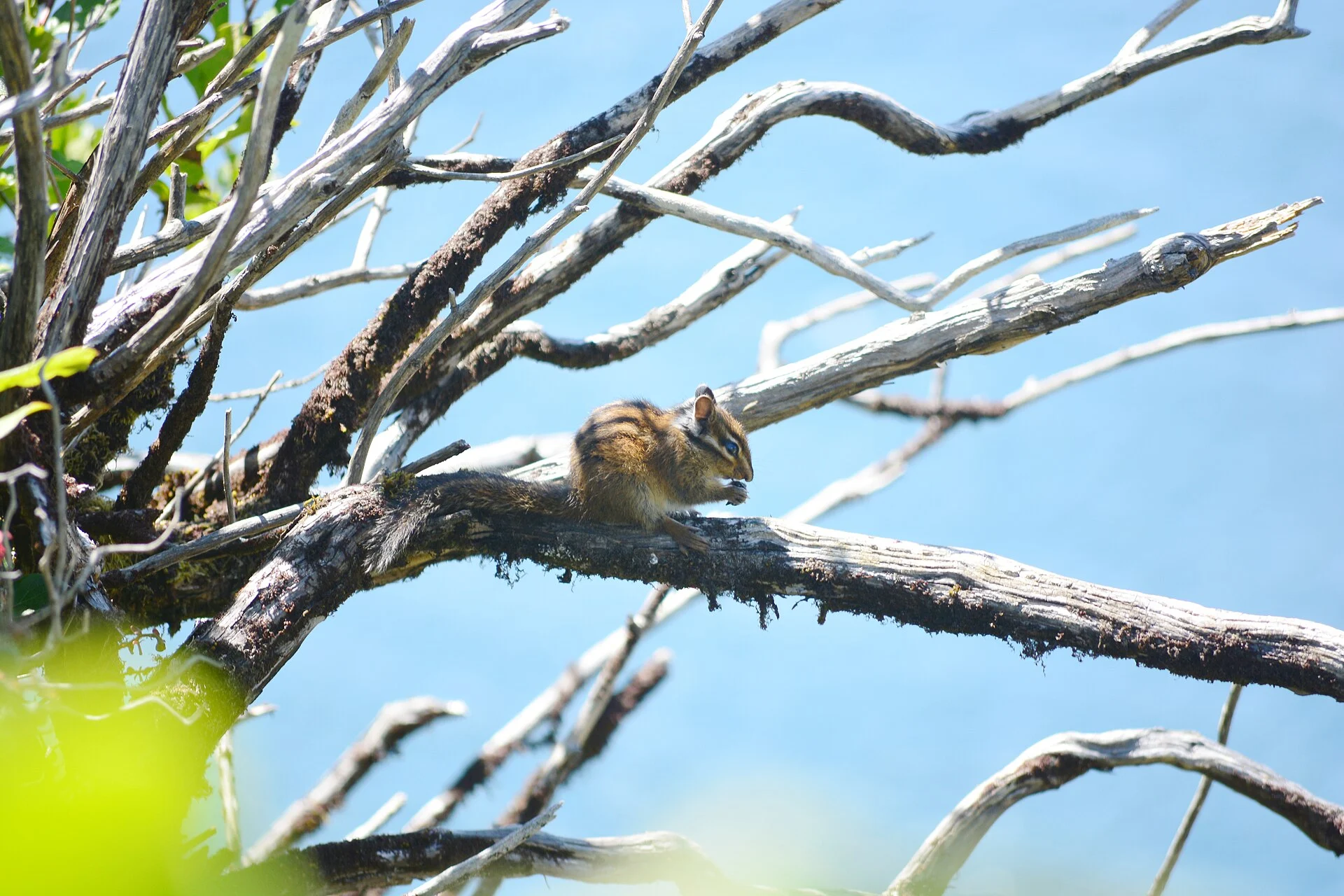
🌤 Weather at Otter Crest State Scenic Viewpoint by season
| Spring | Summer | Fall | Winter |
|---|---|---|---|
| 41–59 °F | 49–66 °F | 44–66 °F | 41–55 °F |
Each range runs from the coldest monthly average low to the warmest monthly average high in that season (1991-2020 climate normals), measured at Newport 3N, 5 mi away, elevation 220 ft. Conditions at the park can differ from the station, especially where elevation differs — check a forecast before you go.

🏆 Cape Foulweather Lookout — Iconic 500-foot cliff viewpoint at Cape Foulweather — named by Captain Cook in 1778
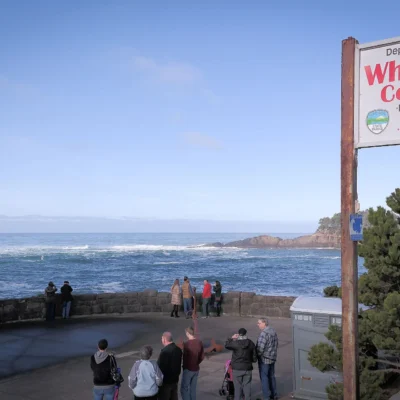
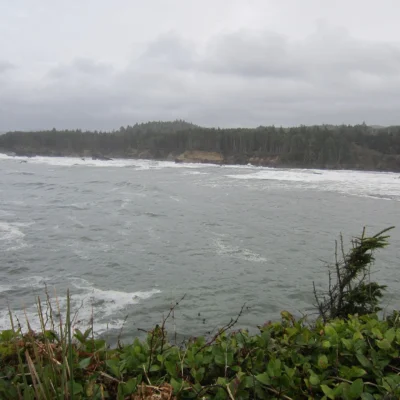
Otter Crest State Scenic Viewpoint sits atop the dramatic cliffs of Cape Foulweather — named by Captain James Cook on March 7, 1778, when violent storms battered his ships during the first recorded European sighting of the Oregon Coast. The 500-foot cliffs provide breathtaking views of the Pacific, the Devils Punch Bowl below, and the rugged coastline extending north and south. Whale watching is excellent during migration seasons, and brown pelicans, cormorants, and bald eagles ride the powerful updrafts along the cliff face.
Visitor Information
| Detail | Information |
|---|---|
| Location | Cape Foulweather, Lincoln County, OR |
| Entry Fee | Free |
| Cliffs | 500 feet above the Pacific |
| History | Named by Captain Cook (1778) |
| Whales | Gray whale migration viewing |
Frequently Asked Questions
Why did Captain Cook name it Foulweather?
On March 7, 1778, Cook’s ships encountered savage storms as they first sighted the Oregon Coast. The cape was the first identifiable feature he named — a testament to the violent weather. The area still experiences some of Oregon’s most dramatic storms.
What is a Marine Garden?
Oregon designates Marine Gardens as specially protected intertidal areas — no collecting of any organisms is allowed. These reserves protect sensitive tide pool ecosystems and serve as scientific reference sites. Oregon has 13 Marine Gardens along its coast.
About Otter Crest
Otter Crest State Scenic Viewpoint is perched 500 feet above the Pacific on Cape Foulweather — named by Captain James Cook during his 1778 voyage. The viewpoint offers one of the most dramatic ocean panoramas on the entire Oregon coast. On clear days, you can see over 30 miles of coastline.
Things to Do
The commanding viewpoint is one of the best whale-watching spots on the coast during gray whale migration. The historic Lookout observatory gift shop at the summit has operated since the 1930s. The Otter Crest Loop scenic drive circles the cape.
Insider Tips
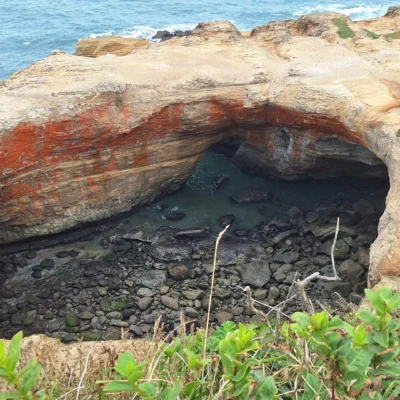
Devil’s Punchbowl views: Otter Crest offers stunning views of the iconic Devil’s Punchbowl — a collapsed sea cave where waves surge into a natural cauldron. Pro tip: Time your visit with high tide and large swells for the most dramatic wave action in the Punchbowl. Marine garden: The rocky shoreline below is a Marine Garden — one of Oregon’s most protected tide pool zones.
Best Time to Visit
Winter storms + high tide: Most dramatic Punchbowl wave action. Summer low tides: Best tide pool exploring in the Marine Garden. Spring: Whale watching. Year-round: Dramatic in all conditions.
Wildlife & Nature
Otter Crest provides one of the finest panoramic viewpoints on the central Oregon coast — from the 500-foot Cape Foulweather (named by Captain James Cook during a storm on March 7, 1778). The viewpoint overlooks Devil’s Punchbowl — a collapsed sea cave that fills dramatically during high tide and storm surge. Sea otters — for which the area is named — were historically abundant along the Oregon coast but were hunted to local extinction by the fur trade by the 1900s. Reintroduction attempts in the 1970s failed, and Oregon remains one of the few West Coast states without a resident sea otter population. Gray whales are visible offshore year-round — a group of approximately 200 “resident” gray whales feed along the Oregon coast instead of migrating to the Arctic.
Nearby Attractions
Devil’s Punchbowl State Natural Area — visible from the viewpoint — is accessible at low tide. Beverly Beach State Park offers excellent camping with beach access. Depoe Bay — the “Whale Watching Capital of Oregon” — has the world’s smallest navigable harbor. Oregon Coast Aquarium in Newport features a walk-through shark tunnel. Yaquina Head Outstanding Natural Area has tidepools and Oregon’s tallest lighthouse. Otter Rock has the Flying Dutchman Winery and beachfront dining.
Keep exploring: The closest neighbors are Devils Punch Bowl State Natural Area (a short drive away) and Devils Punchbowl State Natural Area (a short drive away).
⛈️ Visit Otter Crest SSVP
Captain Cook’s Cape Foulweather — 500-foot cliffs named in 1778’s storms.

🐾 Dogs & Pets at Otter Crest State Scenic Viewpoint
- Pets allowed? statewide rule
- Pets are welcome in Oregon state parks and on most ocean beaches but must be leashed except in designated off-leash areas.
- Leash rule statewide rule
- Leash no longer than 6 feet required in developed park areas
- Beaches & swim areas statewide rule
- Pets are allowed on most ocean beaches under direct control; western snowy plover nesting areas restrict pets March 15 - Sept. 15; leash required on the beach at some parks (e.g. Cape Lookout)
- Cabins & lodging statewide rule
- Designated pet-friendly yurts and cabins at many parks (South Beach has 14 pet-friendly yurts, Tugman 8); maximum two dogs and/or cats; $10 per night pet fee
- Pet fees statewide rule
- $10 per night for pet-friendly yurts/cabins; no pet fee for day use or campsites
- Statewide exceptions statewide rule
- Pets prohibited at Dabney SRA, the Trail of Ten Falls at Silver Falls, and Shore Acres; off-leash areas at Stub Stewart, Willamette Mission, Elijah Bristow, Cottonwood Canyon and LaPine
Are dogs allowed at Otter Crest State Scenic Viewpoint?
Pets are welcome in Oregon state parks and on most ocean beaches but must be leashed except in designated off-leash areas. Individual parks can post stricter rules — check signage on arrival.
Rules verified July 2026 via stateparks.oregon.gov. More: Oregon state parks guide · Dog rules in all 50 states compared
Park Location
Plan your gear for Otter Crest State Scenic Viewpoint
From our editorial guides, matched to this park’s activities:


Top Tours & Activities Near Lincoln City
 from $600
 from $35