Providence Canyon State Park
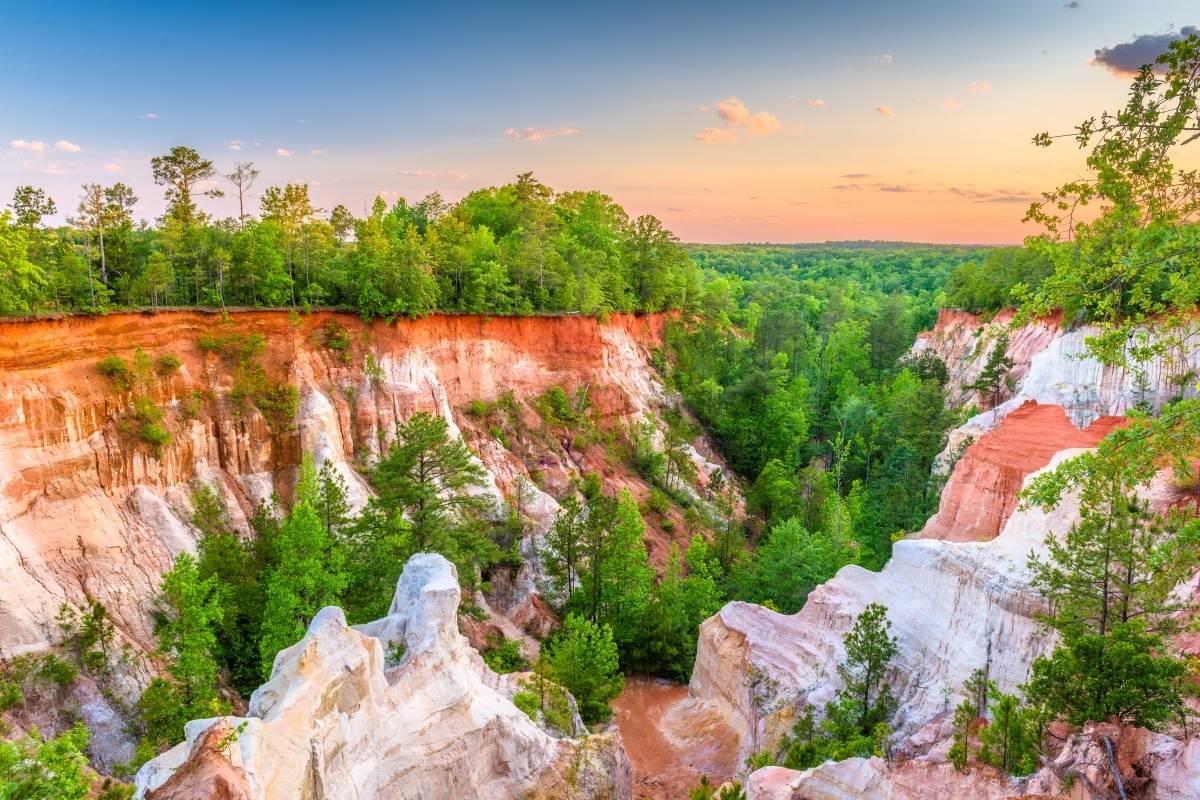
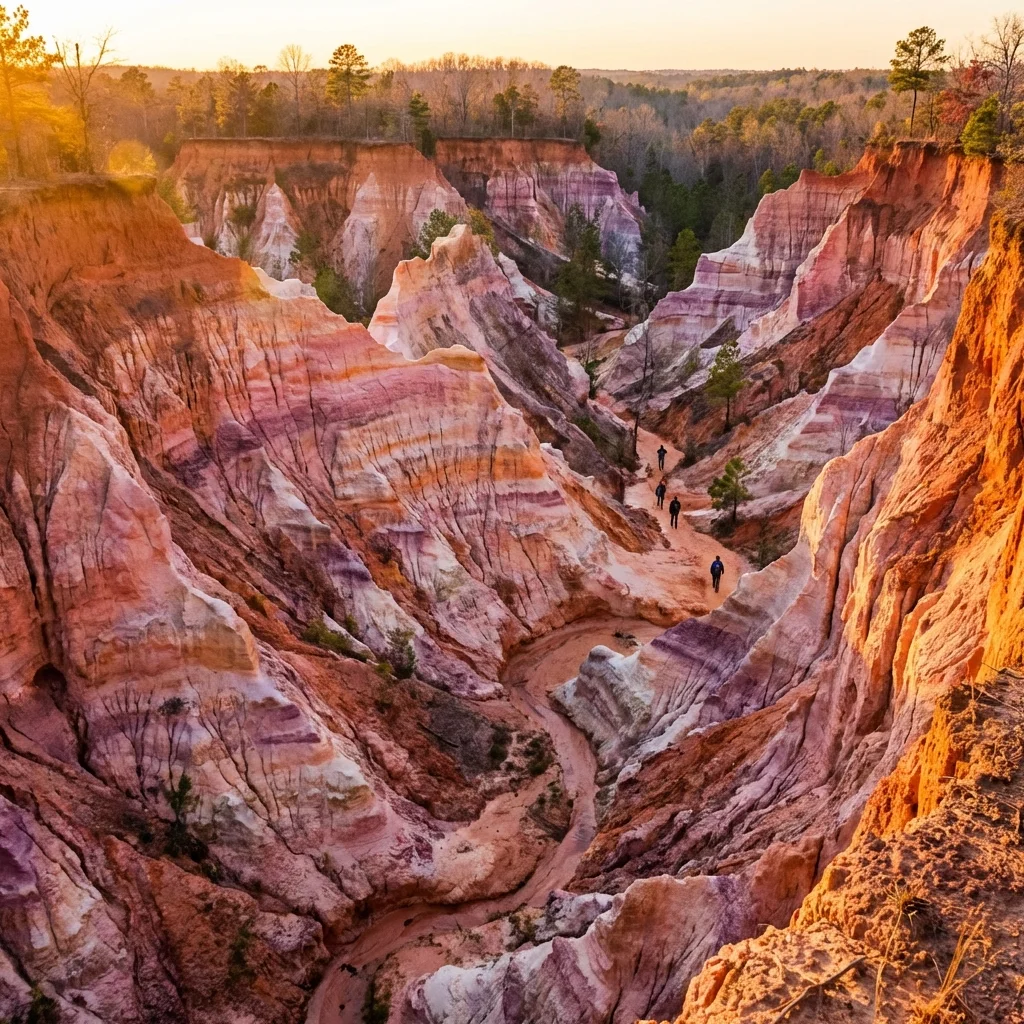
The first thing that strikes you is the color. Not one color—forty-three. White, pink, orange, red, purple, black, tan, and everything in between stripe the 150-foot canyon walls in bands that seem painted rather than geological. These gullies weren’t here 200 years ago. They didn’t take millions of years to form. They’re a spectacular accident—the unintended consequence of 19th-century cotton farming that stripped the land bare and let rainwater do the rest. What poor agricultural practices created, nature has transformed into one of Georgia’s Seven Natural Wonders.
Welcome to Providence Canyon State Park, affectionately known as “Georgia’s Little Grand Canyon.” The comparison isn’t just marketing—visitors gasp at their first glimpse of these vertical walls striped in impossible colors. Unlike the real Grand Canyon, carved over millions of years, Providence Canyon is shockingly young. The deepest gullies didn’t exist until the 1850s. And they’re still growing—canyon walls erode 3 to 5 feet every single year, meaning the landscape you see today will be different tomorrow.
What Makes Providence Canyon Legendary
43 Sand Colors
White, pink, orange, red, purple—43 distinct colors from ancient minerals.
150-Foot Gullies
Nine massive canyons carved just 200 years ago—still growing today.
Natural Wonder
One of the official Seven Natural Wonders of Georgia.
Man-Made Wonder
Created by farming erosion—nature’s masterpiece from human mistake.
The Colors of Time
The canyon walls tell a story 59 to 74 million years old—even though the canyons themselves are barely 200 years old. The colorful layers you see are unconsolidated sediments deposited by ancient seas, rivers, deltas, and coastal beaches long before the canyons formed. Different minerals create each distinctive band:
| Color | Mineral Source |
|---|---|
| ⬜ White | Kaolin clay |
| 🟥 Red/Orange | Iron oxides (hematite) |
| 🟨 Yellow | Limonite |
| 🟪 Purple | Manganese |
| ⬛ Black | Manganese dioxide |
📸 Photography Tips
- Colors are most vibrant after rain (wet sand intensifies hues)
- Early morning and late afternoon light bring out striations
- Overcast days reduce harsh shadows in canyon depths
- Best colors visible from inside canyons, not just rim
How Humans Made a Canyon
In the early 1800s, this land was forested. European settlers cleared it for cotton and corn farming. They plowed up and down the hillsides—the worst possible technique for soil conservation. Rainwater, with no roots to slow it, began carving ditches. By 1850, some gullies were already 3-5 feet deep. By the early 1900s, they were 100+ feet deep. The erosion continues today: canyon walls lose 3-5 feet annually.
What could have been an environmental tragedy became a geological treasure. The canyons exposed ancient sediment layers that would otherwise remain hidden, creating a living lesson in both geology and the consequences of poor land stewardship.
Hiking Trails
| Trail | Distance | Difficulty | Highlights |
|---|---|---|---|
| 🏜️ Canyon Loop Trail | 2.5 mi | Easy-Moderate | Explore 9 canyons from within; best color views |
| 🎒 Backcountry Trail | 7 mi loop | Extremely Strenuous | Forested route; views of 6 canyons; 6+ hours |
Canyon Loop Trail
The 2.5-mile Canyon Loop Trail (white blazes) is the park’s signature experience. It descends into the canyon system and winds through nine different gullies, putting you face-to-face with the colorful walls. This is where you’ll get the best photographs and the most vivid color experiences. Allow 2-3 hours to fully explore.
🏆 Pro Tip: Canyons 4 & 5
Don’t miss Canyons 4 and 5—they’re the most spectacular. Turn left at the canyon floor to reach them first. The Canyon Climbers Club challenges visitors to specifically hike to these two canyons for the best color displays.
Backcountry Trail
The 7-mile Backcountry Trail (red blazes) is rated extremely rugged and difficult. It loops through forested areas with views into six canyons (though not direct access). Allow at least 6 hours. This trail accesses the primitive backcountry campsites.
⚠️ Trail Rules
- Stay on marked trails—canyon walls are fragile and still eroding
- Do NOT climb on canyon walls (they crumble easily)
- Flash flooding possible after heavy rain
- Carry plenty of water (no potable water in canyons)
Camping
| Site Type | Details |
|---|---|
| 🎒 Backcountry Sites | 6 primitive sites on Backcountry Trail; 2-3 miles from parking; carry all water |
| 👥 Pioneer Sites | 3 group sites closer to parking lot |
💧 Important: Water
Stream water in the canyon is NOT safe for drinking, even with filtration—heavy clay content and potential contaminants. Carry all water from the visitor center. Plan 1+ gallons per person per day for backcountry camping.
When to Visit
🌸 Spring (March – May)
Excellent. Wildflowers blooming on canyon floor and rim. Comfortable temperatures. Occasional rain keeps colors vibrant. Fewer crowds than fall.
Best for: Wildflowers, photography, comfortable hiking
☀️ Summer (June – August)
Hot and humid. Early morning hiking recommended. Afternoon thunderstorms common (stay aware of flash flood potential in canyon bottoms). Colors can appear washed out in harsh midday sun.
Best for: Early morning visits only
🌺 Rare Plumleaf Azalea (July-August)
Providence Canyon hosts the largest wild colony of the rare Plumleaf Azalea—a flower native ONLY to southwest Georgia and eastern Alabama. It blooms in vibrant red and orange during July and August, when most other azaleas have long faded. This is the only time to see this rare flower in bloom!
🍂 Fall (September – November)
Peak season. Comfortable temperatures. Fall foliage adds contrast to canyon colors. Highest crowds, especially October weekends. Colors most photographable.
Best for: Photography, perfect weather, fall colors
❄️ Winter (December – February)
Quiet season. Cool temperatures ideal for hiking. Occasional frost. Bare trees reveal more canyon structure. Fewer crowds. Colors remain striking year-round.
Best for: Solitude, comfortable hiking
Practical Information
| Item | Details |
|---|---|
| 🎟️ Entry Fee | $5/vehicle |
| 🏕️ Backcountry Camping | Reservation required; gastateparks.org |
| ⏰ Hours | 7 AM – sunset daily |
| 🚿 Facilities | Visitor center with restrooms and water |
Getting There
- 📍 Address: 8930 Canyon Rd, Lumpkin, GA 31815
- 📍 From Atlanta: ~150 miles southwest
- 📍 From Columbus: ~40 miles south
- 📍 Nearby: Florence Marina State Park (camping, marina)
Frequently Asked Questions
Is Providence Canyon really man-made?
Yes and no. Humans didn’t dig the canyons, but poor farming practices caused the erosion that created them. The colorful sediments exposed in the walls are 59-74 million years old, but the canyons themselves are less than 200 years old.
Are the canyons still growing?
Yes! The walls erode 3-5 feet per year. The landscape you see today will be measurably different in just a few years.
Can I camp in the park?
Primitive backcountry camping is available on the Backcountry Trail (6 sites, 2-3 miles from parking). For developed camping, visit nearby Florence Marina State Park.
Best time for photography?
After rain (colors most vivid when wet), early morning or late afternoon light, fall for foliage contrast. Inside the canyons offers better color than rim views.
Which canyons are the most beautiful?
Canyons 4 and 5 are considered the most spectacular. Turn left at the canyon floor to reach them. The Canyon Climbers Club specifically challenges visitors to hike to these two.
What is the rare flower here?
The Plumleaf Azalea (Rhododendron prunifolium) is found almost exclusively here—the largest wild colony in the world. It blooms in red and orange during July and August.
🎨 Nature’s Palette from Human Mistake
Forty-three colors of sand band the walls of Providence Canyon—not painted by artists but exposed by erosion, not carved over millions of years but barely two centuries old. This is Georgia’s beautiful accident: canyons created by poor cotton farming, now one of the state’s Seven Natural Wonders. Walk among 150-foot walls striped in pink, orange, purple, and white. Watch the canyon grow before your eyes—literally, as 3-5 feet of wall crumbles away each year. This is proof that even human mistakes, given enough time and water, can become masterpieces.
📍 Address: 8930 Canyon Rd, Lumpkin, GA 31815
📞 Phone: (229) 838-6202