

🌤 Weather at Ragged Rock Wildlife Management Area by season
| Spring | Summer | Fall | Winter |
|---|---|---|---|
| 30–71 °F | 60–85 °F | 35–76 °F | 20–42 °F |
Each range runs from the coldest monthly average low to the warmest monthly average high in that season (1991-2020 climate normals), measured at Hartford Brainard Field, 8 mi away, elevation 19 ft. Conditions at the park can differ from the station, especially where elevation differs — check a forecast before you go.

🏆 Traprock Ridge — Unique traprock (basalt) ridge habitat supporting rare plant species found nowhere else in Connecticut
Ragged Rock Wildlife Management Area protects habitat on a traprock ridge — the distinctive red-brown volcanic ridges that run through central Connecticut. These ridges, formed from 200-million-year-old basalt lava flows, support rare warm-season grassland plants adapted to the thin, well-drained soil. The exposed basalt outcrops create microclimates that support plant communities more typical of the southern Appalachians.
Visitor Information
| Detail | Information |
|---|---|
| Location | Central CT (traprock ridge) |
| Entry Fee | Free |
| Geology | 200-million-year-old volcanic basalt! |
| Plants | Rare species on thin volcanic soil |
Frequently Asked Questions
What is traprock?
Traprock is volcanic basalt from lava flows that erupted when the supercontinent Pangaea was breaking apart 200 million years ago. These ridges run through the Connecticut Valley and are geologically unique in New England.
Can I swim here?
The rocky shoreline is not ideal for swimming — designated beaches nearby offer better swimming. The WMA is best for nature study, fishing, and wildlife observation.
Are harbor seals really here?
Yes — harbor seals visit the Connecticut coast from November through April. They haul out on offshore rocks and can sometimes be seen from shore with binoculars or a spotting scope.
About Ragged Rock
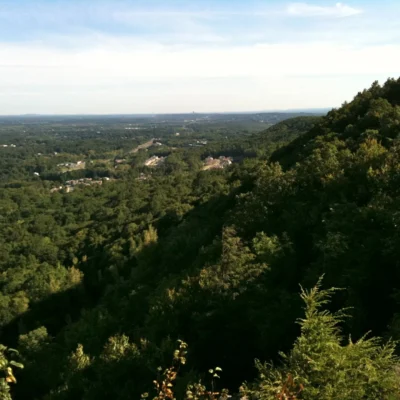
Ragged Rock Wildlife Management Area in Portland and Glastonbury protects forested hillside and wetlands along the Connecticut River. The “ragged rock” refers to the area’s basalt trap rock formations — ancient volcanic rock that creates dramatic cliffs and talus slopes. The rocky terrain supports unique plant communities adapted to the thin, mineral-rich soils.
Things to Do
Hunting (seasonal), hiking through the trap rock landscape, birdwatching, and exploring the unusual geological formations. The nearby Meshomasic State Forest offers extended trail hiking.
Insider Tips
Coastal gem: Ragged Rock offers rugged Connecticut shoreline scenery — exposed rocky coast with tide pools and views across Long Island Sound. Pro tip: Visit at low tide for the best tide pool exploring — hermit crabs, periwinkles, and green crabs are common. Photography: Sunset from the rocky point is stunning with the Sound reflecting golden light.
Best Time to Visit
Late spring: Horseshoe crab spawning on beaches (May). Summer: Tide pool exploration and shore fishing. Fall: Migrating raptors and sea ducks. Winter: Harbor seals haul out on offshore rocks (November-April) — bring binoculars.
Wildlife & Nature
Ragged Rock WMA’s rocky terrain and mixed forest create habitat for species that prefer rugged landscapes. The rock outcrops support lichens — composite organisms made of fungi and algae — that grow imperceptibly slowly (some rock lichens grow less than 1 millimeter per year and may be centuries old). Lichen-covered rocks indicate long-undisturbed habitat. The forest’s canopy gaps — created by fallen trees — allow sunlight to reach the forest floor, supporting wildflower patches and dense shrub growth. These gaps are critical for wildlife — ruffed grouse feed on catkins and buds in the shrubby growth, while wood thrushes nest in the understory. Red efts (the juvenile land stage of eastern newts) are conspicuous after rain — their bright orange coloration warns predators of toxic skin secretions.
Nearby Attractions
The area connects to Connecticut’s diverse recreation offerings. Chatfield Hollow State Park features rock formations, caves, and swimming. Cockaponset State Forest — Connecticut’s second-largest — provides extensive multi-use trails. Killingworth has a charming town center and surrounding farms. Madison on the coast offers Hammonasset Beach State Park — Connecticut’s most visited state park with 2 miles of Long Island Sound beach. Guilford Green is one of New England’s most beautiful town squares. Henry Whitfield State Museum (1639) is the oldest stone dwelling in New England.
More parks nearby: Stanley Works Wildlife Management Area is a short drive away, while East Swamp Wildlife Management Area lies a short drive away.
🌋 Visit Ragged Rock WMA
200-million-year-old lava ridges — rare plants on ancient volcanic soil.

🐾 Dogs & Pets at Ragged Rock Wildlife Management Area
- Pets allowed? statewide rule
- Pets on a leash are permitted in most Connecticut state parks and forests, but not in buildings, swimming areas or state park campgrounds.
- Leash rule statewide rule
- Pets must be leashed and under control at all times; in state forest camping areas the leash may be no longer than 7 feet.
- Beaches & swim areas statewide rule
- Pets are prohibited in swimming areas; Sherwood Island and Squantz Pond State Parks ban pets entirely April 15 - September 30.
- Cabins & lodging statewide rule
- Pets are banned from all state park campgrounds; they are allowed only in the American Legion, Pachaug and Salt Rock state forest campgrounds, but not on rustic cabin sites.
- Statewide exceptions statewide rule
- Pets prohibited year-round at Dinosaur State Park and in the formal gardens and beach at Harkness Memorial State Park.
Are dogs allowed at Ragged Rock Wildlife Management Area?
Pets on a leash are permitted in most Connecticut state parks and forests, but not in buildings, swimming areas or state park campgrounds. Individual parks can post stricter rules — check signage on arrival.
Rules verified July 2026 via portal.ct.gov. More: Connecticut state parks guide · Dog rules in all 50 states compared
Park Location
Plan your gear for Ragged Rock Wildlife Management Area
From our editorial guides, matched to this park’s activities:
Top Tours & Activities Near Hartford
 from $143
 from $79
 from $20