🌤 Weather at Russian Fort Elizabeth State Historical Park by season
| Spring | Summer | Fall | Winter |
|---|---|---|---|
| 64–84 °F | 69–87 °F | 66–87 °F | 62–81 °F |
Each range runs from the coldest monthly average low to the warmest monthly average high in that season (1991-2020 climate normals), measured at Waimea 947, 1 mi away, elevation 20 ft. Conditions at the park can differ from the station, especially where elevation differs — check a forecast before you go.

🏰 The Russian Fort in Hawaii — When the Tsar Almost Colonized the Pacific — Russian Fort Elizabeth State Historical Park (Pāʻulaʻula) in Waimea, Kauai, Hawaii, National Historic Landmark, star-shaped lava rock fort built 1816–1817, Russian-American Company, Dr. Georg Schäffer, King Kaumualii alliance, failed Russian colonization attempt, first Russian Orthodox chapel in Hawaii, Waimea River, 17-acre park — Kauai County, HI
In 1816, a German doctor working for the Russian-American Company built a star-shaped military fort out of lava rock on the banks of the Waimea River in Kauai. He named it Fort Elizabeth, after the Empress of Russia. His plan: to turn Hawaii into a Russian protectorate.
It didn’t work. Within a year, the Russians were expelled. But the fort remains — a National Historic Landmark and one of the strangest chapters in American history. A Russian fort, built by Hawaiian laborers, on a Pacific island, two decades before America had any claim to the place.
What to See
| Feature | Details |
|---|---|
| Fort Walls | Lava rock foundations of the star-shaped fort. Walls were originally up to 20 feet high and 25–40 feet thick. The irregular octagonal shape follows European military architecture |
| Interior Layout | Walking paths through the fort interior where barracks, a trading house, and the first Russian Orthodox chapel in Hawaii once stood |
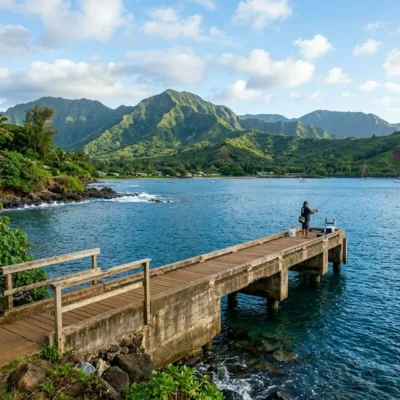
| Waimea River Views | The fort sits on the east bank of the Waimea River, near where Captain Cook first landed in Hawaii in 1778 |
| Interpretive Signs | Panels explaining the “Schäffer Affair” — the bizarre diplomatic scheme that nearly brought Russian influence to the Hawaiian Islands |
The Story
| Year | Event |
|---|---|
| 1778 | Captain James Cook lands at Waimea — the first European contact with Hawaii |
| 1810 | King Kamehameha I unifies the Hawaiian Islands — except Kauai, where King Kaumualii maintains semi-independence |
| 1815 | The Russian-American Company ship Bering wrecks near Waimea. Kaumualii seizes the cargo |
| 1816 | Dr. Georg Schäffer arrives to recover the cargo. He offers Kaumualii Russian military protection against Kamehameha. Kaumualii agrees. Fort construction begins using Hawaiian labor and lava rock from a destroyed heiau (temple) |
| 1817 | Fort Elizabeth completed. Named for the Russian Empress. But the Tsar disavows Schäffer — Russia wants no conflict with Britain or America over Hawaii. Schäffer is forced to flee |
| 1820 | Kaumualii fires a 21-gun salute from the fort to welcome his son home from school in America |
| 1864 | Fort dismantled by the Hawaiian government |
| 1962 | Listed as a National Historic Landmark |
Best Time to Visit
| Season | Best For |
|---|---|
| Winter (Dec–Mar) | 🌊 Kauai’s drier west side. Whale watching season. Golden light on the lava rock walls |
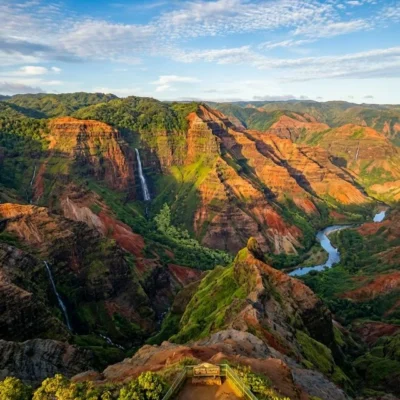
| Spring (Apr–May) | 🌺 Perfect weather. Fewer tourists than summer. Combine with Waimea Canyon (the “Grand Canyon of the Pacific”) |
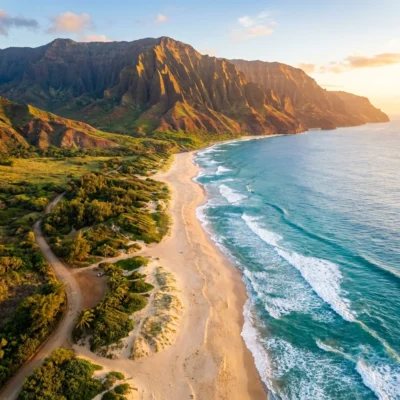
| Summer (Jun–Aug) | Warm and dry on the west side. Good for combining with Waimea Canyon and Polihale Beach |
| Fall (Sep–Nov) | Shoulder season. Occasional rain. Fewer crowds |
Frequently Asked Questions
Did Russia really try to colonize Hawaii?
One rogue agent tried — and failed. Dr. Georg Schäffer acted largely on his own initiative. When the Tsar learned of his scheme, Russia officially disavowed it. The empire had no interest in provoking Britain or the United States over Pacific islands.
Is this near where Captain Cook landed?
Yes — Waimea is where Captain Cook first set foot in Hawaii in 1778. A statue of Cook stands in the town. The fort is less than a mile away.
Can I walk through the fort?
Yes — the 17-acre park is open daily and free. Walking paths lead through the lava rock foundations. The walls are partially standing; interpretive signs explain the layout and history.
More parks nearby: Waimea Canyon State Park is a short drive away, while Polihale State Park lies a short drive away.
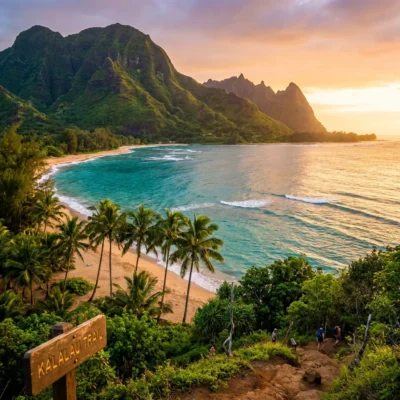
🏰 A Russian Fort on a Hawaiian Beach
Star-shaped. Lava rock. Built for the Tsar, abandoned in a year. A National Historic Landmark at the spot where Captain Cook first touched Hawaii.
Wildlife & Nature
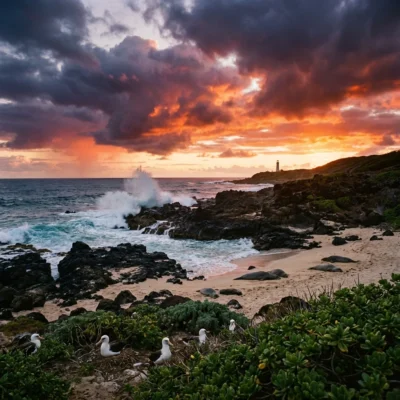
Russian Fort Elizabeth SHP — preserves the ruins of a Russian fort built in 1817 — evidence of Russia’s attempt to gain a foothold in Hawaii during the Russian-American Company era. This is one of the few Russian colonial ruins in the United States. The fort’s stone walls and coastal setting support seabirds and coastal vegetation.
Nearby Attractions
Waimea — adjacent — Captain Cook’s first Hawaiian landing (1778). Waimea Canyon — 15 miles uphill. Kauai’s West Side — surrounding.

🐾 Dogs & Pets at Russian Fort Elizabeth State Historical Park
- Pets allowed? statewide rule
- Pets are heavily restricted in Hawaii state parks: they are not permitted in pavilions, swimming areas, campgrounds, lodges, on beaches or wherever posted, and only limited areas allow them.
- Leash rule statewide rule
- Where permitted, pets must be crated, caged, on a 6-foot or shorter leash, or otherwise under physical restrictive control at all times
- Beaches & swim areas statewide rule
- Pets are not permitted on beaches or in swimming areas statewide
- Cabins & lodging statewide rule
- Pets are not permitted in lodges or campgrounds, so overnight accommodations are effectively pet-free
- Statewide exceptions statewide rule
- Rules vary by park and posting; effectively day-use only in the limited unposted areas where pets are tolerated
Are dogs allowed at Russian Fort Elizabeth State Historical Park?
Pets are heavily restricted in Hawaii state parks: they are not permitted in pavilions, swimming areas, campgrounds, lodges, on beaches or wherever posted, and only limited areas allow them. Individual parks can post stricter rules — check signage on arrival.
Rules verified July 2026 via dlnr.hawaii.gov. More: Hawaii state parks guide · Dog rules in all 50 states compared
Park Location
Plan your gear for Russian Fort Elizabeth State Historical Park
From our editorial guides, matched to this park’s activities: