🌤 Weather at San Pasqual Battlefield State Historic Park by season
| Spring | Summer | Fall | Winter |
|---|---|---|---|
| 45–79 °F | 56–93 °F | 44–91 °F | 38–72 °F |
Each range runs from the coldest monthly average low to the warmest monthly average high in that season (1991-2020 climate normals), measured at San Pasqual Animal Park, 1 mi away, elevation 420 ft. Conditions at the park can differ from the station, especially where elevation differs — check a forecast before you go.

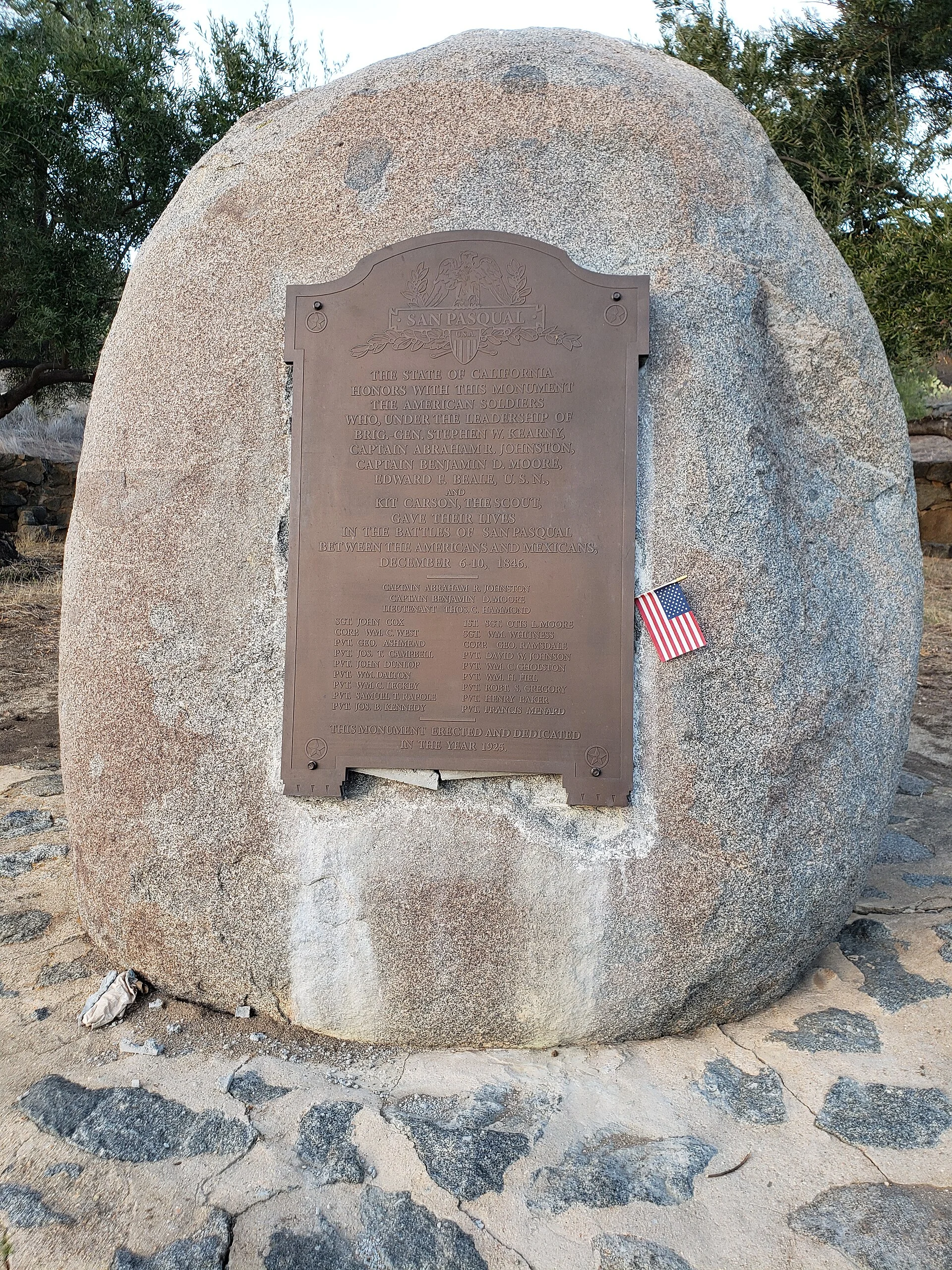
🏆 Official Guide: San Pasqual Battlefield State Historic Park — Site of the bloodiest battle in California during the Mexican-American War (December 6, 1846) — a 50-acre historic park near Escondido in Southern California.
San Pasqual Battlefield State Historic Park preserves the site of the Battle of San Pasqual, fought on December 6, 1846, between U.S. forces under General Stephen Watts Kearny and Californio lancers commanded by Captain Andrés Pico. It was the bloodiest engagement of the Mexican-American War fought on California soil.
Visitor Information
| Detail | Information |
|---|---|
| Location | San Pasqual Valley Road, near Escondido, San Diego County, CA |
| Size | 50 acres |
| Admission | Free |
| Features | Visitor center, exhibits, monument, trails |
| Indigenous Land | Ancestral territory of the Kumeyaay people |
The Battle of San Pasqual
Background
In late 1846, General Kearny’s “Army of the West” marched overland from Santa Fe, New Mexico, toward San Diego to secure California for the United States. After an exhausting 1,000-mile march across desert terrain, his weary troops encountered Andrés Pico’s Californio lancers in the San Pasqual Valley.
The Engagement
| Detail | Information |
|---|---|
| Date | December 6, 1846 |
| U.S. Forces | ~150 dragoons under Gen. Kearny |
| Californio Forces | ~75 lancers under Capt. Andrés Pico |
| U.S. Casualties | ~22 killed, 15+ wounded |
| Californio Casualties | ~12 wounded, few killed |
| Result | Disputed — tactical Californio victory; strategic U.S. advance |
Rain had dampened the Americans’ gunpowder, rendering their carbines largely useless. The Californio lancers — expert horsemen wielding long lances — inflicted devastating casualties in close combat. Kearny himself was wounded twice.
Mule Hill Siege
After the battle, Kearny’s forces were besieged at a rocky hill (now called “Mule Hill”), where they were forced to eat their mules for survival while waiting for reinforcements from San Diego. A relief column arrived several days later, allowing the battered American force to continue to San Diego.
What to See
| Feature | Description |
|---|---|
| Visitor Center | Exhibits on the battle, Kumeyaay history, Mexican-American War |
| Battlefield Monument Trail | Overlooking the valley where the battle occurred |
| Memorial Monument | Commemorating soldiers on both sides |
Getting There
Located on San Pasqual Valley Road, southeast of Escondido and near the San Diego Zoo Safari Park. Accessible from Highway 78.
Nearby Attractions
| Attraction | Distance | Highlights |
|---|---|---|
| San Diego Zoo Safari Park | Adjacent | World-class wildlife park, 1,800 acres |
| Old Town San Diego SHP | 30 miles SW | California’s birthplace, historic adobe buildings |
Frequently Asked Questions
Who won the Battle of San Pasqual?
The outcome is historically disputed. The Californio lancers under Andrés Pico inflicted far heavier casualties and controlled the immediate battlefield — a tactical victory. However, Kearny’s forces eventually reached San Diego with reinforcements and continued the campaign to secure California — a strategic U.S. advance. Most historians consider it a Californio tactical victory.
Is the visitor center open?
The visitor center operates on a seasonal/limited schedule and may experience temporary closures. Check the official California State Parks website for current hours before visiting. The park grounds and monument trail are generally accessible during daylight hours.
What is Mule Hill?
Mule Hill is the rocky hilltop where General Kearny’s forces were besieged after the Battle of San Pasqual. Surrounded by Californio forces and running out of food, the American soldiers were forced to eat their mules for survival — giving the hill its name. Reinforcements from San Diego rescued them several days later.
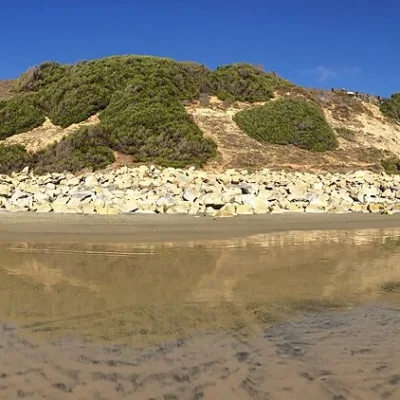
More parks nearby: Cardiff State Beach is within about an hour’s drive, while San Elijo State Beach lies within about an hour’s drive.

🐾 Dogs & Pets at San Pasqual Battlefield State Historic Park
- Pets allowed? statewide rule
- Dogs are permitted in California State Parks only in developed areas — campgrounds, picnic areas, parking lots and paved roads — and are prohibited on most trails, beaches and undeveloped areas unless specifically designated as dog-friendly.
- Leash rule statewide rule
- Maximum 6-foot leash at all times; dogs may not be left unattended.
- Beaches & swim areas statewide rule
- Dogs are prohibited on most state beaches; only beaches specifically designated as dog-allowed permit them (varies by park).
- Cabins & lodging statewide rule
- Pets are generally not allowed in buildings or cabins; overnight campers must keep dogs inside a tent or vehicle at night.
- Statewide exceptions statewide rule
- Designated dog-friendly trails and beaches vary park by park; misrepresenting a pet as a service animal is a misdemeanor.
Are dogs allowed at San Pasqual Battlefield State Historic Park?
Dogs are permitted in California State Parks only in developed areas — campgrounds, picnic areas, parking lots and paved roads — and are prohibited on most trails, beaches and undeveloped areas unless specifically designated as dog-friendly. Individual parks can post stricter rules — check signage on arrival.
Rules verified July 2026 via parks.ca.gov. More: California state parks guide · Dog rules in all 50 states compared
Park Location

Top Tours & Activities Near Carlsbad
 from $45
 from $189
 from $96