🌤 Weather at Wah-Sha-She Park (Former Oklahoma State Park) by season
| Spring | Summer | Fall | Winter |
|---|---|---|---|
| 35–79 °F | 65–93 °F | 34–84 °F | 22–52 °F |
Each range runs from the coldest monthly average low to the warmest monthly average high in that season (1991-2020 climate normals), measured at Bartlesville F P Field, 11 mi away, elevation 715 ft. Conditions at the park can differ from the station, especially where elevation differs — check a forecast before you go.

📋 No longer an Oklahoma state park — the state closed Wah-Sha-She in 2011. The land belongs to the U.S. Army Corps of Engineers, and the park has been run by Osage Nation and local volunteer hands ever since. Verified 24 July 2026.
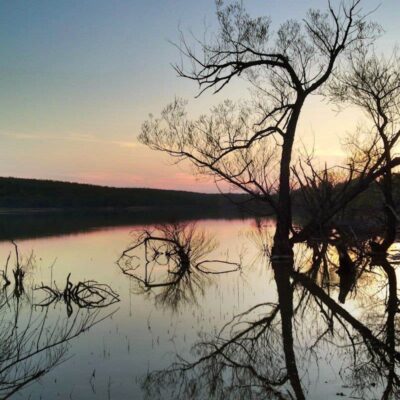
Wah-Sha-She sits on the shore of Hulah Lake in Osage County, in the heart of the Osage Nation. It still turns up on travel sites and map apps as an Oklahoma state park, which it has not been for well over a decade. Oklahoma’s own tourism portal has no page for it — the URL that used to serve one now returns a 404, and no Wah-Sha-She entry exists under the state parks section. Before you drive out here, read the status section below: this is a park whose operator and opening arrangements have changed several times.
What This Park Actually Is
| Detail | Information |
|---|---|
| Current name | Wah-Sha-She Park |
| Status | Former Oklahoma state park — closed by the state in 2011 |
| Landowner | U.S. Army Corps of Engineers (Hulah Lake project, Tulsa District) |
| Operated by | Osage Nation from 2011; sublet to the volunteer-run Hulah Lake Osage Association from 2015 |
| Size | Approx. 266 acres on Hulah Lake |
| Location | Osage County, OK — roughly 15 miles northwest of Pawhuska on OK-99, then about 10 miles east on OK-10 |
How It Stopped Being a State Park
The sequence is well documented in contemporaneous reporting by Osage News and Oklahoma broadcasters:
- 2011: Oklahoma closed Wah-Sha-She as a budget measure — one of seven state parks cut that year.
- Labor Day 2011: the Osage Nation took over management, with the stated aim of expanding water recreation on the reservation.
- May 2012: Principal Chief John Red Eagle signed a management agreement with the Army Corps of Engineers, which owns the land, initially running through 2016.
- 2014: revenue fell sharply and the Osage Nation moved to end the lease.
- October 2014: local residents formed the Hulah Lake Osage Association, a nonprofit that took a sublease with Corps approval and has since maintained the park on a volunteer basis, collecting camping fees.
Two things follow from that. First, no Oklahoma state park pass, reservation system or fee schedule applies here. Second, the Corps’ own Hulah Lake recreation pages list their recreation areas without naming Wah-Sha-She as one of their units — the park exists under a lease arrangement rather than as a Corps-operated facility.
Before You Go: Check the Status
This matters more here than at a state-run park. Wah-Sha-She has been closed once already, has changed operator twice, and is maintained by volunteers rather than by an agency with a published operating calendar. There is no official state or federal page that posts its current hours, fees or season. Confirm locally — through the Osage Nation or the Hulah Lake Osage Association — before you plan a trip around it, and treat any hours you find on a third-party listing as unverified.
What Is There
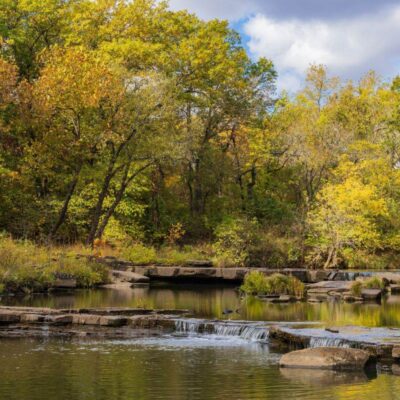
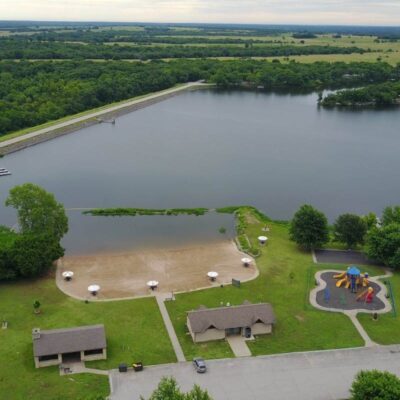
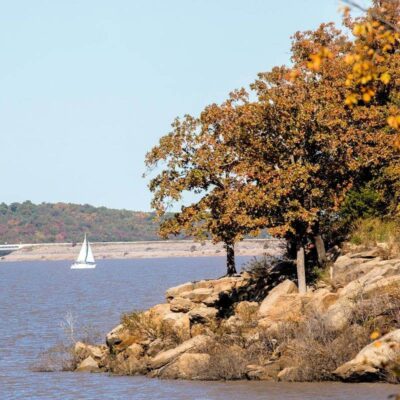
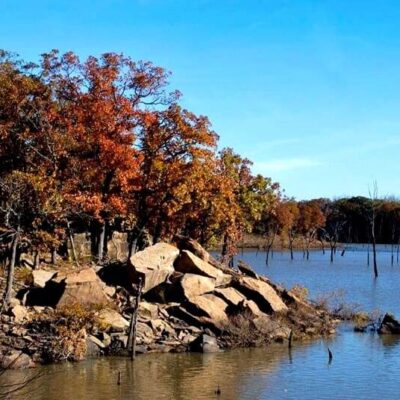
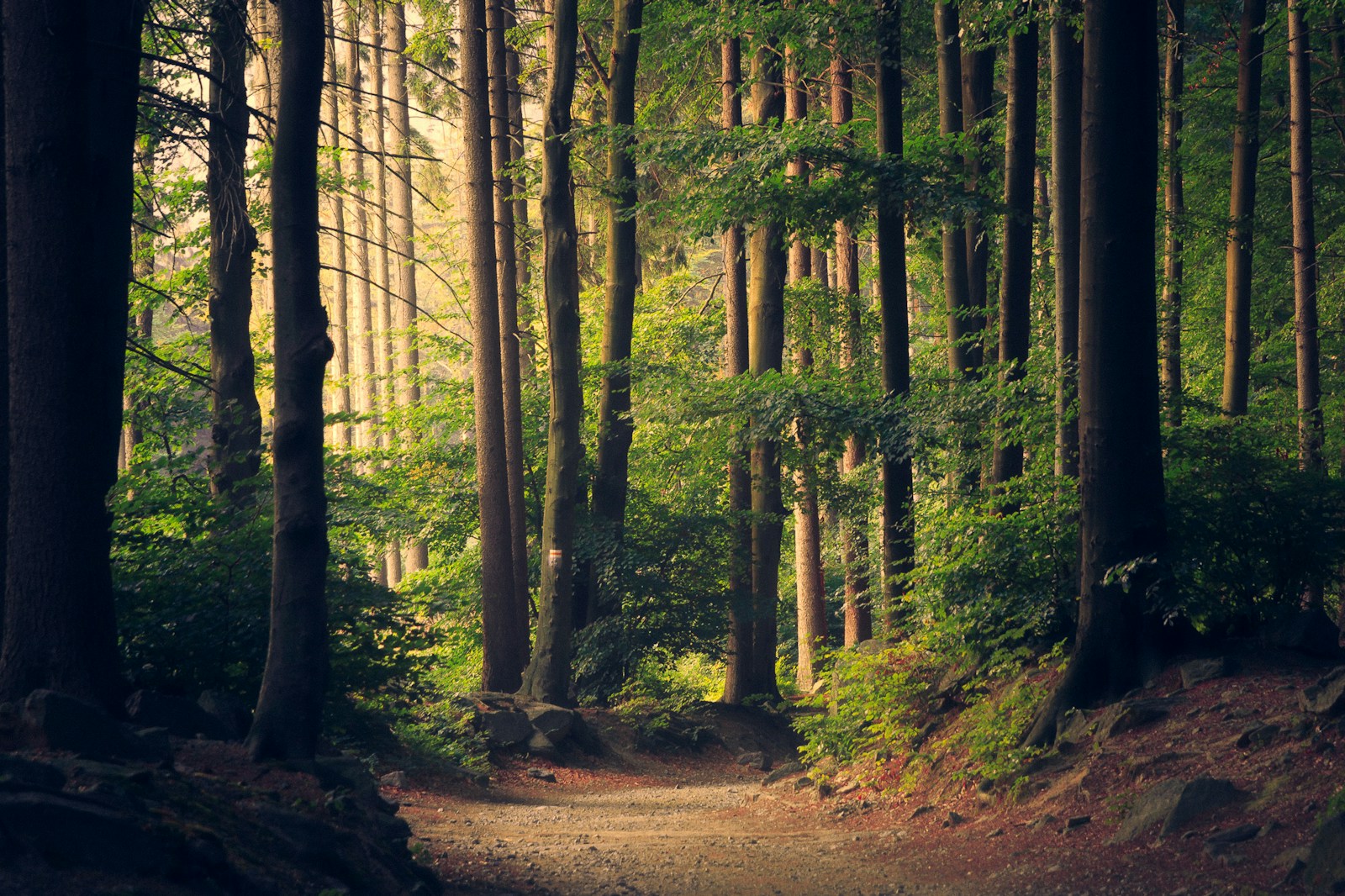
The park offers lake recreation on Hulah Lake: boating, fishing, swimming and camping from a rocky, wooded shoreline. Adjacent Corps land adds an 8,900-acre wildlife management area open to hunting and a 2,000-acre waterfowl refuge that makes the lake a worthwhile stop for birders during migration.
The Osage Context
The park’s name is the Osage word for the Osage people themselves, and the setting is not incidental. The Osage reservation covers all of Osage County — 2.2 million acres that hold both the largest surviving stretch of tallgrass prairie and, beneath it, one of the richest oil deposits in North America. The oil wealth of the 1920s made the Osage the wealthiest people per capita on earth, and it triggered the Reign of Terror murders documented in Killers of the Flower Moon. The Osage Nation Museum in Pawhuska tells that history from the Osage side.
One correction worth making, because it appears in a lot of copy about this park: the free-roaming bison herd and the tallgrass prairie usually mentioned alongside Wah-Sha-She belong to the Tallgrass Prairie Preserve, a separate protected area north of Pawhuska managed by The Nature Conservancy. They are not part of this park, and no Oklahoma park or wildlife agency publishes wildlife documentation for Wah-Sha-She itself.
Frequently Asked Questions
Is Wah-Sha-She still an Oklahoma state park?
No. Oklahoma closed it in 2011 as one of seven state parks cut for budget reasons. It has no page on the state tourism portal and no entry under the state parks section. The land is federal — Army Corps of Engineers — and the park has been operated under lease by the Osage Nation and, since 2015, by the volunteer Hulah Lake Osage Association.
Can you still camp there?
Camping has been offered under the volunteer operation, with fees collected on site. Because there is no agency-published calendar, confirm current availability locally before you travel rather than relying on third-party listings.
Which Oklahoma state parks are actually nearby?
Osage Hills State Park is the closest unit still in the Oklahoma system — a genuine state park with staffed facilities and a published fee schedule.
Keep exploring: our full Oklahoma state parks guide.
📍 Official Source
Hulah Lake recreation — U.S. Army Corps of Engineers, Tulsa District (the landowner).

⛺ Camping at Wah-Sha-She Park (Former Oklahoma State Park): Campgrounds & Cabins
| Campsites | Gravel-surfaced RV/tent campsites with water and electric hookups at most sites, overlooking Hulah Lake and Dam on the Caney River. No official published total site count or detailed hookup-amperage breakdown found. |
|---|---|
| Reservations | Camping fees and site assignment are handled on-site by volunteers on a first-come, first-served basis; no online reservation system identified. |
| Special sites | This is no longer an Oklahoma State Park: it was one of seven parks the state closed for budget reasons around 2011. Hulah Lake is a U.S. Army Corps of Engineers (Tulsa District) lake; the Osage Nation holds an agreement with the Corps to maintain the former park, and since 2014 has subleased day-to-day operation to the volunteer nonprofit Hulah Lake Osage Association (HLOA), which collects camping fees and maintains the site. |
Camping questions about Wah-Sha-She Park (Former Oklahoma State Park)
Can you camp at Wah-Sha-She Park (Former Oklahoma State Park)?
Gravel-surfaced RV/tent campsites with water and electric hookups at most sites, overlooking Hulah Lake and Dam on the Caney River. No official published total site count or detailed hookup-amperage breakdown found.
How do you reserve a campsite at Wah-Sha-She Park (Former Oklahoma State Park)?
Camping fees and site assignment are handled on-site by volunteers on a first-come, first-served basis; no online reservation system identified.
Source: swt.usace.army.mil (verified July 2026). Details change seasonally — confirm when booking.
Park Location
Plan your gear for Wah-Sha-She Park (Former Oklahoma State Park)
From our editorial guides, matched to this park’s activities: