Burlington Trout Hatchery
🌤 Weather at Burlington Trout Hatchery by season
| Spring | Summer | Fall | Winter |
|---|---|---|---|
| 26–70 °F | 57–84 °F | 32–75 °F | 17–41 °F |
Each range runs from the coldest monthly average low to the warmest monthly average high in that season (1991-2020 climate normals), measured at Burlington, 2 mi away, elevation 505 ft. Conditions at the park can differ from the station, especially where elevation differs — check a forecast before you go.

🏆 Connecticut’s Trout Factory — One of three DEEP state fish hatcheries, raising trout and salmon to stock Connecticut waters
Burlington Trout Hatchery, officially the Burlington State Fish Hatchery, is run by the Connecticut Department of Energy and Environmental Protection (DEEP). It was built in 1923, and artesian wells and nearby streams supply all of the water it uses. The hatchery raises about 100,000 pounds of trout and salmon a year for stocking close to 360 waters, including everything west of the Connecticut River (figures from CTvisit, the state tourism office, as of October 2026). You can walk the grounds and look into the outdoor rearing ponds. It is a working fish hatchery, not a park.
Visitor Information
| Detail | Information |
|---|---|
| Location | 34 Belden Road, Burlington, Hartford County, CT |
| Entry Fee | Free |
| Hours | Daily, 8 a.m.–3:30 p.m., year-round (CTvisit, as of October 2026; confirm with DEEP) |
| Production | About 100,000 lb of trout and salmon per year |
Frequently Asked Questions
Can I watch them raise trout?
Yes. The grounds are open to visitors free of charge, and the outdoor rearing ponds are the main thing to see. Check with DEEP for current visiting hours and for group visits.
Why do states stock trout?
Stocking supplements wild populations to support recreational fishing — Connecticut’s waters can’t produce enough wild trout to satisfy angling demand. Hatchery-raised trout provide immediate fishing opportunities, especially in warmer lowland streams where wild trout can’t survive year-round. Critics argue stocking can harm wild trout through competition and genetic mixing. Connecticut maintains both stocked and wild trout management areas — each serving different conservation goals.
About Burlington Trout Hatchery
Burlington is one of DEEP’s three state fish hatcheries. Together with the Kensington and Quinebaug Valley hatcheries it hatches, rears and distributes over 1 million adult and juvenile fish, fingerlings, fry and eggs a year, according to DEEP’s fishing guide. Because the water comes from artesian wells and nearby streams, the hatchery needs little electricity, and the state tourism office calls it Connecticut’s most cost-effective hatchery. Bradley Brook runs through the state property.
Things to Do
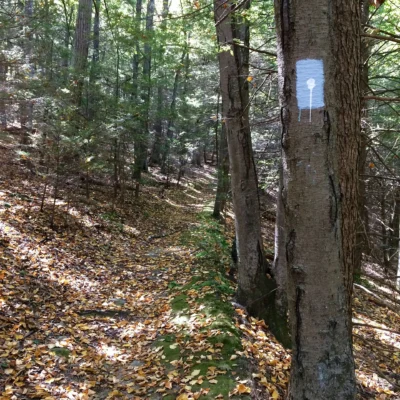
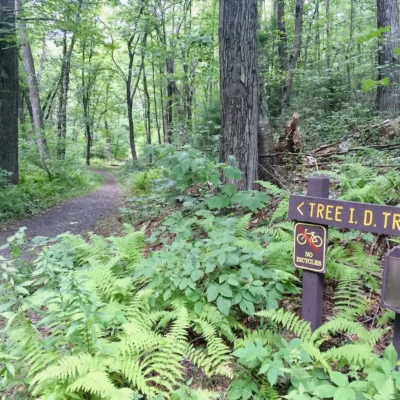
Walk the grounds, watch trout at different sizes in the rearing ponds and learn how stocking works. If you want to fish, the Farmington River, one of Connecticut’s best-known trout rivers, is about 2 miles east. Entry is free year-round. The Tunxis Trail, part of Connecticut’s Blue-Blazed trail system, and the Nassahegon Forest Trail cross the state property and continue into neighboring Nassahegon State Forest, according to DEEP’s trail data (as of October 2026).
Insider Tips
Fish culture: Connecticut has used fish culture to support its fisheries for over 100 years, and Burlington has been part of that work since 1923. Pro tip: Visit early in the day, since the grounds close in mid-afternoon. Farmington River: The nearby Farmington River is a designated Wild and Scenic River — one of the best trout streams in the Northeast.
Best Time to Visit
Year-round: The hatchery raises fish in every season, so there is always something to see in the ponds.
Wildlife & Nature
The Burlington Trout Hatchery raises trout and salmon for stocking Connecticut’s streams and lakes. Its water comes from artesian wells and nearby streams. Brook trout (Salvelinus fontinalis) are Connecticut’s only native trout species — they require the coldest, cleanest water and serve as indicators of stream health. Brown trout (introduced from Europe in the 1880s) are more tolerant of warmer water. Rainbow trout (from the Pacific Northwest) are the most commonly stocked species. Climate change threatens Connecticut’s cold-water fisheries — as streams warm, suitable brook trout habitat is shrinking.
Nearby Attractions
Sessions Woods Wildlife Management Area in Burlington features an excellent interpretive trail with displays explaining Connecticut’s wildlife management practices. Roaring Brook Nature Center in Canton provides environmental education with native wildlife exhibits. Collinsville — a historic mill village on the Farmington River — is now home to galleries, antique shops, and the Canton Historical Museum (in the former Collins axe factory). The Farmington River is Connecticut’s premier fly fishing destination — designated a National Wild and Scenic River for its outstanding recreational and ecological values.
More parks nearby: Sessions Woods Wildlife Management Area is a short drive away, while Nassahegon State Forest lies a short drive away.
🐟 Visit Burlington Trout Hatchery
A working DEEP trout hatchery in Burlington, free to visit year-round.

Park Map
Top Tours & Activities Near Connecticut
 from $100
 from $28from $75