🌤 Weather at Caines Head State Recreation Area by season
| Spring | Summer | Fall | Winter |
|---|---|---|---|
| 25–53 °F | 46–62 °F | 27–56 °F | 21–34 °F |
Each range runs from the coldest monthly average low to the warmest monthly average high in that season (1991-2020 climate normals), measured at Seward Airport, 10 mi away, elevation 22 ft. Conditions at the park can differ from the station, especially where elevation differs — check a forecast before you go.

🏚️ A WWII Fortress Hidden in an Alaskan Coastal Rainforest — Only Accessible at Low Tide — Caines Head State Recreation Area, 6,000 acres on Resurrection Bay near Seward, Alaska, WWII Fort McGilvray with concrete bunkers and tunnels, 14 miles of trails, coastal hiking tide-dependent access, primitive beach camping, public use cabins, Kenai Fjords gateway, wildlife (sea otters, whales, bears, eagles) — Kenai Peninsula, AK
During World War II, the US military built a fortress on the headland above Resurrection Bay to defend the Port of Seward from Japanese invasion. Fort McGilvray — concrete bunkers, underground tunnels, and artillery platforms — was carved into the rock at the top of Caines Head. The invasion never came. The fort was abandoned. The forest grew back.
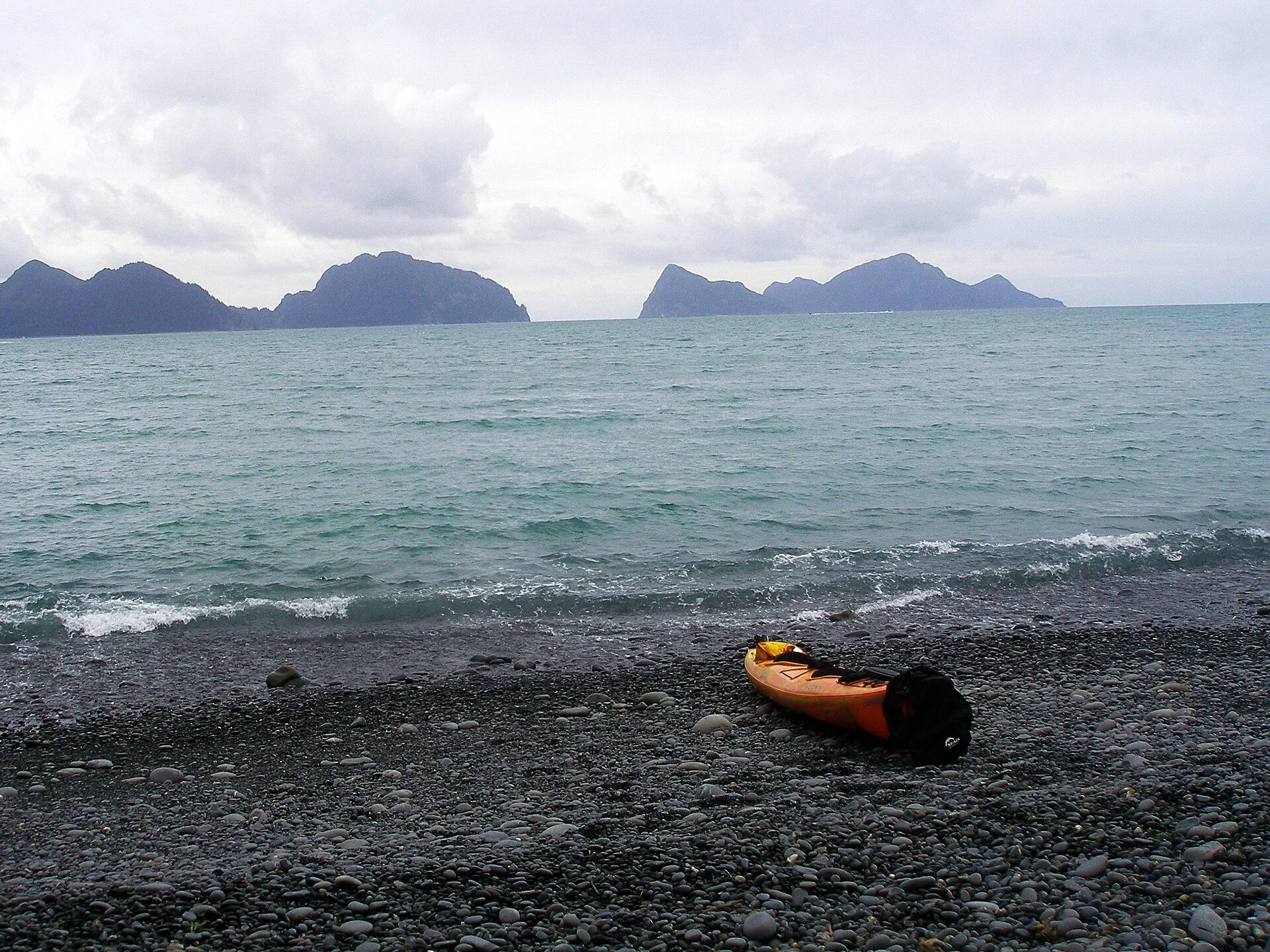
Today, you hike to the ruins through coastal temperate rainforest, along a beach trail that is only passable at low tide. Miss the tide window, and the ocean traps you against the cliffs. Time it right, and you find concrete rooms full of echoes, firing platforms overlooking the bay, and one of the most dramatic coastal landscapes in Alaska.
What to Do
| Activity | Details |
|---|---|
| Fort McGilvray | WWII-era concrete fortification at the summit of Caines Head — bunkers, tunnels, ammunition rooms, and artillery platforms. Bring a headlamp to explore the interior. The fort was built 1941–1943 to defend Seward’s port and railroad terminus |
| Coastal Trail | The primary trail from Lowell Point includes a 3-mile beach section only passable at low tide (+3 feet or lower). Plan your hike around the tide tables — arrive at least 2 hours before low tide. Total distance to the fort: ~4.5 miles one way |
| Camping | Primitive beach camping at North Beach, South Beach, and Tonsina Point. No facilities beyond pit toilets and picnic shelters. Bear canisters required. Rain is constant — this is coastal Alaska rainforest |
| Cabins | Public use cabins at Tonsina, Callisto Canyon, and Derby Cove — reservable through Alaska State Parks. A dry roof in the rainforest is worth its weight in gold |
| Wildlife | Sea otters in the bay, humpback whales in the deeper water, black bears in the forest, mountain goats on the ridges, bald eagles everywhere. Seals haul out on the rocks near the headland |
The Tide Problem
| Detail | What You Need to Know |
|---|---|
| The Rule | The 3-mile beach section between Lowell Point and North Beach is only passable when tides are +3 feet or lower. Higher tides push water against the cliff base — there is no escape route |
| Planning | Check NOAA tide tables for Seward. Plan to hit the beach section during the falling tide. Allow 2+ hours buffer. A round trip requires two low-tide windows — or plan to camp overnight |
| Alternative Access | Water taxis from Seward can drop you directly at North Beach, bypassing the tide-dependent section entirely. This is the safest option for inexperienced hikers or uncertain conditions |
| Consequences | Getting caught by the rising tide on this section is serious — cold water, steep cliffs, no cell service. This is not a casual decision. People have required rescue here |
Best Time to Visit
| Season | Best For |
|---|---|
| Summer (Jun–Aug) | ☀️ Longest days. Best weather (still rainy). Most favorable tide windows. Whales active. Trails most passable. Water taxi services operating |
| Spring (May) | Snow melting at higher elevations. Eagle nesting. Cold water. Limited services. Experienced hikers only |
| Fall (Sep) | Salmon running. Bears fishing streams. Storms building. Dramatic light. Season ending. Fewer boats |
| Winter (Oct–Apr) | Not recommended. Short days, heavy rain/snow, cold water, limited daylight for tide calculations |
Frequently Asked Questions
How hard is the hike?
Moderate to challenging — but the tide timing is the real difficulty. The trail itself is 4.5 miles one way with about 700 feet of elevation gain to the fort. The physical hiking is manageable for fit hikers. The tide-dependent beach section adds a critical planning dimension.
Is this near Kenai Fjords National Park?
Yes — Seward is the gateway to both. Caines Head SRA and Kenai Fjords NP share Resurrection Bay. Many visitors combine a Kenai Fjords boat tour with a Caines Head hike for the ultimate Seward experience.
Nearby state parks: If you have extra time, Thumb Cove State Marine Park is a short drive away, and Sunny Cove State Marine Park is a short drive away.
Camping reservations: Book campsites and cabins for Alaska state parks online at alaskastateparks.reserveamerica.com.
🏚️ A Fortress in the Rainforest. Accessible Only When the Ocean Says So.
WWII bunkers carved into an Alaskan headland. A trail that disappears underwater at high tide. Sea otters in the bay. Whales in the deep water. And concrete rooms full of echoes from a war that never came here.

🐾 Dogs & Pets at Caines Head State Recreation Area
- Pets allowed? statewide rule
- Pets are welcome in Alaska State Parks and campgrounds when leashed and accompanied by the owner; unleashed dogs are allowed in the backcountry if under voice control.
- Leash rule statewide rule
- Leash not exceeding 9 feet required in developed facilities (campgrounds, picnic areas, trailheads, swim beaches, boat ramps).
- Beaches & swim areas statewide rule
- No statewide pet ban on beaches; swim beaches count as developed facilities where the 9-foot leash rule applies.
- Statewide exceptions statewide rule
- In the backcountry leashes are not required but pets must remain under voice control; in trapping areas (e.g. Chena River SRA) leashing is strongly advised for dog safety.
Are dogs allowed at Caines Head State Recreation Area?
Pets are welcome in Alaska State Parks and campgrounds when leashed and accompanied by the owner; unleashed dogs are allowed in the backcountry if under voice control. Individual parks can post stricter rules — check signage on arrival.
Rules verified July 2026 via dnr.alaska.gov. More: Alaska state parks guide · Dog rules in all 50 states compared
🐻 Wildlife at Caines Head State Recreation Area: What to Watch For — and Watch Out For
Worth watching for: From the beach at North Beach and the bluff trail climbing to Fort McGilvray, scan Resurrection Bay for harbor seals, Steller sea lions, sea otters, Dall's and harbor porpoises, and orca, humpback, grey and fin whales - all documented by Alaska State Parks in and adjacent to the recreation area's marine waters. Mountain goats hold the alpine and subalpine slopes through summer and move to lower elevations as winter closes in; in spring, nannies with newborn kids appear on the southern cliffs of Caines Head. Bald and golden eagles range across the whole area, with shore nests including one on the point of land between North Beach and Derby Cove, and small colonies of horned puffin, pigeon guillemot, black oystercatcher, marbled and Kittlitz's murrelets and harlequin duck breed along the shoreline.
Watch out for: Alaska State Parks' management plan for Caines Head states plainly that bears are a potential hazard to visitors and calls for instructing people on safe food handling; both brown and black bears occur in this part of the Kenai, and the walk-in campsites at Tonsina Point and North Beach are where that matters. Follow the Alaska Department of Fish and Game's statewide bear-country rules: make noise so you never surprise a bear, cook away from your tent, store all food plus odorous items such as toothpaste and fuel away from camp and out of reach, and if you meet a bear, face it, stand your ground, talk calmly and do not run. Between April 1 and June 1 the south-facing cliffs of Caines Head are mountain goat birthing grounds - move through discreetly and quietly, because the state can close the area if people displace the nannies and kids. Separately, the tide dictates everything: the three-mile beach stretch from Tonsina Point to North Beach is passable only at very low tide, so leave Seward at least two hours before low tide.
Are there bears at Caines Head State Recreation Area?
Yes — see above for where they occur in the park and how to behave. Sightings are a normal part of a healthy park; incidents are rare when visitors keep distance and store food properly.
Wildlife information verified July 2026 via dnr.alaska.gov.
Park Location
Plan your gear for Caines Head State Recreation Area
From our editorial guides, matched to this park’s activities: