
🌤 Weather at Higganum Meadows Wildlife Management Area by season
| Spring | Summer | Fall | Winter |
|---|---|---|---|
| 28–70 °F | 57–84 °F | 32–75 °F | 19–42 °F |
Each range runs from the coldest monthly average low to the warmest monthly average high in that season (1991-2020 climate normals), measured at Meriden Markham Municipal Airport, 13 mi away, elevation 103 ft. Conditions at the park can differ from the station, especially where elevation differs — check a forecast before you go.

🏆 CT River Floodplain — Connecticut River floodplain meadows near Higganum with migratory waterfowl
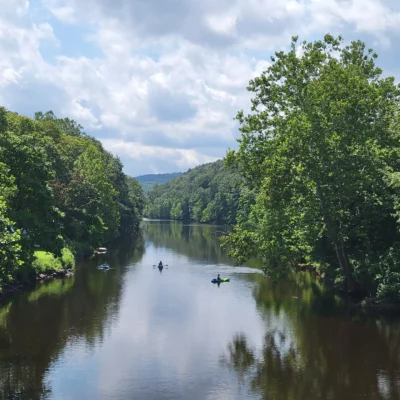
Higganum Meadows Wildlife Management Area protects floodplain meadows along the Connecticut River near Higganum. Like Durham and Cromwell meadows, these seasonally flooded grasslands are vital for migratory waterfowl and declining grassland birds. The Connecticut River — designated an American Heritage River — supports one of the most important migratory corridors in the Eastern United States.
Visitor Information
| Detail | Information |
|---|---|
| Location | Higganum, Middlesex County, CT |
| Entry Fee | Free |
| River | CT River (American Heritage River) |
Frequently Asked Questions
What is an American Heritage River?
The Connecticut River was designated an American Heritage River in 1998, recognizing its historic, cultural, and environmental significance. It’s New England’s longest river and one of only 14 rivers with this designation.
How did bald eagles recover?
DDT (banned 1972) caused eggshell thinning that nearly exterminated bald eagles — only 417 pairs remained in the lower 48 by 1963. After the DDT ban, hacking programs (raising captive-bred chicks in the wild) and habitat protection allowed recovery. Connecticut went from zero nesting pairs to 30+ today. Nationally, bald eagles recovered from 417 to 71,400+ pairs — one of the greatest conservation success stories in history.
About Higganum Meadows
Higganum Meadows Wildlife Management Area preserves Connecticut River floodplain meadows in Haddam. These annually flooded meadows have been maintained as grasslands for centuries — first by Native Americans and then by colonial farmers. The result is a rare grassland ecosystem in a state dominated by forest.
Things to Do
Birdwatching for grassland species (a declining habitat type in the Northeast), hunting (seasonal), and wildlife photography. The meadows are part of the Silvio O. Conte National Fish and Wildlife Refuge along the Connecticut River.
Insider Tips
Tidal meadows: Higganum Meadows are freshwater tidal meadows — the Connecticut River’s tides extend 60 miles inland from Long Island Sound. Pro tip: Freshwater tidal wetlands are among the rarest and most productive ecosystems in North America. Eagle nesting: Bald eagles have returned to nest along the Connecticut River — a remarkable recovery from near-extinction caused by DDT.
Best Time to Visit
Winter: Bald eagle viewing. Spring: Tidal meadow awakening. Fall: Meadow and river foliage. Summer: Full wetland ecology.
Wildlife & Nature
Higganum Meadows protects one of the most ecologically significant freshwater tidal wetlands in the Connecticut River system. Freshwater tidal wetlands — where river tides influence water levels without salt intrusion — are among the rarest ecosystems in North America. The meadows support wild rice, pickerelweed, and arrow arum — plants adapted to the twice-daily rise and fall of fresh water. American bitterns nest in the tall vegetation, their cryptic striped plumage rendering them nearly invisible among the reeds. Bald eagles fish the meadows regularly — their dramatic talon-first strikes on the water surface are a thrilling sight. The meadows provide critical nursery habitat for river herring and American shad during their spawning runs.
Nearby Attractions
Hurd State Park along the Connecticut River offers dramatic cliff-top views from Split Rock and excellent riverside hiking. Haddam Meadows State Park provides river access and is a popular boat launch. Middlesex County‘s river towns — Chester, Deep River, and Essex — offer charming village centers with galleries, restaurants, and historical architecture. The Chester-Hadlyme Ferry (since 1769) crosses the Connecticut River in minutes. Selden Island in the river is accessible only by boat — offering primitive camping on the state’s largest river island.
More parks nearby: Higganum Reservoir State Park is a short drive away, while King’s Island Coop Wildlife Management Area lies a short drive away.
🦆 Visit Higganum Meadows WMA
Heritage River — floodplain meadows on New England’s longest river.

🐾 Dogs & Pets at Higganum Meadows Wildlife Management Area
- Pets allowed? statewide rule
- Pets on a leash are permitted in most Connecticut state parks and forests, but not in buildings, swimming areas or state park campgrounds.
- Leash rule statewide rule
- Pets must be leashed and under control at all times; in state forest camping areas the leash may be no longer than 7 feet.
- Beaches & swim areas statewide rule
- Pets are prohibited in swimming areas; Sherwood Island and Squantz Pond State Parks ban pets entirely April 15 - September 30.
- Cabins & lodging statewide rule
- Pets are banned from all state park campgrounds; they are allowed only in the American Legion, Pachaug and Salt Rock state forest campgrounds, but not on rustic cabin sites.
- Statewide exceptions statewide rule
- Pets prohibited year-round at Dinosaur State Park and in the formal gardens and beach at Harkness Memorial State Park.
Are dogs allowed at Higganum Meadows Wildlife Management Area?
Pets on a leash are permitted in most Connecticut state parks and forests, but not in buildings, swimming areas or state park campgrounds. Individual parks can post stricter rules — check signage on arrival.
Rules verified July 2026 via portal.ct.gov. More: Connecticut state parks guide · Dog rules in all 50 states compared
Park Location
Plan your gear for Higganum Meadows Wildlife Management Area
From our editorial guides, matched to this park’s activities:

Top Tours & Activities Near Hartford
 from $143
 from $79
 from $20