🌤 Weather at Judge C. R. Magney State Park by season
| Spring | Summer | Fall | Winter |
|---|---|---|---|
| 18–53 °F | 44–70 °F | 24–62 °F | 6–26 °F |
Each range runs from the coldest monthly average low to the warmest monthly average high in that season (1991-2020 climate normals), measured at Grand Marais, 14 mi away, elevation 612 ft. Conditions at the park can differ from the station, especially where elevation differs — check a forecast before you go.

Where Waterfalls Swallow Rivers — Minnesota’s Greatest Geological Mystery
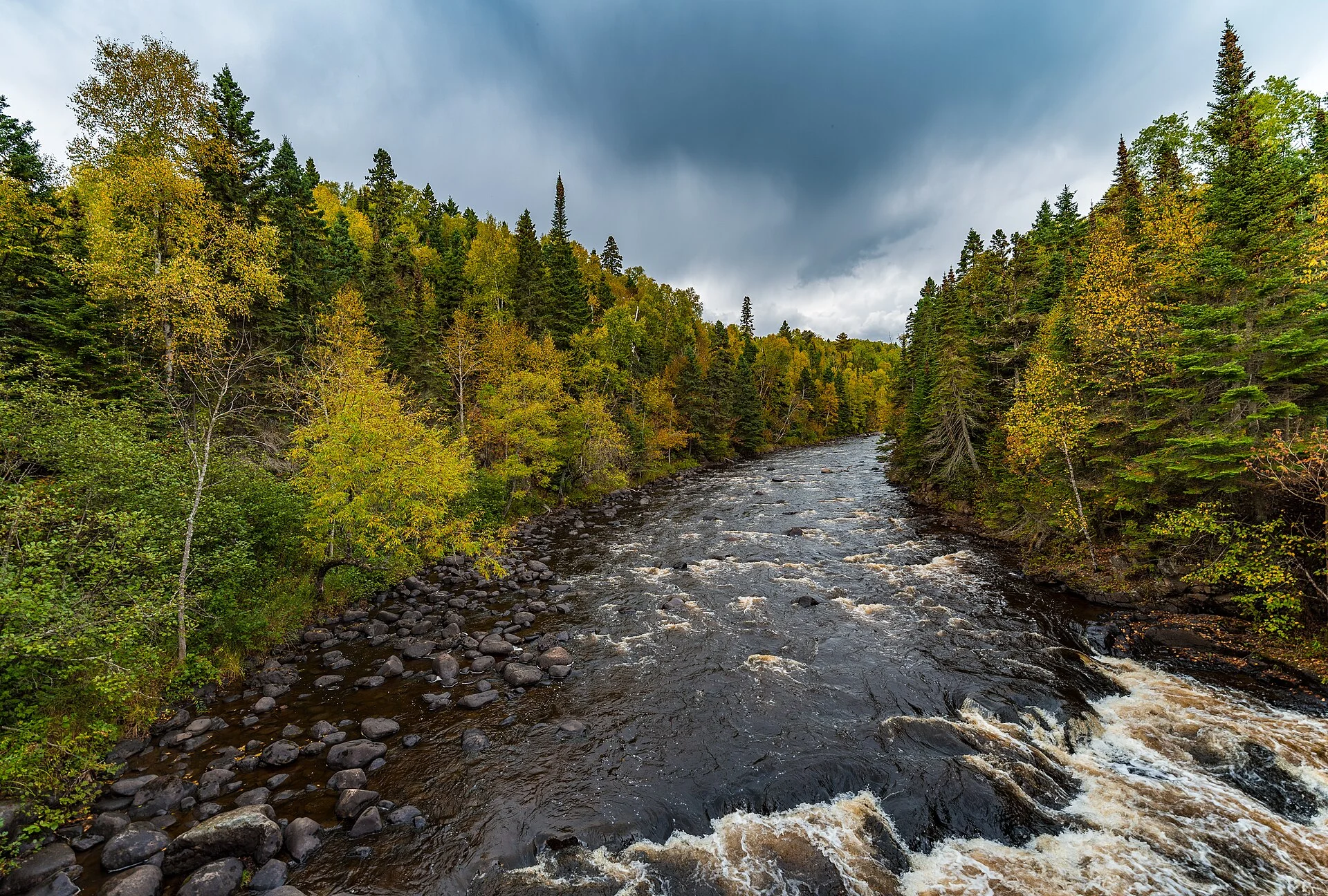
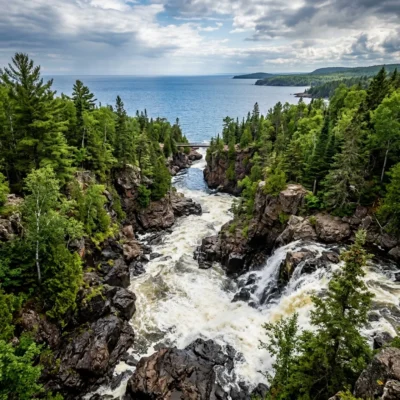
Judge C.R. Magney State Park, perched on Minnesota’s rugged North Shore along Lake Superior, guards one of the most fascinating geological puzzles in America — the Devil’s Kettle. Here, the Brule River splits around a massive rock outcropping: one half plunges 50 feet down a conventional waterfall, while the other half pours into a deep pothole and seemingly vanishes into the earth. For decades, hikers, scientists, and thrill-seekers threw logs, ping-pong balls, and even dye into the kettle, watching them disappear without a trace — fueling legends of underground river systems leading to Lake Superior.
The mystery was finally resolved in 2017 when Minnesota DNR hydrologists measured the river’s flow above and below the falls and found the volumes were essentially identical. The water doesn’t truly disappear — it re-enters the main channel through submerged passages at the base. The “vanishing” objects are simply pulverized by the extreme turbulence inside the pothole. But standing at the edge and watching half a river pour into a hole in the earth, with no visible outlet, remains one of the most surreal experiences in any American state park.
Things to Do
Hiking
The park’s signature hike — the Devil’s Kettle Trail — is a 2-mile round trip that descends approximately 175 wooden steps to the falls viewpoint. The trail also passes the Upper Falls of the Brule River. While moderate in difficulty, the stairs can be slippery when wet — wear sturdy shoes with good tread. The Timberdoodle Trail (1 mile) offers an easier forest walk through the boreal landscape.
Fishing
The Brule River is one of the premier steelhead and brook trout streams on the North Shore. Spring steelhead runs (April–May) draw anglers from across the Midwest. The river’s deep pools and fast runs below the falls are particularly productive. A Minnesota fishing license is required.
Wildlife Watching
The park’s boreal forest habitat supports moose, black bears, wolves, and a diversity of North Shore bird species. In fall, the forest canopy blazes with color — Sugar Maples, Birch, and Aspen create one of the most vivid foliage displays on the North Shore.
Trails
| Trail | Distance | Difficulty | Highlights |
|---|---|---|---|
| Devil’s Kettle Trail | 2 mi RT | Moderate (175 steps) | Devil’s Kettle pothole, Upper Falls, Brule River gorge |
| Timberdoodle Trail | 1 mi | Easy | Boreal forest, birding, American Woodcock habitat |
| Superior Hiking Trail (segment) | Varies | Moderate–Strenuous | Section of the 310-mile SHT passes through the park |
Camping
The campground is small, quiet, and heavily wooded — 27 drive-in sites with fire rings, picnic tables, and access to a shower building with flush toilets. No electric hookups. The campground is open seasonally, typically mid-May through mid-October. No backcountry camping is available within the park. Reservations recommended — this is a popular North Shore destination, especially during fall foliage season (late September through mid-October).
| Type | Sites | Season | Amenities |
|---|---|---|---|
| Drive-in (no electric) | 27 | Mid-May–Mid-Oct | Fire rings, picnic tables, showers, flush toilets |
Best Time to Visit
| Season | Highlights | Considerations |
|---|---|---|
| Spring (Apr–May) | Steelhead runs on Brule River; snowmelt boosts waterfall flow; wildflowers | Trail may be muddy; some facilities closed early spring |
| Summer (Jun–Aug) | Full facilities open; hiking; fishing; long daylight hours | Peak visitation; book campground early |
| Fall (Sep–Oct) | ⭐ Spectacular North Shore foliage; Devil’s Kettle at peak drama | Very popular — reserve early; nights get cold |
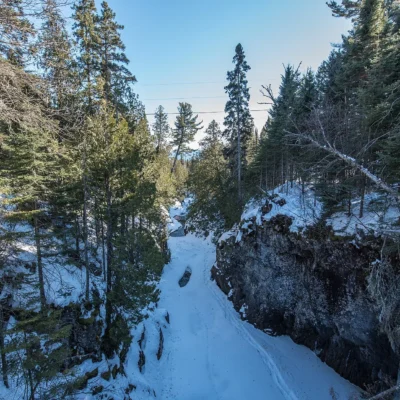
| Winter (Nov–Mar) | Day-use open; frozen river scenery; solitude | Campground closed; limited facilities; icy trail conditions |
Visitor Tips
- Devil’s Kettle timing: The waterfall is most dramatic during spring snowmelt (April–May) and after heavy rains. By late summer in dry years, flow can be reduced.
- Footwear: The 175-step descent to the falls can be very slippery — waterproof hiking boots with good tread are essential, not sandals or sneakers.
- Superior Hiking Trail: A section of the 310-mile Superior Hiking Trail passes through the park — experienced hikers can extend their trip along the North Shore.
- Location: The park is located on Highway 61, approximately 14 miles northeast of Grand Marais — one of the most charming small towns on the North Shore, with restaurants, outfitters, and craft breweries.
- Fall foliage: Late September through mid-October is peak foliage season on the North Shore. The combination of golden birch, red maple, and the dark basalt of the Brule River gorge is spectacular.
Frequently Asked Questions
What is the Devil’s Kettle?
The Devil’s Kettle is a geological formation where the Brule River splits into two at a large rock outcropping. One half flows over a 50-foot waterfall; the other half pours into a deep pothole and appears to vanish. Scientists confirmed in 2017 that the water re-enters the river through submerged passages — objects thrown in are pulverized by extreme turbulence. It remains one of the most visually surreal natural features in any American state park.
How difficult is the hike to Devil’s Kettle?
The Devil’s Kettle Trail is a 2-mile round trip rated moderate. The main challenge is approximately 175 wooden steps descending to the falls viewpoint. The steps can be slippery when wet — sturdy hiking footwear with good traction is strongly recommended. Allow about 1–1.5 hours for the full hike including time at the overlook.
When is the best time to visit Judge C.R. Magney State Park?
Fall (late September through mid-October) offers spectacular North Shore foliage combined with good waterfall flow. Spring (April–May) provides the most dramatic waterfall flow from snowmelt and is also prime steelhead fishing season. Summer offers the best weather and full facilities but is the busiest period. Winter is open for day use only, with limited facilities.
Last updated: April 2026
Make it a road trip: Pair a visit with Kadunce River State Wayside (a short drive away).

🐾 Dogs & Pets at Judge C. R. Magney State Park
- Pets allowed? statewide rule
- Pets are welcome in Minnesota state parks and recreation areas as long as they are leashed and personally attended at all times.
- Leash rule statewide rule
- Leash six feet or shorter (or portable enclosure) required at all times.
- Beaches & swim areas statewide rule
- Only service animals are allowed in beach areas — pets are prohibited on swim beaches statewide.
- Cabins & lodging statewide rule
- Only service animals are allowed in state park lodging, camper cabins, yurts and tipis — no pet-friendly cabin program.
- Statewide exceptions statewide rule
- Emotional support/therapy animals do not qualify as service animals and are prohibited from park buildings.
- Dogs & wildlife
- Minnesota DNR states plainly that dogs and bears don't mix - in three of Minnesota's documented bear attacks the bear was chasing an unleashed dog back to its owner - so keep your dog on the required six-foot leash at all times or leave it at home.
Are dogs allowed at Judge C. R. Magney State Park?
Pets are welcome in Minnesota state parks and recreation areas as long as they are leashed and personally attended at all times. Individual parks can post stricter rules — check signage on arrival.
Rules verified July 2026 via dnr.state.mn.us. More: Minnesota state parks guide · Dog rules in all 50 states compared
🐻 Wildlife at Judge C. R. Magney State Park: What to Watch For — and Watch Out For
Worth watching for: Minnesota DNR lists moose, white-tailed deer, black bears and timber wolves among the larger animals living in this boreal-forest park, with woodchuck, snowshoe hare, red squirrel and chipmunk as the common smaller mammals. Birders get a bonanza of warblers during the nesting months of May, June and July, and early fall is a good time to watch migrating hawks that congregate along the Lake Superior shore. Chickadees, nuthatches, jays, woodpeckers and ruffed grouse are around all year; the DNR publishes a park bird checklist, and the nine miles of trail along the Brule River and Gauthier Creek are the places to walk for them.
Watch out for: Black bears live in the park, and the Minnesota DNR's statewide bear guidance applies here: keep a clean campsite in the 27-site drive-in campground, cook downwind and as far from your tent as possible, and never store food, trash, cooking clothes or toiletries in a tent - use a bear-resistant container, a locked out-of-sight vehicle, or hang it at least ten feet up and ten feet out from the trunk. On the trail, the DNR says not to startle a bear: make noise periodically, and if you meet one, speak calmly, back away slowly and never run; if it approaches, hold your ground, wave your arms and yell, and if a black bear makes contact, fight back rather than playing dead. For viewing, the DNR's stated minimum is 50 yards (about ten car lengths).
Are there bears at Judge C. R. Magney State Park?
Yes — see above for where they occur in the park and how to behave. Sightings are a normal part of a healthy park; incidents are rare when visitors keep distance and store food properly.
Wildlife information verified July 2026 via dnr.state.mn.us.
Park Location
Plan your gear for Judge C. R. Magney State Park
From our editorial guides, matched to this park’s activities:
Top Tours & Activities in Minnesota
 from $79
 from $110
 from $195