
🌤 Weather at Point Lobos State Natural Reserve by season
| Spring | Summer | Fall | Winter |
|---|---|---|---|
| 46–64 °F | 51–69 °F | 48–71 °F | 44–61 °F |
Each range runs from the coldest monthly average low to the warmest monthly average high in that season (1991-2020 climate normals), measured at Monterey, 5 mi away, elevation 260 ft. Conditions at the park can differ from the station, especially where elevation differs — check a forecast before you go.

The Crown Jewel of California’s Coastline
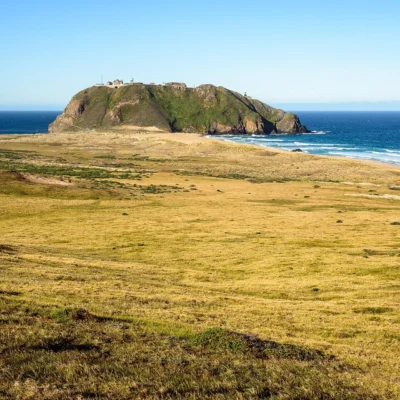
Called the “Crown Jewel of the California State Park System”, Point Lobos State Natural Reserve is a place where rugged granite cliffs plunge into turquoise coves, ancient Monterey cypress trees twist against Pacific gales, and sea otters float lazily in kelp forests just offshore. Located just 3 miles south of Carmel-by-the-Sea on the spectacular Big Sur coast, this 1,325-acre reserve (including 775 submerged acres) packs more natural drama into its compact footprint than places ten times its size.
The Rumsen people, an Ohlone group, considered this place sacred for over 2,500 years, calling it “Ishxenta.” Today, the reserve protects one of only two remaining natural groves of the rare Monterey cypress tree, hosts year-round populations of sea otters, sea lions, and harbor seals, and offers some of the most spectacular coastal hiking in North America. Whether you’re a photographer chasing the perfect wave-crashing-on-granite shot, a diver exploring 70-foot kelp forests, or a family looking for California’s most beautiful easy hikes, Point Lobos will take your breath away.
Hiking Trails at Point Lobos
Point Lobos features over 10 miles of interconnected trails, from wheelchair-accessible pathways to the comprehensive 6.7-mile Point Lobos Loop. Nearly every trail delivers jaw-dropping ocean views, hidden coves, and wildlife encounters. The reserve is compact enough that you can explore most trails in a single visit.
| Trail Name | Distance | Difficulty | Highlights |
|---|---|---|---|
| Point Lobos Loop | 6.7 mi loop | Moderate | Complete reserve perimeter — all ecosystems and views |
| Cypress Grove Trail | 0.8 mi loop | Easy | Ancient Monterey cypress grove, dramatic ocean views |
| Sea Lion Point Trail | 0.6 mi RT | Easy (ADA) | Sea lions on rocks, wheelchair accessible |
| Bird Island Trail | 0.8 mi RT | Easy (ADA partial) | China Cove views, seabird colonies, nesting cormorants |
| North Shore Trail | 1.4 mi | Easy-Moderate | Blue Fish Cove, Whaler’s Cove vistas |
| South Shore Trail | 1.3 mi | Moderate | Rugged coastline, hidden rock formations |
| Lace Lichen Trail | 0.5 mi | Easy | Sheltered forest walk opening to ocean views |
| Carmelo Meadow Trail | 0.7 mi | Easy (ADA) | Wildflower meadow, accessible pathway |
| Granite Point Trail | 0.5 mi | Easy (ADA) | Rocky promontory, excellent whale watching perch |
| Pine Ridge Trail | 0.5 mi | Moderate | Interior forest, connects to South Shore |
Trail Tips from Experienced Visitors
- Must-do combo: Cypress Grove Trail → Sea Lion Point → Bird Island Trail covers the reserve’s three most iconic spots in about 2 hours
- Full experience: The Point Lobos Loop (6.7 miles) takes 3–4 hours and shows you everything — bring water and snacks for the picnic areas
- Arrive early: Parking fills by 9:30 AM on weekends — the 150-spot lot is tiny. Alternative: park on Highway 1 and walk in free
- Poison oak alert: Wear long pants on interior trails and learn to identify the three-leaflet pattern
Wildlife at Point Lobos
Point Lobos is part of the Monterey Bay National Marine Sanctuary, one of the world’s richest marine ecosystems. The reserve’s unique position — where cold upwelling currents meet the coast — creates extraordinary biodiversity both above and below the waterline.
| Species | Best Viewing Location | Best Season | Viewing Tips |
|---|---|---|---|
| Sea Otters | Whaler’s Cove, China Cove | Year-round | Look for them wrapped in kelp — bring binoculars |
| California Sea Lions | Sea Lion Point | Year-round (breeding: summer) | Listen for their barking from the parking lot |
| Harbor Seals | Whaler’s Cove, China Cove | Year-round (pups: Mar–Jun) | Keep 50+ feet distance, especially from pups |
| Gray Whales | Granite Point, Sea Lion Point | Dec–May (peak: Jan–Feb) | Scan the horizon for spouts — morning is calmest |
| Blue Whales | Headlands viewpoints | Summer (Jul–Sep) | Rare sightings — look for massive blows near horizon |
| Cormorants & Seabirds | Bird Island | Spring–Summer (nesting) | Thousands of birds nest on the offshore rocks |
| Gray Fox, Bobcat | Interior trails | Year-round (dawn/dusk) | Quiet, patient observation on less-traveled trails |
The Rare Monterey Cypress
Point Lobos protects one of only two natural groves of the Monterey cypress (Hesperocyparis macrocarpa) remaining on Earth — the other is in the Del Monte Forest across Carmel Bay. These wind-sculpted, centuries-old trees are perhaps the most photographed trees in California, their gnarled silhouettes framing impossible Pacific sunsets.
Walk the Cypress Grove Trail (0.8-mile loop) to experience these ancient trees up close. Their scale-like leaves, rounded cones, and deeply furrowed gray bark are distinctive. Many of the larger specimens are estimated to be 200–300 years old, shaped by relentless ocean winds into dramatic, twisted forms that have inspired artists from Ansel Adams to modern Instagram photographers.
Scuba Diving at Point Lobos
Point Lobos’ underwater reserve is recognized as one of the finest diving destinations in California. The 775 submerged acres feature towering 70-foot kelp forests, vibrant marine life, and crystal-clear visibility that can reach 50+ feet on calm days.
Diving Rules and Access
| Detail | Information |
|---|---|
| Permitted Dive Sites | Whalers Cove and Bluefish Cove only |
| Certification Required | Yes — proof of open water certification mandatory |
| Reservations | Required in advance — limited to 10–15 dive teams/day |
| Team Size | Minimum 2 divers per team (buddy system required) |
| Entry/Exit | Dive access ramp at Whalers Cove parking lot only |
| What You’ll See | Giant kelp forests, lingcod, rockfish, sea stars, harbor seals, sea otters |
| Best Visibility | Late summer/fall — can reach 60+ feet |
History of Point Lobos
The history of Point Lobos stretches back thousands of years, weaving together indigenous heritage, commercial industry, and conservation triumph:
- 2,500+ years ago: The Rumsen (Ohlone) people inhabit the area, naming it “Ishxenta” — a sacred gathering place
- 1769: Spanish explorers discover the area during the Portolá Expedition
- 1850s: Portuguese whalers establish operations at Whaler’s Cove — the Whalers Cabin from this era still stands as a museum
- 1860s–1890s: Chinese and Japanese fishermen harvest abalone; the area hosts the largest abalone cannery on the West Coast
- 1898: Entrepreneur A.M. Allan begins purchasing land to prevent industrial and residential development
- 1933: California acquires the land from Allan’s heirs, establishing it as a State Natural Reserve
- Later expansions: 775 submerged acres added, creating one of the nation’s first underwater reserves
Today, the Whalers Cabin Museum (built 1850s) showcases artifacts from the whaling, fishing, and abalone eras. It’s located near the Whaler’s Cove parking area and is free to visit.
Seasonal Guide
| Season | Weather | Highlights | Considerations |
|---|---|---|---|
| Spring (Mar–May) | 55–65°F, sunny | Wildflowers, seal pups at China Cove, migrating whales | Busiest season — arrive before 9 AM |
| Summer (Jun–Aug) | 60–70°F, frequent fog | Sea lion breeding, best diving visibility, blue whales | Fog can persist all day — bring layers |
| Fall (Sep–Nov) | 60–75°F, warm | Warmest weather, clearest skies, excellent photography | Best overall season — moderate crowds |
| Winter (Dec–Feb) | 50–60°F, rain | Gray whale migration, dramatic storm watching, fewest visitors | Trails can be muddy, check weather before visiting |
Visitor Guide and Budget Planner
Getting There
Point Lobos is on Highway 1, approximately 3 miles south of Carmel-by-the-Sea and about 125 miles south of San Francisco. The entrance is well-marked on the east side of the highway. The nearest airports are Monterey Regional Airport (8 miles) and San Jose International Airport (75 miles).
Fees and Parking
| Type | Cost | Notes |
|---|---|---|
| Vehicle Entry Fee | $10 | Includes all trails and parking |
| Senior Vehicle Fee | $9 | Driver 62+ years old |
| Disabled Discount | $5 | With valid DDP card |
| Walk-in/Bike-in | Free | Park on Highway 1 and walk in |
| CA Annual Pass | $125/year | Valid at all California State Parks |
Budget Breakdown
| Expense | Cost |
|---|---|
| Vehicle entry (standard) | $10 |
| Scuba diving (own gear) | $10 (entry only) |
| Whalers Cabin Museum | Free |
| Lunch in Carmel-by-the-Sea | $15–$30 |
| Total half-day visit | $25–$50 |
Rules and Safety
- Stay on trails — cliff edges are unstable and falls are fatal
- No dogs — only ADA-qualified service animals permitted
- No drones — strictly prohibited
- No collecting — rocks, shells, plants, and marine life are all protected
- No bikes — bicycles and skateboards prohibited on trails
- No alcohol — prohibited throughout the reserve
- Exit by closing time — gates lock at 5 PM (or posted closing time)
- Watch for poison oak — common on interior trails, wear long pants
- Wildlife distance — maintain at least 50 feet from seals, sea lions, and otters
Packing Essentials
| Item | Why You Need It |
|---|---|
| Binoculars | Essential for sea otter, whale, and bird watching |
| Layers and windbreaker | Coastal fog and wind can drop temps 15°F quickly |
| Sturdy shoes | Rocky coastal trails with uneven surfaces |
| Camera with zoom | Wildlife is close but telephoto captures the details |
| Water and snacks | No food service in the reserve — nearest options in Carmel |
| Sunscreen | UV reflects strongly off ocean — sunburn sneaks up on foggy days |
| Tide chart | Tidepool exploration is best at minus tides |
Nearby Attractions
- Carmel-by-the-Sea — Charming village with art galleries, restaurants, and Carmel Beach (3 miles north)
- Big Sur — Begin the iconic Highway 1 drive south through Bixby Bridge and Julia Pfeiffer Burns SP
- Monterey Bay Aquarium — World-renowned aquarium featuring local marine life (12 miles north)
- 17-Mile Drive — Scenic coastal drive through Pebble Beach and the Lone Cypress (5 miles north)
- Garrapata State Park — Less-crowded coastal hiking just south on Highway 1
Frequently Asked Questions
How long does it take to visit Point Lobos?
Plan for 2–4 hours depending on your pace and interests. The three most popular trails (Cypress Grove, Sea Lion Point, and Bird Island) take about 2 hours combined. The full Point Lobos Loop takes 3–4 hours. Add time for wildlife watching, the Whalers Cabin Museum, and photography stops — it’s easy to spend a full day.
Can I bring my dog to Point Lobos?
No. Dogs are not allowed in Point Lobos State Natural Reserve, with the sole exception of ADA-qualified service animals. This policy protects the sensitive wildlife and habitats, particularly nesting seabirds and marine mammals. Nearby Carmel Beach does allow dogs and is a popular alternative just 3 miles north.
Do I need a reservation for Point Lobos?
Reservations are recommended, especially on weekends and holidays, as the parking lot only holds about 150 vehicles. When the lot fills, the gate closes and visitors must wait for others to leave. Alternatively, you can park along Highway 1 and walk into the reserve for free — this avoids both the parking issue and the entry fee.
What’s the best trail at Point Lobos for beginners?
The Cypress Grove Trail is ideal for beginners — it’s a flat 0.8-mile loop through ancient Monterey cypress trees with stunning ocean views. The Sea Lion Point Trail (0.6 miles, wheelchair accessible) and Bird Island Trail (0.8 miles, partially accessible) are also excellent easy options. All three trails have clear signage and well-maintained surfaces.
Can I scuba dive at Point Lobos?
Yes, but with strict regulations. Diving is only allowed at Whalers Cove and Bluefish Cove, requires proof of open water certification, advance reservations, and must be done in teams of at least two. Only 10–15 dive teams are permitted per day. The reward is spectacular — 70-foot kelp forests, lingcod, rockfish, sea stars, and visiting harbor seals and sea otters.
When is the best time to see whales at Point Lobos?
Gray whales migrate past Point Lobos from December through May, with peak sightings in January and February. Head to Granite Point or Sea Lion Point for the best vantage points. In summer (July–September), rare blue whale sightings are possible. Bring binoculars and scan the horizon for spouts — calm, clear mornings offer the best visibility.
Is Point Lobos wheelchair accessible?
Yes, several trails are wheelchair accessible, including Sea Lion Point Trail, Bird Island Trail (partial), Granite Point Trail, and Carmelo Meadow Trail. Free wheelchairs are available for loan at the Entry Kiosk, Information Station, or Whalers Cabin. The accessible trails provide excellent ocean views and wildlife watching opportunities.
Explore More California State Parks
Point Lobos State Natural Reserve is one of many outstanding state parks in California. Discover more parks in our Best State Parks in California guide, or use our Park Finder to search by activity, location, or features.
Make it a road trip: Pair a visit with Carmel River State Beach (a short drive away) or Hatton Canyon (a short drive away).

🐾 Dogs & Pets at Point Lobos State Natural Reserve
Park policy: California State Parks answers "Are dogs allowed?" with a flat No for Point Lobos in both the reserve's own listing and the statewide dogs table, and the reserve's rules page repeats it without qualification: dogs are not allowed anywhere within the boundary. There is no developed-area carve-out here, so the usual California allowance for campgrounds, picnic areas and paved roads does not apply.
- Pets allowed?
- No dogs anywhere inside the reserve, including all trails, coves and parking areas
- Leash rule statewide rule
- Maximum 6-foot leash at all times; dogs may not be left unattended.
- Beaches & swim areas statewide rule
- Dogs are prohibited on most state beaches; only beaches specifically designated as dog-allowed permit them (varies by park).
- Cabins & lodging statewide rule
- Pets are generally not allowed in buildings or cabins; overnight campers must keep dogs inside a tent or vehicle at night.
- Park-specific rules
- You also may not leave a dog inside a parked vehicle while you walk the reserve — the ban explicitly covers cars in the lots, so bringing your dog along and leaving it in the car is not an option.
- Statewide exceptions statewide rule
- Designated dog-friendly trails and beaches vary park by park; misrepresenting a pet as a service animal is a misdemeanor.
Are dogs allowed at Point Lobos State Natural Reserve?
No dogs anywhere inside the reserve, including all trails, coves and parking areas.
Beyond that, California’s statewide rules apply.
Rules verified July 2026 via parks.ca.gov. More: California state parks guide · Dog rules in all 50 states compared
Park Location
Plan your gear for Point Lobos State Natural Reserve
From our editorial guides, matched to this park’s activities:
Top Tours & Activities Near Monterey & Carmel
 from $225
 from $240
 from $20