🌤 Weather at Prairie Dog State Park by season
| Spring | Summer | Fall | Winter |
|---|---|---|---|
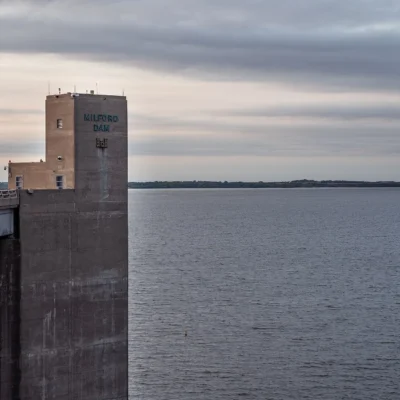
| 26–75 °F | 58–92 °F | 25–81 °F | 14–43 °F |
Each range runs from the coldest monthly average low to the warmest monthly average high in that season (1991-2020 climate normals), measured at Norton Dam, 4 mi away, elevation 2,346 ft. Conditions at the park can differ from the station, especially where elevation differs — check a forecast before you go.

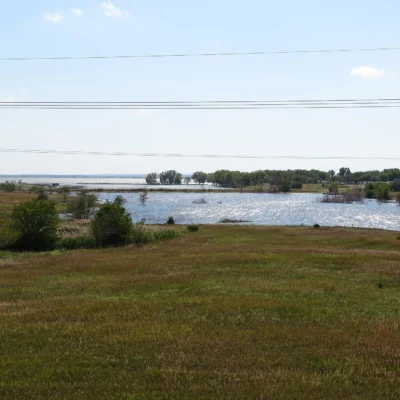
🏆 Prairie Dog Town — Named for the massive black-tailed prairie dog colonies! This park surrounds 9,000-acre Norton Reservoir (Sebelius Lake) in northwestern Kansas — swimming, boating, and watching hundreds of prairie dogs pop up from their underground cities! The Adobe House Museum nearby preserves a rare 1890s adobe structure.
Visitor Information
| Detail | Info |
|---|---|
| Location | Norton, KS |
| Lake | 9,000-acre Sebelius Lake! |
About Prairie Dog
Prairie Dog State Park in Norton County provides recreation on Keith Sebelius Lake — named for the Kansas congressman who championed its construction. A restored 1893 adobe house stands in the park — the last surviving example of the sod and adobe homesteads that early settlers built on the treeless High Plains where wood was unavailable. The park’s prairie dog town is one of the few publicly accessible colonies remaining in Kansas.
Plan Your Visit
The park has 117 campsites, a swimming beach, boat ramps, and the Norton Wildlife Area for hunting and birding. The 1893 adobe house is open for tours. Visit the prairie dog colony in early morning for the most activity. Norton’s “They Also Ran” gallery in the First State Bank is a quirky must-see. Open year-round; ice fishing on Keith Sebelius Lake is popular in winter.
Nature & Wildlife
The park’s black-tailed prairie dog town is one of the few publicly accessible colonies in Kansas. Prairie dogs — a keystone species — maintain short-grass habitat that supports burrowing owls, ferruginous hawks, and swift foxes. Keith Sebelius Lake attracts white pelicans during spring and fall migration — flocks of 500+ birds are common. The surrounding short-grass prairie supports western meadowlarks (Kansas state bird) and ornate box turtles.
Insider Tips
High Plains: Prairie Dog sits in northwest Kansas — the most remote and least-populated part of the state. Pro tip: Prairie dogs once numbered 5 billion — their “towns” covered millions of acres across the Great Plains. Poisoning campaigns eliminated 98% of them. Dust Bowl: Northwest Kansas was devastated by the 1930s Dust Bowl — “Black Sunday” (April 14, 1935) created dust storms that reached the Atlantic.
Frequently Asked Questions
What happened during the Dust Bowl?
The Dust Bowl (1930s) resulted from decades of overplowing native grassland — when drought hit, topsoil blew away in massive storms. “Black Sunday” (April 14, 1935) produced dust clouds 10,000 feet high visible from 50 miles away. Kansas, Oklahoma, Texas, and Colorado were hardest hit. 2.5 million people fled the region. The disaster led to the Soil Conservation Service and changed American farming forever — demonstrating that land misuse has catastrophic consequences.
More parks in Kansas: Webster State Park and Cedar Bluff State Park. See the full Kansas state parks guide.

⛺ Camping at Prairie Dog State Park: Campgrounds & Cabins
| Campsites | Descriptive text states 10 electric/water/sewer sites, 89 electric/water sites, and more than 130 primitive sites; the Areas data gives a lower, itemized breakdown: Cedar Ridge Campground 10 water/sewer/electric (reservable, ADA camping available); Prairie Dog Campground 52 water/electric (reservable, ADA camping available); Mushroom Shelters 7 primitive + 1 electric (reservable); Branded Cedar Campground 40 primitive + 6 water/electric (reservable, ADA camping available); Cottonwood Campground 15 primitive (not reservable, ADA camping available); Shady Rest Campground 14 primitive + 21 water/electric (reservable, ADA camping available); Meadowlark Campground 30 primitive (not reservable); Leota Cove 5 primitive (not reservable, ADA camping available). Two RV dump stations, one on the west side and one on the east side. |
|---|---|
| Cabins & Lodging | 4 cabins: 2 modern (Prairie Dog, Eagle View) with kitchen and nice bathroom, near the public fishing dock; 2 primitive (Cedar Crest, Cottonwood) with no kitchen, close to a shower house, adjacent to Prairie Dog campground. All cabins have heat, AC, refrigerator/freezer and microwave. Primitive cabins sleep 8 (one full-size mattress, rest twin; bring own bedding); during peak season (mid-April-mid-October) shower/restroom facilities are close by and a water hydrant is at each cabin, during off-season only a vault toilet is nearby with no water. Modern cabins are one-bedroom with two full-size beds plus a couch and twin Murphy bed in the living area, sleep 5-6, kitchen with small stove/oven, refrigerator/freezer, microwave, coffee maker, pots/pans, dishes, silverware, table and 4 chairs, picnic table and grill. No pets, no smoking in any cabin; no tents around the cabins except one small kid's tent allowed free of charge. Reservable 364 days in advance; call the office within 48 hours of arrival for the key code. |
| Pets | Statewide KDWP rule: pets must be restrained by leash, chain or kennel no longer than 10 feet and are not allowed on swimming beaches or in buildings. No pets allowed in any Prairie Dog State Park cabin. |
| Reservations | Book via campitks.gov or Reserve America, or through the park office, (785) 877-2953. A $5 fee applies to cabin and campsite date changes/cancellations, in addition to the standard refund policy. Vehicle permits required. |
| Special sites | No hunting is allowed in the state park. 1.4-mile nature trail with StoryWalk signage for kids. |
Camping questions about Prairie Dog State Park
Can you camp at Prairie Dog State Park?
Descriptive text states 10 electric/water/sewer sites, 89 electric/water sites, and more than 130 primitive sites; the Areas data gives a lower, itemized breakdown: Cedar Ridge Campground 10 water/sewer/electric (reservable, ADA camping available); Prairie Dog Campground 52 water/electric (reservable, ADA camping available); Mushroom Shelters 7 primitive + 1 electric (reservable); Branded Cedar Campground 40 primitive + 6 water/electric (reservable, ADA camping available); Cottonwood Campground 15 primitive (not reservable, ADA camping available); Shady Rest Campground 14 primitive + 21 water/electric (reservable, ADA camping available); Meadowlark Campground 30 primitive (not reservable); Leota Cove 5 primitive (not reservable, ADA camping available). Two RV dump stations, one on the west side and one on the east side.
How do you reserve a campsite at Prairie Dog State Park?
Book via campitks.gov or Reserve America, or through the park office, (785) 877-2953. A $5 fee applies to cabin and campsite date changes/cancellations, in addition to the standard refund policy. Vehicle permits required.
Are there cabins at Prairie Dog State Park?
4 cabins: 2 modern (Prairie Dog, Eagle View) with kitchen and nice bathroom, near the public fishing dock; 2 primitive (Cedar Crest, Cottonwood) with no kitchen, close to a shower house, adjacent to Prairie Dog campground. All cabins have heat, AC, refrigerator/freezer and microwave. Primitive cabins sleep 8 (one full-size mattress, rest twin; bring own bedding); during peak season (mid-April-mid-October) shower/restroom facilities are close by and a water hydrant is at each cabin, during off-season only a vault toilet is nearby with no water. Modern cabins are one-bedroom with two full-size beds plus a couch and twin Murphy bed in the living area, sleep 5-6, kitchen with small stove/oven, refrigerator/freezer, microwave, coffee maker, pots/pans, dishes, silverware, table and 4 chairs, picnic table and grill. No pets, no smoking in any cabin; no tents around the cabins except one small kid's tent allowed free of charge. Reservable 364 days in advance; call the office within 48 hours of arrival for the key code.
Are pets allowed at the Prairie Dog State Park campground?
Statewide KDWP rule: pets must be restrained by leash, chain or kennel no longer than 10 feet and are not allowed on swimming beaches or in buildings. No pets allowed in any Prairie Dog State Park cabin.
Source: ksoutdoors.gov (verified July 2026). Details change seasonally — confirm when booking.
🐾 Dogs & Pets at Prairie Dog State Park
- Pets allowed? statewide rule
- Pets are allowed in Kansas state parks, including trails and campgrounds, but must always be restrained by a camper, cage, hand-held leash, or tether no longer than 10 feet.
- Leash rule statewide rule
- Hand-held leash or tethered chain no longer than 10 feet (or confined in camper/cage)
- Beaches & swim areas statewide rule
- Pets are not allowed on swimming beaches or in buoyed swimming areas, or in public buildings
- Cabins & lodging statewide rule
- Pets are not allowed inside cabins except in designated pet-friendly cabins (e.g. at Lovewell, Eisenhower, El Dorado, Clinton) with a $50 pet fee; at other cabins pets must stay outside
- Pet fees statewide rule
- No day-use pet fee; $50 pet fee for designated pet-friendly cabins
- Statewide exceptions statewide rule
- Dogs participating in authorized activities (such as hunting) or assisting the visually or hearing impaired are exempt
Are dogs allowed at Prairie Dog State Park?
Pets are allowed in Kansas state parks, including trails and campgrounds, but must always be restrained by a camper, cage, hand-held leash, or tether no longer than 10 feet. Individual parks can post stricter rules — check signage on arrival.
Rules verified July 2026 via ksoutdoors.gov. More: Kansas state parks guide · Dog rules in all 50 states compared
Park Location
Plan your gear for Prairie Dog State Park
From our editorial guides, matched to this park’s activities:

Top Tours & Activities Near Kansas
 from $56
 from $82
 from $20