🌤 Weather at Sue-meg State Park by season
| Spring | Summer | Fall | Winter |
|---|---|---|---|
| 41–60 °F | 48–64 °F | 42–65 °F | 40–57 °F |
Each range runs from the coldest monthly average low to the warmest monthly average high in that season (1991-2020 climate normals), measured at Arcata Eureka Airport, 11 mi away, elevation 200 ft. Conditions at the park can differ from the station, especially where elevation differs — check a forecast before you go.

California’s Sacred Yurok Coast — 640 Acres of Sea Stacks, Agate Beach & Redwood Forest
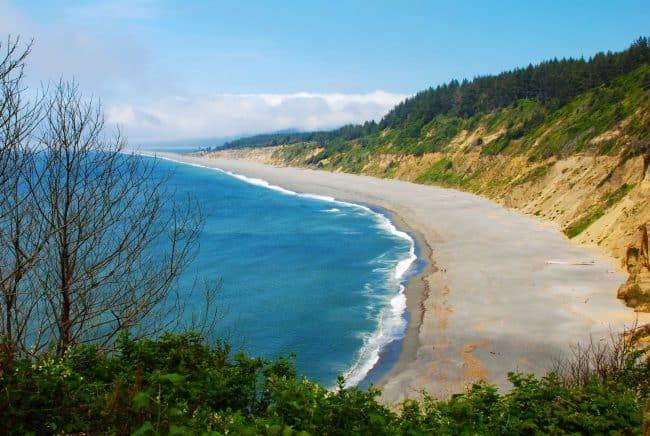
Sue-meg State Park — formerly Patrick’s Point — sits on a forested headland overlooking the Pacific Ocean near Trinidad, California, in the heart of Humboldt County’s Redwood Coast. Renamed in 2021 to honor the Yurok Tribe, for whom this land has been a seasonal fishing camp for thousands of years, the park’s 640 acres encompass dramatic sea stacks, sheer ocean cliffs, tide pools, old-growth Sitka spruce forest, and the famous Agate Beach — a crescent of polished stones and driftwood at the base of the bluffs.
What makes Sue-meg extraordinary is the layered experience: the reconstructed Sumêg Village (a full-scale Yurok village with traditional redwood plank houses, a sweat house, and dugout canoes) provides profound cultural context, while the two-mile Rim Trail delivers one stunning ocean viewpoint after another — Wedding Rock, Ceremonial Rock, Lookout Rock. Harbor seals, sea lions, and migrating gray whales are regularly spotted from the bluffs. This is not a generic beach park — it’s a living cultural landscape at the edge of the continent.
Things to Do
Sumêg Village
The reconstructed Yurok village, built in the 1990s through a collaboration between the Yurok Tribe and California State Parks, is the park’s cultural centerpiece:
- Traditional redwood plank houses
- Sweat house and dance house
- Dugout canoes
- Native plant garden — featuring plants traditionally used by the Yurok for food, medicine, and basketry
Agate Beach
A steep trail descends to Agate Beach, famous for semi-precious agates, jade, and sea-polished stones. Beachcombing is the primary activity — the surf is not safe for swimming due to rough, unpredictable ocean conditions, sneaker waves, and strong currents.
Rim Trail & Scenic Viewpoints
The two-mile Rim Trail connects the park’s most dramatic viewpoints along the cliff edge:
- Wedding Rock: A promontory jutting into the Pacific — sweeping views north and south
- Ceremonial Rock: Culturally significant overlook
- Lookout Rock: Elevated vantage point over the entire coastline
Tide Pools & Marine Wildlife
Low-tide visits reveal rich tide pool ecosystems — sea anemones, starfish, urchins, and crabs. From the bluffs, visitors regularly spot harbor seals, California and Steller sea lions, and migrating gray whales (spring and fall).
Trails
| Trail | Distance | Difficulty | Highlights |
|---|---|---|---|
| Rim Trail | 2 mi | Easy–Moderate | Cliff-edge views; Wedding Rock; Ceremonial Rock; Lookout Rock; whale watching |
| Agate Beach Trail | ~0.5 mi (steep) | Moderate | Descent to beach; agate hunting; driftwood; dramatic surf |
| Sumêg Village Trail | Short loop | Easy | Reconstructed Yurok village; plank houses; native plant garden |
| Octopus Tree Trail | Short | Easy | Old-growth Sitka spruce; forest atmosphere; unique tree formations |
Camping
| Type | Sites | Amenities |
|---|---|---|
| Abalone Campground | Family sites | Restrooms, showers; no hookups; RV limit 31 ft |
| Penn Creek Campground | Family sites | Restrooms, showers; forested setting; no hookups |
| Agate Beach Campground | Family sites | Closest to beach; restrooms, showers; no hookups |
| Group Camping | Available | Large group areas; reservations required |
| Hiker/Biker Sites | Available | Dedicated sites for through-travelers |
Reservations: Highly recommended through ReserveCalifornia.com. During peak season (summer), sites fill weeks in advance.
Best Time to Visit
| Season | Highlights | Considerations |
|---|---|---|
| Summer (Jun–Aug) | ⭐ Driest weather; tide pools; camping peak; wildflowers; longest days | Fog common; book campsites months ahead; still cool (50s–60s°F) |
| Fall (Sep–Oct) | ⭐ Clearest skies; gray whale migration begins; fewer crowds; warm days | Campsites more available; rain starting by late Oct |
| Spring (Mar–May) | Gray whale migration; wildflowers; green forest; rhododendron bloom | Rain likely; muddy trails; ocean rough; dress in layers |
| Winter (Nov–Feb) | Storm watching; dramatic surf; solitude; mushroom foraging season | Heavy rain; cold; some campgrounds may close; short days |
Visitor Tips
- Ocean safety: The ocean here is not safe for swimming. Sneaker waves, cold water, strong currents, and rocky shores make entering the surf extremely dangerous. Enjoy the coast from the bluffs and Agate Beach.
- Fog advisory: Summer fog is common on the Humboldt Coast — temperatures often stay in the 50s and 60s°F even in July. Bring layers regardless of the forecast.
- Agate hunting: The best agate finds on Agate Beach occur after winter storms that churn up fresh material. Look for translucent stones that glow when held up to light.
- Redwoods nearby: Sue-meg is perfectly positioned between Redwood National Park (north) and Humboldt Redwoods State Park (south) — combine your visit for a complete Redwood Coast experience.
- Cultural respect: The Sumêg Village is a living cultural site, not a museum exhibit. Please treat it with the same respect you would offer any sacred place.
Frequently Asked Questions
Why was Patrick’s Point renamed to Sue-meg?
In 2021, the park was renamed from Patrick’s Point to Sue-meg as part of a California state initiative to address discriminatory place names. “Sue-meg” is the ancient Yurok name for this coastal area, which has been a significant site for the Yurok people since time immemorial. The previous name was associated with violence against Indigenous people. The renaming honors the deep cultural connection between the Yurok Tribe and this land.
Can you swim at Sue-meg State Park?
No — swimming in the ocean at Sue-meg is extremely dangerous and not recommended. The North Coast of California features sneaker waves, strong currents, cold water temperatures, and rocky shores. Agate Beach is for beachcombing only, not swimming. For safe swimming, freshwater options are available at nearby inland parks.
Last updated: April 2026
More parks in California: Sinkyone Wilderness State Park and Humboldt Redwoods State Park. See the full California state parks guide.

🐾 Dogs & Pets at Sue-meg State Park
- Pets allowed? statewide rule
- Dogs are permitted in California State Parks only in developed areas — campgrounds, picnic areas, parking lots and paved roads — and are prohibited on most trails, beaches and undeveloped areas unless specifically designated as dog-friendly.
- Leash rule statewide rule
- Maximum 6-foot leash at all times; dogs may not be left unattended.
- Beaches & swim areas statewide rule
- Dogs are prohibited on most state beaches; only beaches specifically designated as dog-allowed permit them (varies by park).
- Cabins & lodging statewide rule
- Pets are generally not allowed in buildings or cabins; overnight campers must keep dogs inside a tent or vehicle at night.
- Statewide exceptions statewide rule
- Designated dog-friendly trails and beaches vary park by park; misrepresenting a pet as a service animal is a misdemeanor.
Are dogs allowed at Sue-meg State Park?
Dogs are permitted in California State Parks only in developed areas — campgrounds, picnic areas, parking lots and paved roads — and are prohibited on most trails, beaches and undeveloped areas unless specifically designated as dog-friendly. Individual parks can post stricter rules — check signage on arrival.
Rules verified July 2026 via parks.ca.gov. More: California state parks guide · Dog rules in all 50 states compared
Park Location
Plan your gear for Sue-meg State Park
From our editorial guides, matched to this park’s activities:


Top Tours & Activities Near Mendocino
 from $172
 from $65
 from $286