
🌤 Weather at Quinnipiac River State Park by season
| Spring | Summer | Fall | Winter |
|---|---|---|---|
| 28–71 °F | 58–85 °F | 34–76 °F | 20–42 °F |
Each range runs from the coldest monthly average low to the warmest monthly average high in that season (1991-2020 climate normals), measured at Mount Carmel, 3 mi away, elevation 180 ft. Conditions at the park can differ from the station, especially where elevation differs — check a forecast before you go.

Connecticut’s Wild Floodplain Paddling Destination — 323-Acre Forested Wetland, Quinnipiac River Canoe & Kayak Access, Bird Watching, Fishing & Nature Photography in North Haven
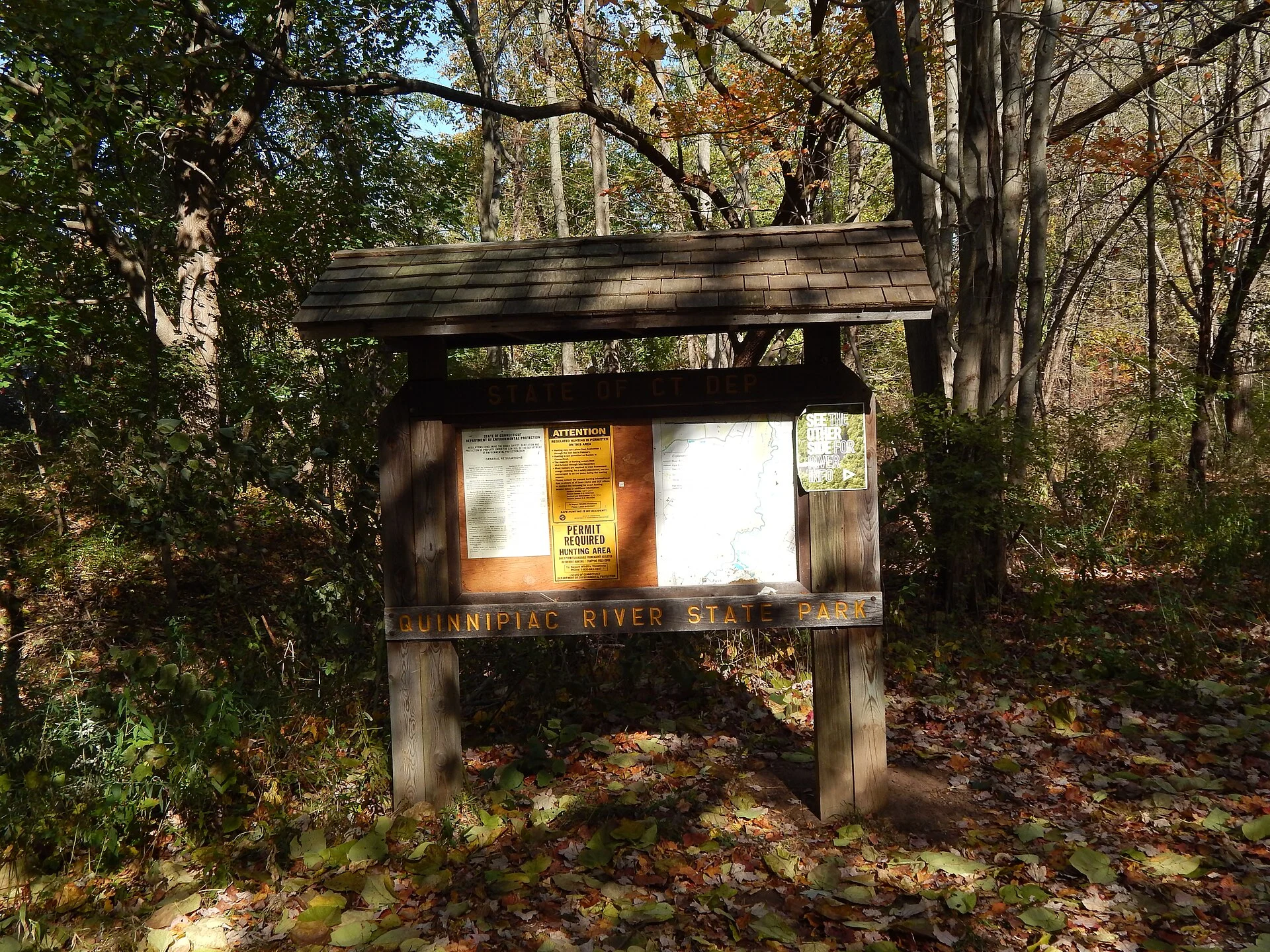
Quinnipiac River State Park is a 323-acre forested floodplain state park along the Quinnipiac River in North Haven, Connecticut. The park features a natural meandering river corridor ideal for canoeing and kayaking, extensive riparian and wetland bird habitat, fishing access, informal walking paths through floodplain forest, and a wild, undeveloped character with minimal facilities.
Quinnipiac River State Park preserves one of Connecticut’s most significant forested floodplain ecosystems — a 323-acre expanse of seasonally inundated woodland, riparian edges, and meandering river channels. The Quinnipiac River flows slowly through the park, making it an excellent flatwater paddling destination for canoes and kayaks. Bird watching is a primary draw — the floodplain habitat supports great blue herons, wood ducks, warblers, and migratory waterfowl. Access is via Banton Street in North Haven, where a gate leads to the river and informal paths. The park’s floodplain nature means terrain can be muddy or partially submerged, especially after heavy rains — visitors should come prepared for wet conditions.
Things to Do
Paddling
- Quinnipiac River: Slow-moving, meandering flatwater
- Canoe and kayak access: Via Banton Street, North Haven
- Ideal for leisurely paddling and wildlife observation
- Be aware of seasonal water levels and obstructions
Bird Watching
- Great blue herons, egrets, wood ducks
- Warblers and songbirds in spring
- Migratory waterfowl — fall and spring
- Riparian and wetland habitat
Fishing
- Quinnipiac River shoreline fishing
- Warm-water species
- Connecticut fishing license required
Walking & Exploration
- Informal paths through floodplain forest
- No formally maintained blazed trails
- Expect muddy, wet conditions — especially spring
Park Information
| Feature | Details |
|---|---|
| Acreage | 323 acres |
| Type | Forested floodplain preserve |
| River | Quinnipiac River — slow, meandering flatwater |
| Paddling | Canoe and kayak access (Banton Street gate) |
| Fishing | Shoreline — warm-water species |
| Trails | Informal — no maintained blazed trails |
| Facilities | NONE — no restrooms, water, or visitor center |
| Swimming | Not permitted |
| Camping | Not permitted |
| Parking | Limited — near Banton Street gate — FREE |
| Hours | 8 AM to sunset |
| Pets | Leashed pets welcome (max 7 ft leash) |
Best Time to Visit
| Season | Highlights | Considerations |
|---|---|---|
| Spring (Apr–May) | ⭐ BEST: Spring migration birding; warbler waves; green-up; paddling | Floodplain often submerged; very muddy; ticks; wet paths |
| Summer (Jun–Aug) | Full canopy; warm paddling; herons nesting; dragonflies; long days | Mosquitoes heavy; humid; stagnant water; poison ivy |
| Fall (Sep–Nov) | Fall colors along river; migrating waterfowl; cool paddling; drier paths | Shorter days; leaves obscure paths; hunting season nearby |
| Winter (Dec–Mar) | Winter raptors; bare-tree river views; solitude; tracks in snow | Cold; icy paths; river may be partially frozen; very short days |
Visitor Tips
- Floodplain warning: This is an active floodplain — trails and low areas are frequently muddy or underwater, especially in spring.
- Rubber boots: Waterproof footwear is essential — sneakers and regular hiking boots will get soaked.
- Paddling access: Launch from the Banton Street gate area in North Haven — carry your boat in.
- No facilities: No restrooms, no water, no services — plan accordingly.
- Birding hotspot: Bring binoculars and a field guide — the floodplain supports species not found in upland parks.
- Nearby: The Quinnipiac River Watershed Association and North Haven Trail Association have current trail and river condition updates.
Frequently Asked Questions
Can you canoe or kayak at Quinnipiac River State Park?
Yes — Quinnipiac River State Park in North Haven, Connecticut, provides canoe and kayak access to the Quinnipiac River. The river is slow-moving and meandering, making it ideal for flatwater paddling and wildlife observation. Access is via the Banton Street gate — paddlers carry their boats to the water. The river passes through 323 acres of forested floodplain habitat. There are no restrooms, water, or developed facilities. Check current water levels before going, as the floodplain can be partially submerged after heavy rains.
Last updated: May 2026
Make it a road trip: Pair a visit with Wharton Brook State Park (a short drive away) or Farmington Canal State Park Trail (a short drive away).

🐾 Dogs & Pets at Quinnipiac River State Park
- Pets allowed? statewide rule
- Pets on a leash are permitted in most Connecticut state parks and forests, but not in buildings, swimming areas or state park campgrounds.
- Leash rule statewide rule
- Pets must be leashed and under control at all times; in state forest camping areas the leash may be no longer than 7 feet.
- Beaches & swim areas statewide rule
- Pets are prohibited in swimming areas; Sherwood Island and Squantz Pond State Parks ban pets entirely April 15 - September 30.
- Cabins & lodging statewide rule
- Pets are banned from all state park campgrounds; they are allowed only in the American Legion, Pachaug and Salt Rock state forest campgrounds, but not on rustic cabin sites.
- Statewide exceptions statewide rule
- Pets prohibited year-round at Dinosaur State Park and in the formal gardens and beach at Harkness Memorial State Park.
Are dogs allowed at Quinnipiac River State Park?
Pets on a leash are permitted in most Connecticut state parks and forests, but not in buildings, swimming areas or state park campgrounds. Individual parks can post stricter rules — check signage on arrival.
Rules verified July 2026 via portal.ct.gov. More: Connecticut state parks guide · Dog rules in all 50 states compared
Park Location
Plan your gear for Quinnipiac River State Park
From our editorial guides, matched to this park’s activities:
Top Tours & Activities Near New Haven
 from $28
 from $10
 from $26