In-Depth Guide to New Hampshire State Parks
From the wind-scoured summit of Mount Washington to the granite-walled Flume Gorge, New Hampshire’s state park system spans 93 properties across 64,000+ acres of the most dramatic scenery in New England. The Granite State earns its name with every cliff face, mountain pass, and boulder-strewn trail — and with 6 million annual visitors, these compact but spectacular parks deliver alpine summits, pristine lakes, and ocean shoreline all within a three-hour drive.
Park Pass & Fees
| Pass Type | Cost | Details |
|---|---|---|
| Individual Day-Use Pass | $60 | One person; day-use at most parks |
| Resident Family Pass | $105 | 2 adults + up to 4 dependents |
| Non-Resident Family Pass | $120 | 2 adults + up to 4 dependents |
| Seacoast Parking Pass | $175 | Hampton Beach + Wallis Sands parking only |
| NH State Parks License Plate | Plate fee | Grants free day-use entry for 1 year |
| Day-Use Admission | $4–$15/person | Varies by park; children 5 & under free |
📋 New Hampshire Annual Pass: $105 resident / $120 non-resident (family). Does NOT cover Flume Gorge ($18), Cannon Tramway, or camping. → See our Complete 50-State Annual Pass Price Guide.
Parks by Region
White Mountains
Franconia Notch State Park is New Hampshire’s crown jewel — home to the Flume Gorge (an 800-foot granite chasm with boardwalks, covered bridges, and waterfalls; $18 adults, $14 children 6–12), the Cannon Mountain Aerial Tramway, and swimming at Echo Lake. Lafayette Place Campground offers 97 wooded tent/RV sites (88 reservable, 7 walk-in) with coin-operated showers and camp store. Cannon RV Park has 7 three-way hookup sites on the north shore of Echo Lake. Crawford Notch State Park features Arethusa Falls — New Hampshire’s tallest waterfall — plus Dry River Campground with platform tent sites. Mount Washington State Park sits atop the Northeast’s highest peak (6,288 ft), famous for recording the then-world-record wind speed of 231 mph.
Lakes Region
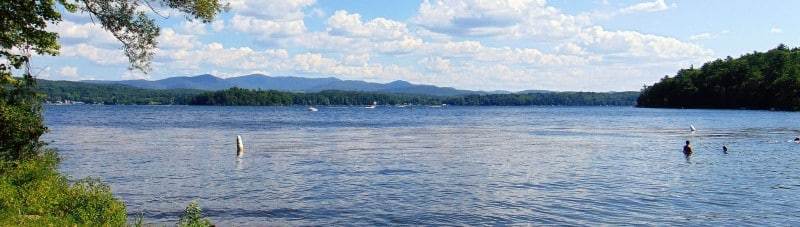
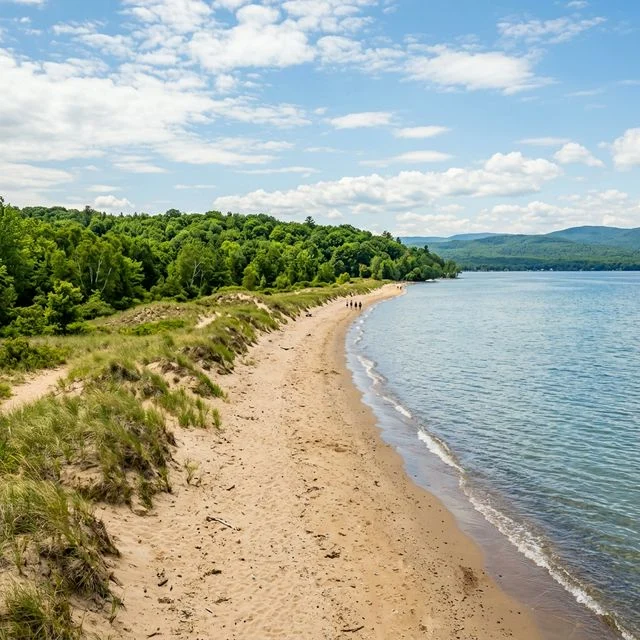
Ellacoya State Park provides one of the best public beach accesses on Lake Winnipesaukee, with 600 feet of waterfront. Wellington State Park on Newfound Lake has the largest freshwater swimming beach in the state park system. White Lake State Park offers lakeside camping surrounded by pines — an easy loop trail circles the pristine lake (no pets allowed). These parks combine mountain views with swimming, boating, and fishing.
Seacoast
New Hampshire’s 18-mile coastline punches far above its weight. Hampton Beach State Park is the state’s most popular beach — and the only ocean-side camping in the state: 28 full-hookup RV-only sites (no tents, no pop-ups; must be self-contained, no restrooms/showers in campground). Wallis Sands State Park offers a quieter beach alternative. Odiorne Point State Park features rocky coastal trails and the Seacoast Science Center.
Monadnock Region & South
Monadnock State Park protects the most-climbed mountain in North America — Mount Monadnock at 3,165 feet draws 100,000+ hikers annually. Its bare summit offers 100-mile views in every direction. Pisgah State Park is the system’s largest property at 13,500 acres of undeveloped wilderness. Bear Brook State Park — New Hampshire’s largest developed park — offers extensive trails and camping.
North Country & Remote Parks
Milan Hill State Park north of Berlin offers panoramic views of mountains in NH, Maine, Vermont, and Canada. It features 4 yurts (16-ft diameter, twin bunks + full-size futon; no electricity or heat). Umbagog Lake State Park offers both standard and remote cabins accessible only by boat — among the most secluded state park lodging in New England. Coleman State Park adds additional remote cabin options.
Camping & Lodging Guide
| Accommodation | Park | Price | Details |
|---|---|---|---|
| Lafayette Place (97 sites) | Franconia Notch SP | $25–$35/night | Wooded; showers; camp store; 88 reservable |
| Hampton Beach RV (28) | Hampton Beach SP | $40–$55/night | Ocean-front; RV only; full hookups; no restrooms |
| Yurts (4) | Milan Hill SP | $40–$60/night | 16-ft; bunks + futon; no electricity or heat |
| Remote Cabins | Umbagog Lake SP | $40–$70/night | Boat-access only; extremely secluded |
| Platform Tent Sites | Crawford Notch / Dry River | $20–$30/night | Hot water showers; White Mountain access |
| Lakeside Camping | White Lake SP | $20–$35/night | Pine-ringed lake; no pets; easy trails |
Booking tip: New Hampshire uses ReserveAmerica — reservations open 11 months in advance. Lafayette Place (Franconia Notch) and Hampton Beach fill quickly for summer. Day-use reservations at popular parks available 30 days ahead. Call center: 1-877-NHPARKS (647-2757). No in-state firewood rule — don’t bring out-of-state firewood. Pets NOT allowed at White Lake SP; at Hampton Beach only Sept 14–Oct 31.
Insider Tips
🏔️ Local Knowledge
- Flume Gorge is worth $18: The 800-foot granite chasm with boardwalks, covered bridges, and waterfalls is one of New England’s most iconic natural attractions. Go early in the morning — by 11 AM lines form. The annual pass does NOT cover Flume Gorge or Cannon Tramway admission.
- Monadnock = most-climbed mountain in North America: 40+ trails to the bare granite summit. The White Arrow Trail is the most direct (1.9 mi; strenuous). 100-mile views from the top — on clear days you can see the Boston skyline. 100,000+ summits per year.
- Mount Washington Auto Road or Cog Railway: Two ways to the 6,288-ft summit — the privately operated Auto Road (car, guided tour, or bike) and the historic Cog Railway. The state park at the summit has an observatory and visitor center. Weather changes in minutes; bring warm layers even in summer.
- Hampton Beach RV-only secret: The only ocean-side camping in New Hampshire is RV-only (28 sites, full hookups). No tents, no pop-ups, no restrooms in the campground — campers must be self-contained. The Seacoast Parking Pass ($175) is separate from the regular annual pass.
- Umbagog boat-in cabins: Some of the most remote state park lodging in New England — accessible only by boat across Umbagog Lake. True wilderness isolation. Bring everything you need — there are no services.
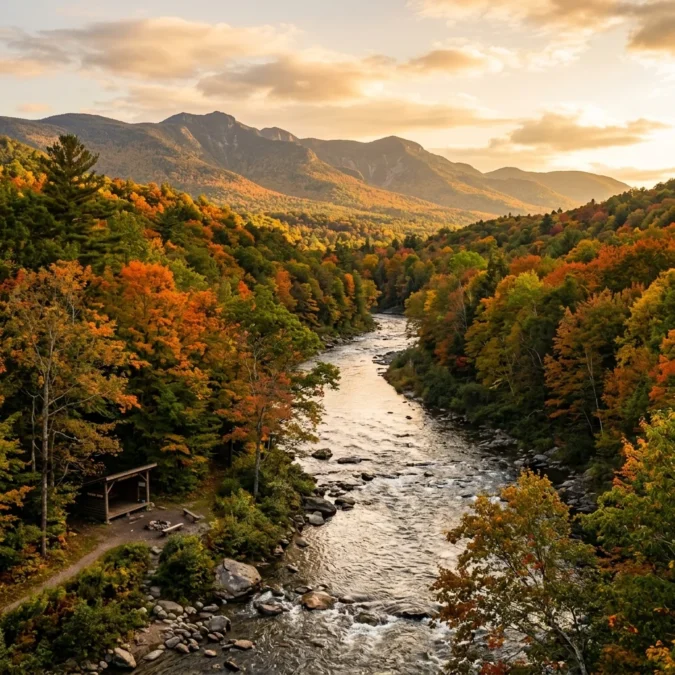
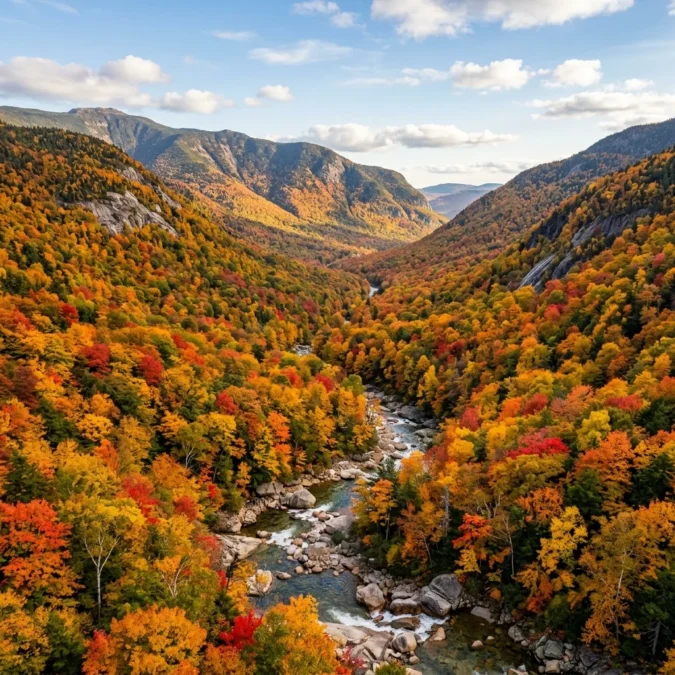
- Fall foliage — Kancamagus Highway: The Kanc (NH Route 112) between Lincoln and Conway is one of America’s top autumn drives. Crawford Notch and Franconia Notch deliver peak color typically in early October. Book camping months ahead for foliage season.
Best Parks by Activity
Best for Hiking
- Monadnock SP — Most-climbed mountain in North America; bare summit
- Franconia Notch SP — Flume Gorge, Lonesome Lake, Franconia Ridge
- Crawford Notch SP — Arethusa Falls (tallest in NH) + Ripley Falls
- Mt. Washington SP — Northeast’s highest peak (6,288 ft)
Best for Swimming
- Wellington SP — Largest freshwater swimming beach in system
- Ellacoya SP — Lake Winnipesaukee beach access
- Hampton Beach SP — Classic ocean swimming + boardwalk
- Pawtuckaway SP — Warm freshwater lake swimming
When to Visit
| Season | Highlights | Crowds |
|---|---|---|
| Spring (Apr–May) | Waterfall peak, wildflowers, fewer crowds | Low–Moderate |
| Summer (Jun–Aug) | Lake swimming, beach season, mountain hiking | High |
| Fall (Sep–Oct) | World-class foliage, Kancamagus Highway peak color | Very High |
| Winter (Dec–Mar) | Cannon Mountain skiing, snowshoeing, ice climbing | Low |
FAQs
Are New Hampshire state parks free?
No — most charge $4–$15/person day-use admission. Family passes $105–$120. The pass does NOT cover Flume Gorge ($18), Cannon Tramway, or camping.
Is Flume Gorge worth visiting?
Absolutely — $18 adults, $14 children 6–12. An 800-foot granite chasm with boardwalks, covered bridges, and waterfalls. One of New England’s most iconic natural attractions. Go early to avoid lines.
Can I camp on the ocean in New Hampshire?
Yes — Hampton Beach SP has 28 ocean-front sites, but RV-only (full hookups, self-contained required). No tents. No restrooms in campground. The only ocean-side camping in the state.
What is the most-climbed mountain in North America?
Mount Monadnock (3,165 ft) with 100,000+ summits per year. 40+ trails. Bare granite summit with 100-mile views.
Are there yurts at NH state parks?
Yes — Milan Hill SP has 4 yurts (no electricity, no heat). Umbagog Lake SP has boat-in remote cabins. Most NH state park camping is tent/RV.
Alpine summits, granite gorges, pristine lakes, and ocean shoreline — all within a three-hour drive across the Granite State.