In-Depth Guide to Idaho State Parks
Where else can you climb a 470-foot sand dune under an observatory-quality night sky, soak in natural hot springs after a day of skiing, and kayak through volcanic canyons where waterfalls pour from basalt cliffs? Idaho’s 30 state parks span 43,000 acres from the Snake River high desert to the Selkirk Mountains’ lake country, delivering the raw, uncrowded outdoor adventure the Gem State is famous for. The system serves 8 million annual visitors — yet many parks feel like private wilderness. And at just $10/year for residents via the vehicle registration Passport add-on, Idaho offers arguably the best park deal in America.
Passes & Fees
| Pass Type | Cost | Details |
|---|---|---|
| Resident Passport | $10/year | Added to vehicle registration; covers all parks |
| Non-Resident Daily | $7–$14 | Per vehicle; varies by park |
| Non-Resident Annual | $80/year | All parks, 12 months |
| Senior Camping Discount (62+) | 50% off | Mon–Thu at select parks (non-holiday) |
📋 Idaho Parks Passport: $10/year resident (with vehicle registration) — One of the best park deals in America. → See our Complete 50-State Annual Pass Price Guide for full details, discounts, and tips.
Parks by Region
Southwest — Snake River & Canyon Country
Bruneau Dunes State Park is Idaho’s most unique destination — home to the tallest single-structured sand dune in North America at 470 feet. But it’s the public observatory that makes this park truly special, hosting regular stargazing programs under some of the darkest skies in the region. The park offers 120 campsites (82 with hookups) and 12 basic cabins. Sandboard rentals are available at the visitor center. Thousand Springs State Park showcases one of the most surreal geological features in Idaho — massive waterfalls pouring directly from basalt canyon walls along the Snake River, fed by the Lost River aquifer emerging after a 150-mile underground journey. Niagara Springs and Ritter Island are the highlights. Three Island Crossing State Park marks the most famous Oregon Trail river crossing and features interpretive trails along the actual pioneer route.
Central — Sawtooth & Mountain Country
Ponderosa State Park occupies a dramatic peninsula jutting into turquoise Payette Lake at McCall, with towering old-growth ponderosa pines, osprey nesting platforms, and summer water sports. The North Beach area provides prime swimming. Harriman State Park, part of the Greater Yellowstone Ecosystem, is a world-class wildlife refuge on the legendary Railroad Ranch — where trumpeter swans winter on Silver Creek, moose browse the meadows, and sandhill cranes nest in spring. Historic ranch buildings serve as lodging, including the Cattle Foreman’s House (3 bedrooms, wood stove) and winter yurts. Important: Dogs are only allowed in parking lots next to vehicles at Harriman — not on any trails or roads. Castle Rocks State Park features world-class granite climbing formations and connects to City of Rocks National Reserve via trail.
North — Lake Country
Farragut State Park was the second-largest naval training station in the world during WWII, processing 293,000 sailors on the shores of Lake Pend Oreille — Idaho’s largest and deepest lake (1,150 ft). Today, 40+ miles of trails wind through the 4,000-acre park with 10 camping cabins, a disc golf course, and boat launches. Heyburn State Park, established in 1908, is the oldest state park in the Pacific Northwest, with old-growth forests, three navigable lakes along the St. Joe River, and excellent fishing. Priest Lake State Park provides remote lakeside camping in the Selkirk Mountains — crystal-clear water surrounded by dense conifer forest, with minimal cell service and maximum solitude.
Southeast — Historic Trails
Massacre Rocks State Park preserves Oregon Trail wagon ruts in a dramatic Snake River canyon — interpretive signs mark the 1862 route where emigrants faced their most perilous crossing. The surrounding lava formations create an otherworldly hiking landscape. Bear Lake State Park sits on the “Caribbean of the Rockies” — a stunningly turquoise natural lake straddling the Idaho-Utah border. The vivid color comes from suspended limestone particles, and the lake supports endemic species found nowhere else on Earth. East Beach and North Beach offer swimming and boat access.
Camping & Lodging Guide
| Accommodation | Availability | Price Range | Details |
|---|---|---|---|
| Standard Campsites | 23 parks | $18–$44/night | Many with electric/water hookups |
| Cabins | Bruneau Dunes, Farragut, others | $35–$75/night | Basic: bunk, futon, electricity, A/C; bring own bedding |
| Historic Lodging | Harriman SP | $80–$200/night | Ranch houses with full kitchens, wood stoves |
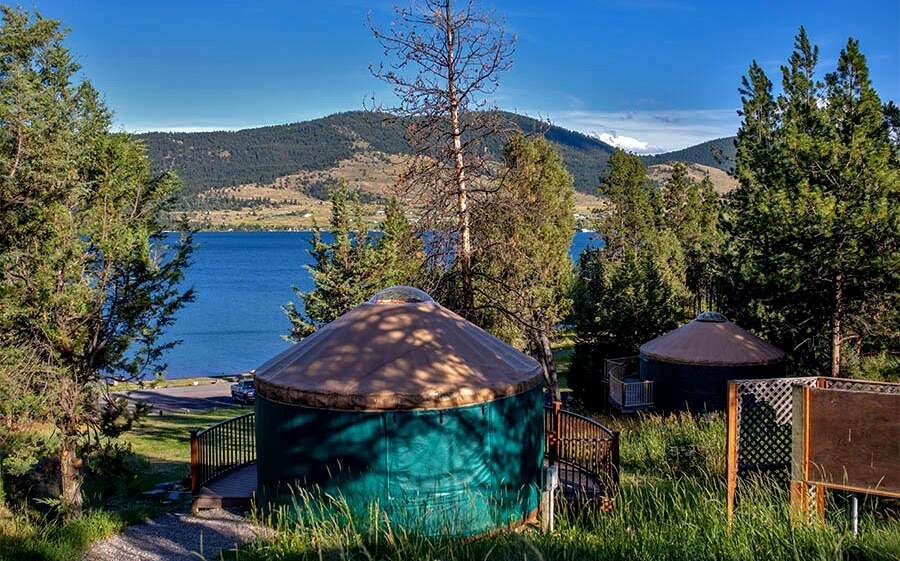
| Yurts | Harriman (winter), others | $50–$100/night | Winter rentals with ski/snowshoe trail access |
| Primitive/Walk-in | Select parks | $12–$20/night | No hookups; remote backcountry settings |
Booking tip: Reservations can be made up to 9 months in advance at the new online reservation system. Check-in is 2 PM for campsites, 3 PM for cabins. Stays limited to 14 nights in a 30-day period. Senior discount (62+): 50% off camping Mon–Thu at Bruneau Dunes, Bear Lake, Massacre Rocks, Lake Cascade, Three Island Crossing, and Lake Walcott.
Insider Tips
🏕️ Local Knowledge
- $10 park pass secret: Idaho residents can add the Parks Passport to their vehicle registration for just $10/year — covering day-use entry and boat launches at all 30 parks. It’s the best park deal in America, bar none.
- Sandboarding at Bruneau: Rent sandboards at the visitor center and climb the 470-foot dune — it’s a legitimate workout but the ride down is worth it. Go at sunset for the best light and cooler sand.
- Harriman’s no-dogs rule: Dogs are strictly prohibited on all trails and roads at Harriman — only in parking lots next to vehicles. This protects the trumpeter swans, moose, and other wildlife. Plan accordingly.
- Thousand Springs timing: Visit Thousand Springs in spring (April–June) when snowmelt from the Lost River Range flows through the aquifer at peak volume, creating the most dramatic waterfall displays.
- Observatory programs: Bruneau Dunes observatory hosts regular public stargazing programs — check the park website for scheduled dates. Bring binoculars for an extra dimension.
Best Parks by Activity
Best for Hiking
- Ponderosa SP — Peninsula trails with turquoise Payette Lake views
- Harriman SP — Silver Creek wildlife loops with moose and crane sightings
- Farragut SP — 40+ miles through historic WWII naval station grounds
Best for Water Sports
- Bear Lake SP — Turquoise “Caribbean of the Rockies” swimming and boating
- Priest Lake SP — Crystal-clear mountain lake in remote Selkirk Mountains
- Farragut SP — Lake Pend Oreille (Idaho’s deepest) boating and fishing
Best for Stargazing
- Bruneau Dunes SP — Public observatory with scheduled programs; dark sky
- Harriman SP — Minimal light pollution in Greater Yellowstone Ecosystem
- Massacre Rocks SP — Remote Snake River canyon; wide-open desert sky
Best for Families
- Bruneau Dunes SP — Sand dune playground, observatory, lake fishing
- Ponderosa SP — Lake beach, nature trails, McCall town nearby
- Eagle Island SP — Water slide, swimming beach near Boise
Best for Winter
- Harriman SP — 24 miles groomed cross-country ski and snowshoe trails
- Ponderosa SP — Winter camping at McCall with Nordic skiing access
- Farragut SP — Quiet winter trails on snowy lakeside terrain
When to Visit
| Season | Highlights | Crowds |
|---|---|---|
| Spring (Apr–May) | Wildflowers, peak waterfall flow at Thousand Springs, fishing opens | Low |
| Summer (Jun–Aug) | Lake swimming, camping, longest days, Payette Lake peak | High |
| Fall (Sep–Oct) | Western larch trees turn gold, uncrowded trails, cool nights | Low |
| Winter (Dec–Mar) | Cross-country skiing at Harriman, yurt stays, hot springs access | Very Low |
FAQs
How much is an Idaho State Parks Passport?
Idaho residents pay just $10/year when renewing their vehicle registration — covering day-use entry and boat launches at all 30 parks. Non-residents pay $7–$14/day or $80/year for an annual pass.
What is Idaho’s most unique state park?
Bruneau Dunes features North America’s tallest single-structured sand dune (470 feet) plus a public observatory for stargazing — a combination found nowhere else in any state park system.
Can I camp in Idaho state parks?
Yes — 23 parks offer camping with options from full-hookup RV sites to primitive tent-only areas. Cabins and yurts are available at select parks. Reserve up to 9 months in advance online.
Are there hot springs near Idaho state parks?
While state parks don’t manage hot springs directly, Idaho has hundreds of natural hot springs — many located near parks in the central mountain region. Kirkham, Goldbug, and Sunbeam hot springs are popular options near central Idaho parks.
Can I bring my dog to Idaho state parks?
Leashed dogs (6ft max) are welcome at most parks. The major exception is Harriman State Park, where dogs are restricted to parking lots only — no trails or roads — to protect wildlife including trumpeter swans and moose.
What is the best rock climbing in Idaho state parks?
Castle Rocks State Park in south-central Idaho offers world-class granite climbing on formations hundreds of feet tall, with direct trail connections to City of Rocks National Reserve for even more routes.
Sand dunes, volcanic waterfalls, and mountain lakes — explore Idaho’s 30 state parks.