In-Depth Guide to Iowa State Parks
Don’t underestimate Iowa. The Hawkeye State’s 71 state parks and recreation areas draw over 16 million visitors annually — more per capita than many western states — to 68,000 acres of bluffs, prairies, lakes, and limestone formations that will shatter every stereotype about the Midwest. Walk through a 1,100-foot cave, stand atop 500-foot Mississippi River bluffs, paddle one of only three blue-water glacial lakes in the world, and explore canyon-like sandstone ledges — all with free entry at most parks.
Park Pass & Fees
| Fee Type | Cost | Details |
|---|---|---|
| Park Entry | FREE | No entry or vehicle fees at most parks |
| Non-Electric Camping | $11/night | Tent-only sites |
| Electric Camping | $16–$22/night | Most campgrounds |
| Full Hookup Camping | $25–$29/night | Water, electric, sewer |
| Cabins | $50–$150/night | Available at select parks; bring own linens |
📋 Iowa Park Entry: FREE — no vehicle fees or annual passes needed. Camping fees apply. → See our Complete 50-State Annual Pass Price Guide to compare with other states.
Parks by Region
Northeast Iowa — Driftless Area
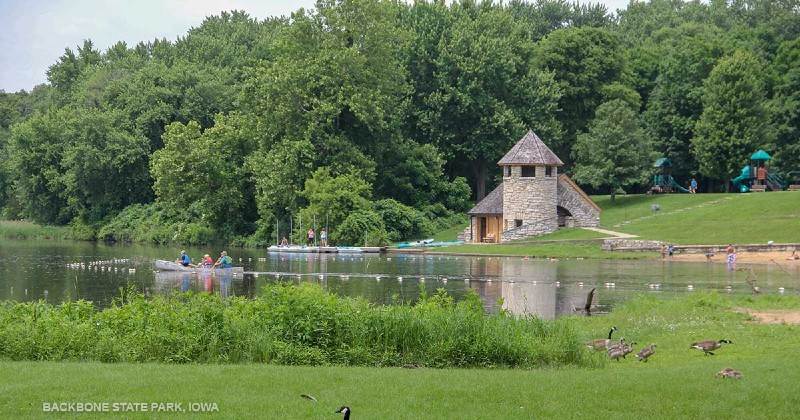
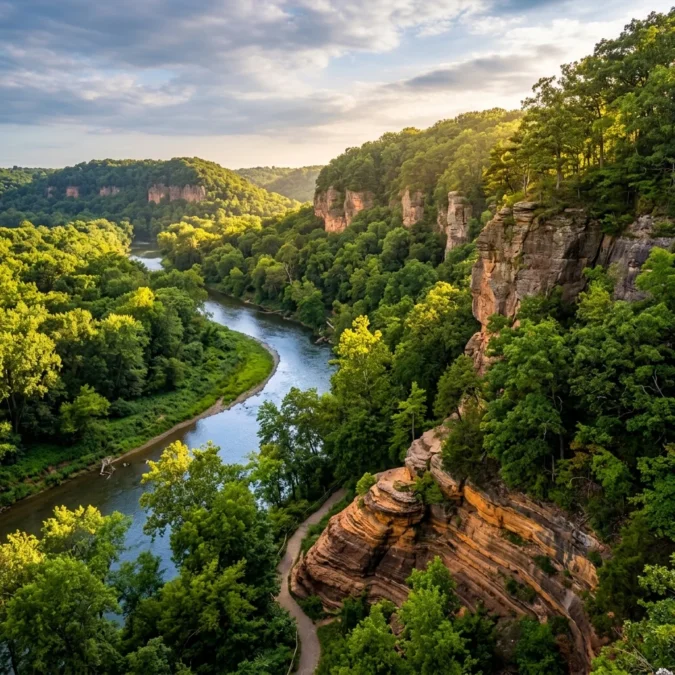
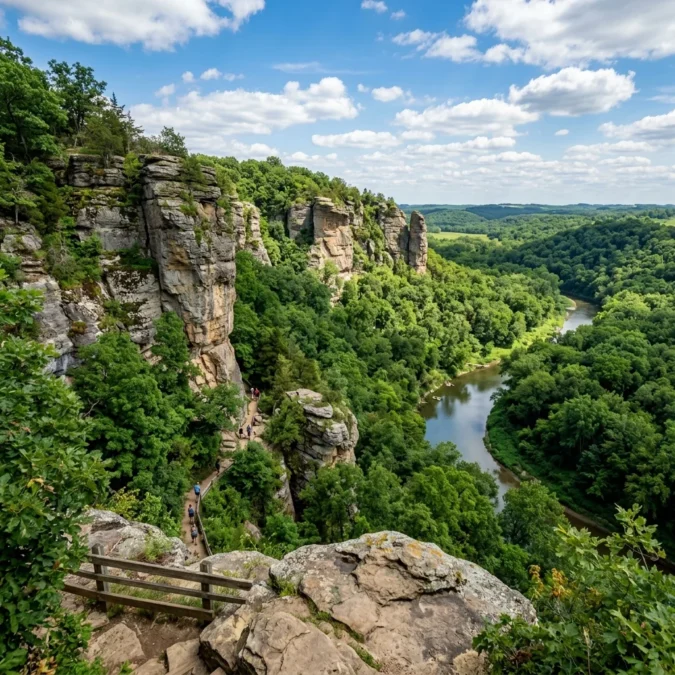
The unglaciated Driftless Area — a region that was never covered by glaciers — holds Iowa’s most dramatic scenery. Maquoketa Caves State Park features more caves than any other Iowa state park: over a dozen, including the massive 1,100-foot Dancehall Cave, large enough to walk through standing up. Dogs are allowed in the caves (all on-leash). Bring a headlamp and sturdy shoes — some caves require crawling. The campground is small (about 28 sites, all electric) and books up fast; all sites are 100% reservable online. Pikes Peak State Park offers 500-foot bluffs with panoramic views of the Mississippi River’s confluence with the Wisconsin River — one of the most photographed vistas in the Midwest. Hike to Bridal Veil Falls and Point Ann for river panoramas. Backbone State Park — Iowa’s first state park (est. 1920) — features the rugged “Devil’s Backbone” limestone ridge carved by the Maquoketa River. Backbone offers 16 modern cabins (heated, A/C, kitchens, bathrooms), a CCC museum, and trout fishing in Richmond Springs. Cabins book up to a year in advance.
Northwest Iowa — Great Lakes
Gull Point State Park on West Okoboji Lake sits on one of only three blue-water glacial lakes in the world (alongside Lake Geneva and Lake Lucerne). The vivid blue color results from a unique combination of depth, glacial origin, and dissolved minerals. Mini-Wakan State Park offers Spirit Lake access, while the broader Iowa Great Lakes region draws over 700,000 summer visitors for beach-town tourism, boating, and legendary walleye fishing.
Central Iowa
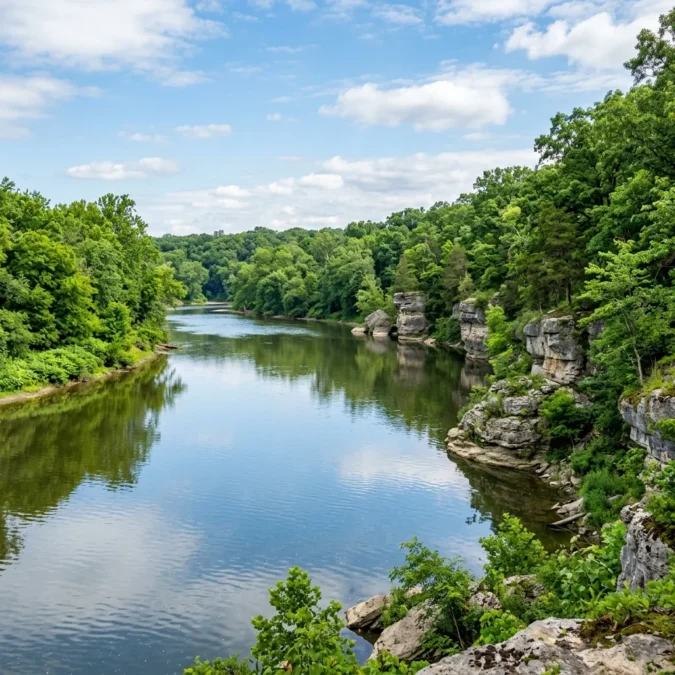
Ledges State Park near Boone features dramatic sandstone ledges carved by Pease Creek into canyon-like formations — a ravine trail with 100-foot walls that feels completely un-Iowa. It’s one of the most popular parks in the system. Big Creek State Park near Des Moines provides lake recreation close to the capital city, with a beach, boat ramp, and multi-use trail. Brushy Creek State Recreation Area offers 6,500 acres of multi-use trails popular with equestrians, mountain bikers, and ATV riders. Dolliver Memorial State Park near Fort Dodge features the otherworldly Copperas Beds — exposed mineral formations stained in vivid green, yellow, and orange along Prairie Creek.
Southern Iowa
Lacey-Keosauqua State Park is one of Iowa’s largest parks (1,653 acres), featuring the dramatic horseshoe bend of the Des Moines River, Ely’s Ford — a river-crossing point used for thousands of years — and Native American earthworks. Geode State Park sits in one of the best-known geode collecting regions in the world — the creek and surrounding area yield hollow rocks lined with quartz crystals. Lake of Three Fires State Park and Lake Wapello State Park offer quiet southern Iowa camping and fishing away from the crowds.
Camping & Lodging Guide
| Accommodation | Availability | Price Range | Details |
|---|---|---|---|
| Electric Campsites | Most parks | $16–$22/night | 100% reservable online, March–November |
| Non-Electric Sites | Many parks | $11/night | Tent camping; first-come or reservable |
| Full Hookup Sites | Select parks | $25–$29/night | Water, electric, sewer; popular with RVs |
| Modern Cabins | Backbone (16), Pine Lake, Lacey-Keosauqua | $50–$150/night | Heated, A/C, kitchen; bring own linens; some pet-friendly |
| Lodges | Backbone SP | Varies | CCC-era stone lodge available for groups |
Booking tip: Iowa campgrounds are now 100% reservable online 3 months in advance. Weekend stays require 2-night minimum (3 nights on holiday weekends). Maquoketa Caves and Pikes Peak fill fastest — book the day reservations open. Backbone cabins book up to a year ahead for fall weekends. Caves close November 15–April 1 to protect hibernating bats.
Insider Tips
🏕️ Local Knowledge
- Free entry advantage: Iowa is one of only a handful of states with no park entry fees — you only pay for camping and cabin rentals. Drive in, hike, and explore every park for $0.
- Dogs in caves: Maquoketa Caves allows leashed dogs inside the caves — a rare policy nationally. Bring a headlamp, wear sturdy shoes, and prepare to crawl in smaller caves.
- West Okoboji rare lake: West Okoboji is one of only three blue-water glacial lakes on Earth. The vivid blue color is real, not a filter — visit on a sunny day and you’ll think you’re in Switzerland.
- Fall foliage secret: Pikes Peak SP’s Mississippi River bluffs peak in mid-October (around Oct 9–15) with some of the most dramatic autumn color in the Midwest. Book campground early — October fills months ahead.
- Backbone cabin hack: Cabins A–D at Backbone are open year-round (heated). For fall weekends (peak foliage), book as early as possible — these are Iowa’s most popular cabin accommodations.
- Geode hunting: Geode SP near Burlington is a world-class geode collecting area. Check creek beds after spring rains for the best finds — hollow rocks lined with quartz crystal.
Best Parks by Activity
Best for Hiking
- Maquoketa Caves SP — Cave exploration, bluff trails, stair-heavy terrain
- Pikes Peak SP — 500-foot Mississippi River bluff trails with overlooks
- Backbone SP — “Devil’s Backbone” limestone ridge trail
- Ledges SP — Canyon-like sandstone ravine near Boone
Best for Camping
- Backbone SP — 16 modern cabins plus CCC-era scenic camping
- Lacey-Keosauqua SP — River bend campsites on the Des Moines River
- Gull Point SP — Lakeside camping on blue-water Okoboji
- Pine Lake SP — Wooded family campground with cabins
Best for Fishing
- Gull Point SP — Walleye on West Okoboji’s legendary blue waters
- Big Creek SP — Bass, catfish, and crappie near Des Moines
- Lake Wapello SP — Trout and pan fish in quiet southern Iowa
- Clear Lake SP — Yellow bass and walleye in north-central Iowa
Best for Families
- Maquoketa Caves SP — Walk-through caves kids adore (dogs welcome too)
- Ledges SP — Easy canyon walk 30 minutes from Des Moines
- Gull Point SP — Beach swimming and boating on Okoboji
- Dolliver Memorial SP — Colorful Copperas Beds mineral formations
When to Visit
| Season | Highlights | Crowds |
|---|---|---|
| Spring (Apr–May) | Wildflowers on prairies, waterfall season in Driftless Area, geode hunting | Low |
| Summer (Jun–Aug) | Iowa Great Lakes resort season, Okoboji swimming, full campground facilities | High |
| Fall (Sep–Nov) | Stunning bluff foliage along Mississippi River, peak Pikes Peak colors | Moderate |
| Winter (Dec–Mar) | Cross-country skiing, bald eagle watching along rivers, cabin stays | Very Low |
FAQs
Are Iowa state parks free?
Yes — most Iowa state parks have no entry or vehicle fees. You only pay for camping ($11–$29/night), cabin rentals ($50–$150/night), and shelter reservations. This makes Iowa one of the most affordable park systems in America.
Can I walk through a cave in Iowa?
Yes! Maquoketa Caves SP features over a dozen caves, including the 1,100-foot Dancehall Cave large enough to walk through standing up. Bring a flashlight and sturdy shoes. Some smaller caves require crawling. Dogs are allowed on-leash.
What is the Driftless Area?
A region in northeast Iowa, southwest Wisconsin, and southeast Minnesota that was never covered by glaciers during the Ice Age. This created dramatic terrain — 500-foot bluffs, limestone caves, cold-water trout streams, and forested hillsides that look nothing like the stereotypical flat Midwest.
What is special about West Okoboji Lake?
West Okoboji is one of only three blue-water glacial lakes in the world (alongside Lake Geneva and Lake Lucerne). Its vivid blue color comes from its unusual depth and mineral composition. Gull Point SP provides direct lakeside access.
When should I visit for fall colors?
Peak fall foliage along the Mississippi River bluffs (Pikes Peak SP, Effigy Mounds area) typically occurs October 9–15. Backbone SP peaks slightly earlier. Book campgrounds months in advance for October weekends.
Can I find geodes in Iowa state parks?
Yes — Geode SP near Burlington sits in one of the world’s premier geode collecting regions. Check creek beds, especially after spring rains, for hollow rocks lined with quartz crystals. The park is named for this geological treasure.
Caves, bluffs, and blue-water lakes — explore Iowa’s 71 state parks.