In-Depth Guide to Minnesota State Parks
Minnesota’s 64 state parks protect 267,000 acres of the Land of 10,000 Lakes — from the North Shore’s dramatic Lake Superior cliffs to the blufflands of the Mississippi River Valley. Walk across the headwaters of the Mississippi River, hike to a mystery waterfall that disappears into the earth, explore the largest peat bog in the lower 48, and ski frozen waterfalls. A Vehicle Permit ($35/year) covers access to all parks, and the reservation system opens 120 days in advance — mark your calendar.
Park Pass & Fees
| Pass Type | Cost | Details |
|---|---|---|
| Annual Vehicle Permit | $35 | All parks, 12 months from purchase |
| Daily Vehicle Permit | $7 | Single day, one park |
| Second Vehicle Permit | $26 | Household’s second vehicle |
| Tent/RV Camping | $15–$31/night | Electric and non-electric; reservable online |
| Camper Cabins | $60–$80/night | One room, heated, electric; no plumbing |
| Full Cabins/Lodges | $130–$225/night | Itasca, Tettegouche; full kitchen, bath |
📋 Minnesota Annual Pass: $35/year — Vehicle permit for all state parks. → See our Complete 50-State Annual Pass Price Guide for full details.
Parks by Region
North Shore — Lake Superior
Minnesota’s most iconic parks line the rugged Lake Superior shoreline along Highway 61 — the Superior Hiking Trail (310 miles) connects them all. Gooseberry Falls State Park features five waterfalls on the Gooseberry River and is Minnesota’s most visited park, stunning in every season — including winter, when the falls freeze into sculptural ice formations for cross-country skiing. Tettegouche State Park offers 60-foot High Falls (tallest entirely in Minnesota), the dramatic Shovel Point cliffs jutting into Superior, and the Tettegouche Camp — four historic hike-in cabins on Mic Mac Lake accessible only by a 1.7-mile steep trail. These rustic cabins have woodstoves, kitchenettes, screened porches, and a dedicated canoe — but no running water or indoor bathrooms. Cabin B sits directly on the lake. Year-round. Split Rock Lighthouse State Park preserves the iconic 1910 lighthouse with dramatic lake views. Judge C.R. Magney State Park contains the Devil’s Kettle — a waterfall that splits in two, with one half disappearing into a pothole in the rock. George H. Crosby Manitou State Park is Minnesota’s only backpack-only camping park.
Northern Minnesota — Headwaters & Boreal Forest
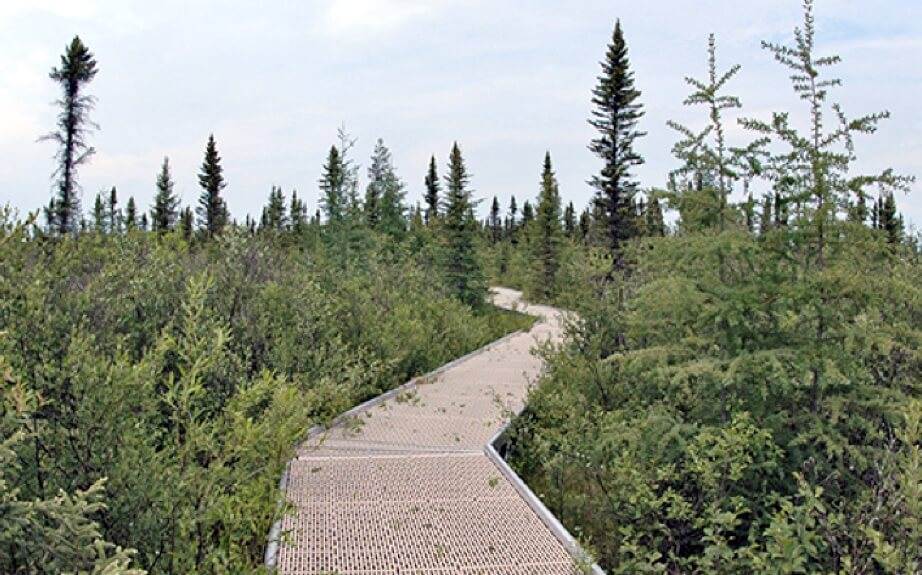
Itasca State Park — established 1891, Minnesota’s oldest — is where the Mississippi River begins as a modest stream you can literally step across at Lake Itasca. Itasca offers the most diverse lodging in the system: the historic Douglas Lodge (rooms, suites with screened porches, and full cabins, $140–$225/night), Bert’s Cabins (12 unique cabins along Wilderness Drive with knotty pine interiors, fireplaces, and kitchens, $140–$200/night), plus the Bear Paw Cabins and the remote Lake Ozawindib Cabin. With 33+ miles of trails, a swimming beach, and old-growth red pine forest, it’s one of Minnesota’s premier year-round destinations. Scenic State Park protects the state’s largest stand of old-growth red pine. Big Bog State Recreation Area features a mile-long boardwalk across the largest peat bog in the lower 48 — a surreal, spongy landscape.
Metro Area & Central Minnesota
Fort Snelling State Park at the confluence of the Mississippi and Minnesota rivers is an urban oasis minutes from Minneapolis–St. Paul with riverside trails, paddling, and Pike Island. Afton State Park offers St. Croix River bluffs with prairie-to-forest trails and groomed winter ski trails perfect for Twin Cities residents. Interstate State Park preserves the Dalles of the St. Croix — dramatic glacial potholes carved into basalt, some of the deepest in the world, with a swimming beach.
Southern Minnesota — Blufflands
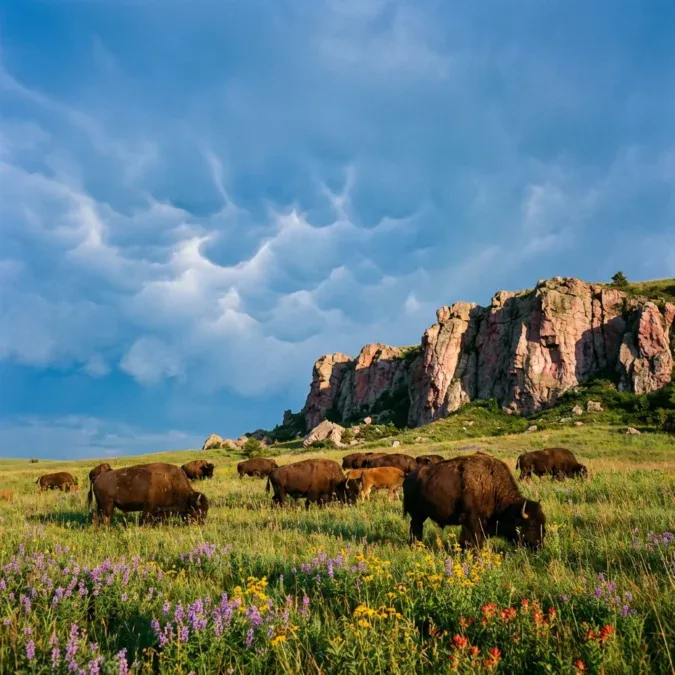
Forestville/Mystery Cave State Park offers underground cave tours through passages filled with stalactites, stalagmites, and a subterranean pool — plus a restored historic townsite above ground. Great River Bluffs State Park sits on 500-foot bluffs overlooking the Mississippi River Valley — some of the most dramatic views in the Midwest. Whitewater State Park features limestone bluffs with trout streams flowing through a narrow valley. Blue Mounds State Park maintains a free-roaming bison herd along a dramatic Sioux quartzite cliff line.
Western Prairies
Buffalo River State Park protects one of Minnesota’s best remaining virgin tallgrass prairie ecosystems — 250+ wildflower species in summer. Glacial Lakes State Park offers rolling glacial terrain where prairie meets hardwood forest. Lake Shetek State Park is the largest lake in southwestern Minnesota with family camping on the prairie.
Camping & Lodging Guide
| Accommodation | Where | Price Range | Details |
|---|---|---|---|
| Douglas Lodge | Itasca SP | $140–$225/night | Historic rooms, suites, and cabins; screened porches |
| Bert’s Cabins | Itasca SP | $140–$200/night | 12 unique knotty pine cabins; fireplaces; some pet-friendly |
| Illgen Falls Cabin | Tettegouche SP | ~$220/night | Overlooks 45-ft waterfall; full kitchen; gas fireplace |
| Mic Mac Lake Cabins | Tettegouche SP | $130–$175/night | Hike-in only (1.7 mi); woodstove; canoe; no running water |
| Camper Cabins | 30+ parks | $60–$80/night | One room, heated, electric; shared bathroom nearby |
| Standard Campsites | All parks | $15–$31/night | Electric and non-electric; reservable 120 days ahead |
Booking tip: Minnesota reservations open exactly 120 days in advance at midnight — and popular locations fill within minutes. Set calendar reminders for your target date. Call 866-857-2757 or book at mndnr.gov/reservations. Tettegouche Mic Mac cabins, Itasca Bert’s Cabins, and North Shore campgrounds during fall color (mid-September to mid-October) are the hardest to get. Most cabins don’t provide bedding or towels — bring your own. Check in by 11 AM the day after your reservation or it may be canceled.
Insider Tips
🦌 Local Knowledge
- Tettegouche hike-in cabins: The 4 Mic Mac Lake cabins are Minnesota’s most unique accommodation — woodstove-heated, canoe-included, accessible only by a steep 1.7-mile trail. Cabin B is lake-facing and the most sought-after. Bring a sled in winter for your gear. No pets allowed.
- Devil’s Kettle mystery: At Judge C.R. Magney SP, the Brule River splits at a rock outcrop — half falls normally while the other half disappears into a pothole in the volcanic rock. Scientists have debated for decades where the water goes (it likely rejoins the river underground).
- Fall color timing: North Shore foliage peaks mid-September to early October (earlier than most people expect). Southern blufflands peak 2–3 weeks later. Book North Shore campgrounds 120 days ahead of your target September weekend.
- Mississippi headwaters walk: At Itasca, you can literally step across the mighty Mississippi where it begins as a knee-deep, 20-foot-wide stream flowing out of Lake Itasca. It’s one of the most iconic photo ops in America’s parks.
- Winter waterfall magic: Gooseberry Falls in winter transforms into frozen ice sculptures. Cross-country ski the trails, then warm up in the visitor center. Tettegouche’s High Falls and Cascade River’s cascades are equally stunning frozen.
- Big Bog boardwalk: The mile-long boardwalk at Big Bog SRA crosses the largest peat bog in the lower 48 — the ground literally bounces beneath your feet. Open seasonally; check conditions before visiting.
Best Parks by Activity
Best for Hiking
- Tettegouche SP — Shovel Point, High Falls, Superior Hiking Trail
- Itasca SP — 33+ miles including Headwaters Trail and Wilderness Drive
- Blue Mounds SP — Prairie and cliff-top trails with bison views
- Whitewater SP — Limestone bluff trails with trout stream crossings
Best for Camping
- Gooseberry Falls SP — Steps from five waterfalls and Lake Superior
- Whitewater SP — Riverside camping in limestone bluff country
- Itasca SP — Historic cabin area and lakefront campground
- George H. Crosby Manitou SP — Backpack-only wilderness camps
Best for Winter Sports
- Gooseberry Falls SP — Cross-country skiing past frozen waterfalls
- Afton SP — Groomed ski trails just 30 minutes from the Twin Cities
- Itasca SP — Snowshoeing and skiing through old-growth pines
- Tettegouche SP — Winter hike-in cabin stays; frozen High Falls
Best for Families
- Itasca SP — Walk across the Mississippi headwaters; swim beach; lodges
- Fort Snelling SP — Easy riverside trails; 20 minutes from Minneapolis
- Interstate SP — Glacial potholes with swimming beach on the St. Croix
- Forestville/Mystery Cave SP — Underground cave tours kids love
When to Visit
| Season | Highlights | Crowds |
|---|---|---|
| Spring (Apr–May) | Waterfall peak flow, migrating birds, bog boardwalk opens | Low |
| Summer (Jun–Aug) | Swimming, camping, all lodges open, long northern days | High |
| Fall (Sep–Oct) | North Shore foliage (mid-Sept), bluffland color (early Oct) | High |
| Winter (Nov–Mar) | Frozen waterfalls, cross-country skiing, hike-in cabin stays | Low |
FAQs
How much is a Minnesota state park vehicle permit?
$35 annual, $7 daily. The annual permit is valid for 12 months from purchase and covers all 64+ parks and recreation areas. A second household vehicle permit costs $26.
What is Minnesota’s most popular state park?
Gooseberry Falls State Park is Minnesota’s most visited park, drawing visitors year-round for its five waterfalls. In winter, the falls freeze into spectacular ice formations popular for cross-country skiing and photography.
Can I walk across the Mississippi headwaters?
Yes! At Itasca State Park, you can step across the Mississippi River where it begins as a modest knee-deep, 20-foot-wide stream flowing out of Lake Itasca. It’s one of the most iconic experiences in any American state park.
What are the Tettegouche hike-in cabins?
Four historic cabins on Mic Mac Lake at Tettegouche SP, accessible only by a steep 1.7-mile hike. They feature woodstoves, kitchenettes, screened porches, and a canoe — but no running water or indoor plumbing. $130–$175/night. Year-round. Reserve exactly 120 days ahead.
When is peak fall color on the North Shore?
North Shore foliage typically peaks mid-September to early October — earlier than most people expect. Southern Minnesota blufflands peak 2–3 weeks later. Book campgrounds at the 120-day window for September weekends.
What is Minnesota’s strangest natural feature?
The Devil’s Kettle at Judge C.R. Magney State Park — a waterfall that splits in two, with one half disappearing into a volcanic rock pothole. Where the water goes has puzzled scientists for decades (it likely rejoins the river underground).
Waterfalls, prairies, bogs, and 10,000 lakes — explore Minnesota’s 64 state parks.